

Maddy summaryThe Paycheck Fairness Act strengthens equal pay protections by expanding the definition of "sex" to include pregnancy, childbirth, sexual orientation, gender identity, and sex characteristics. It modifies employer defenses for pay disparities to require proof that any pay difference is job-related, not based on sex, and accounts for the entire pay gap. The bill prohibits employers from asking about salary history, enhances penalties for violations, and requires employers with 100+ employees to collect and report detailed pay data by race, sex, and job category. It also establishes training programs for employers on eliminating pay bias and creates a National Equal Pay Enforcement Task Force to coordinate enforcement efforts. This legislation directly affects employers, particularly those with 100+ employees, and aims to address pay disparities impacting women, people of color, and other underrepresented groups.
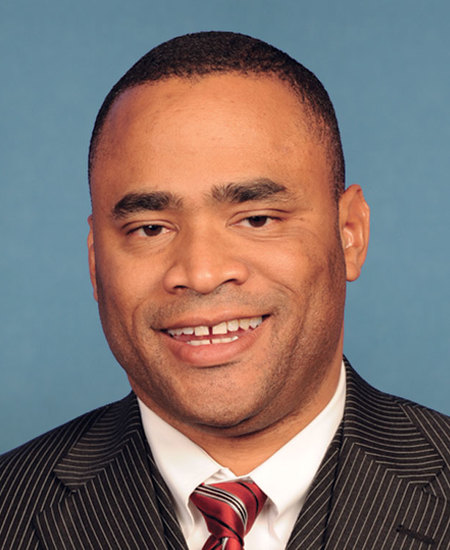
Rep. Marc A. Veasey
Sponsored bills
Maddy summaryH.J. Res. 80 would declare the Equal Rights Amendment (ERA) part of the U.S. Constitution, asserting it has been ratified by 38 states (three-fourths of the states) despite the original 1972 deadline. If passed, this resolution would formally establish the ERA as a constitutional amendment, requiring all federal and state laws to align with its gender equality protections. The bill does not create new laws but confirms the ERA's status as part of the Constitution, affecting how laws are interpreted and enforced. It is a procedural step to resolve the legal dispute over the ERA's validity after decades of debate.
Maddy summaryThis bill reauthorizes and expands U.S.-Israel energy cooperation programs through 2031. It increases annual funding for the BIRD Energy Foundation from $2 million to $5 million and for the U.S.-Israel Energy Center from $4 million to $7 million, extending support through fiscal years 2026-2031. The bill adds new focus areas like hydrogen energy, fusion, industrial decarbonization, carbon management, agrivoltaics, grid modernization, and energy infrastructure cybersecurity to existing collaboration efforts. These changes directly affect U.S. and Israeli energy companies, researchers, and institutions working on commercializing clean energy technologies.
Maddy summaryThis bill creates a tax credit for cable, satellite, and internet-based video distributors (like streaming services) that carry content from independent video producers. Distributors can claim a credit equal to the lesser of their actual license fees paid for carrying independent programming or $0.10 per average monthly subscriber, with a maximum of $0.30 per subscriber. It also requires the Federal Communications Commission to submit biennial reports to Congress on how many independent programmers are being carried and for how long, to help assess the program's effectiveness. The credit applies to agreements where distributors carry independent content to at least 40% of their subscribers, targeting small, non-corporate video producers who aren't owned by major networks or distributors.
Maddy summaryThe Innovative FEED Act of 2025 establishes a new regulatory category for "zootechnical animal food substances" - additives in animal feed that affect digestive byproducts, reduce foodborne pathogens, or alter an animal's gut microbiome without providing nutrition. These substances would be regulated as food additives (not drugs) under the Federal Food, Drug, and Cosmetic Act, requiring manufacturers to submit specific safety and efficacy data for approval. The bill mandates labeling stating "Not for use in the diagnosis, cure, mitigation, treatment, or prevention of disease in animals" and allows optional claims about intended effects on animal body function. It explicitly excludes existing drugs, hormones, ionophores, and other substances from this category, ensuring no mandatory use of these additives.
Maddy summaryThe Air America Act of 2025 authorizes one-time payments of $40,000 to individuals who worked for Air America or its affiliated companies for at least five years during 1950-1976, or to their surviving spouses, children, or dependents. Additional payments of $8,000 per full year beyond five years are allowed. The program is capped at $60 million total funding, with claims required within two years of final regulations. Payments are a single lump sum with no ongoing benefits, and the bill explicitly states it does not create new entitlements beyond this one-time award.
Maddy summaryHR 2092, the SPEAK Act of 2025, requires the Health and Human Services Secretary to create guidance for healthcare entities within one year of enactment. This guidance focuses on improving telehealth access for people with limited English proficiency, directly affecting health IT companies, hospitals, insurers, language service providers, and interpreters. Key provisions include best practices for using interpreters during video appointments, providing multilingual patient materials (like appointment reminders and prescriptions), and making digital health portals accessible. The bill aims to standardize language access in telehealth services without changing existing laws.
Homes for Every Local Protector, Educator, and Responder Act of 2025 or the HELPER Act of 2025 This bill establishes a program administered by the Department of Housing and Urban Development to provide mortgage assistance to law enforcement officers, elementary and secondary school teachers, firefighters, or other first responders. Specifically, these individuals may be eligible for a first-time mortgage on a primary family residence with no down payment. Instead, the mortgage is subject to a one-time, up-front mortgage insurance premium.
Metastatic Breast Cancer Access to Care Act This bill expedites payment of Social Security Disability Insurance (SSDI) benefits and eligibility for Medicare coverage for those with metastatic breast cancer (i.e., breast cancer that has spread to other sites in the body). Specifically, the bill eliminates the 5-month waiting period for SSDI benefits and the subsequent 24-month waiting period for Medicare coverage for individuals with metastatic breast cancer. Under current law, individuals generally must wait 5 months after the onset of disability to begin receiving SSDI benefits and an additional 24 months to become eligible for Medicare.
Maddy summaryHR 2081, the Donut Dollies Congressional Gold Medal Act, authorizes a Congressional Gold Medal to honor the 627 women who served as Red Cross volunteers in the Supplemental Recreation Activities Overseas (SRAO) program during the Vietnam War. The bill directs the Treasury Secretary to design and strike the medal, which will be presented by Congress and then given to the Smithsonian Institution for display. It also allows the sale of bronze duplicates to cover costs, with proceeds going to the U.S. Mint fund. This commemorative act recognizes the volunteers' service supporting over 280,000 troops through recreation programs across Vietnam from 1965 to 1973.