

Maddy summaryThis bill amends federal law (18 U.S.C. § 1362) to explicitly include broadband internet access service infrastructure under protections against destruction. It directly affects entities that operate or damage broadband facilities, such as internet service providers, infrastructure owners, and individuals who might intentionally destroy such infrastructure. Key changes expand the definition of protected "means of communication" to specifically cover broadband facilities and broaden liability to include "any other person or entity" beyond government-controlled systems. The amendment removes the prior exemption for infrastructure used in "military or civil defense functions," ensuring all broadband infrastructure receives equal legal protection. This strengthens existing penalties for damaging broadband networks but does not create new regulatory requirements for service providers.
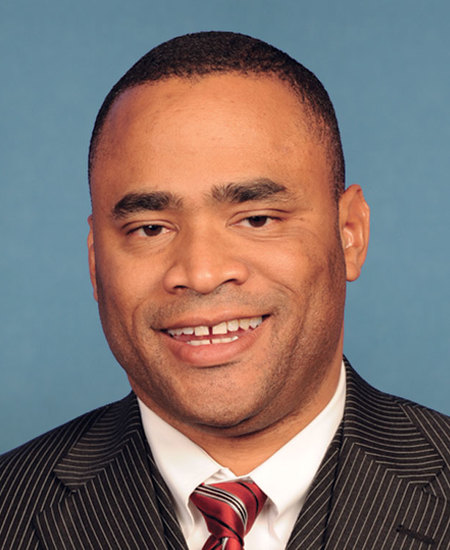
Rep. Marc A. Veasey
Sponsored bills
Maddy summaryThe American Family Act (HR 2763) establishes a new refundable child tax credit that provides monthly payments to eligible families with children. It would pay $300 per month for each child under age 6 and $360 per month (120% of $300) for each child age 6 or older, with income limits of $150,000 for joint filers and $112,500 for other filers. The bill creates a "period of presumptive eligibility" to determine eligibility for monthly payments, allowing families to receive advance payments based on information from previous tax returns. This would directly affect millions of families with children who meet the income requirements, providing more consistent financial support throughout the year rather than an annual tax credit.
Maddy summaryThis bill establishes federal minimum standards for collective bargaining rights for public employees and supervisors. The Federal Labor Relations Authority would determine if state laws provide these rights, and if not, would establish them for affected employees. The bill guarantees public employees the right to form unions, bargain collectively, and engage in concerted activities, while requiring public employers to recognize unions and put agreements in writing. It also prohibits strikes or lockouts that would disrupt emergency services. This would apply to public employees in states that don't meet the federal standards for collective bargaining rights.
Maddy summaryThis bill requires all detention agencies (jails, prisons, police custody) to establish mandatory policies for notifying families when an individual dies, is seriously injured, or becomes seriously ill while in custody. It mandates that agencies collect emergency contact information at the time of intake, notify families within 12 hours of death or 48 hours of serious illness/injury (between 6 a.m. and midnight), and provide specific details about the incident. Families must receive information on cause of death, medical treatment, and autopsy results, with options for compassionate in-person communication. The bill ensures contact information collection is voluntary, prohibits coercion, and requires agencies to document all notification attempts in the individual’s official file.
Maddy summaryThe No Tax Breaks for Union Busting Act would deny tax deductions for employers who spend money to influence employees' decisions about union activities, such as union elections or collective bargaining. It defines "labor organization activities" broadly to include union elections, labor disputes, and collective actions. The bill requires employers to report such spending on tax returns and prevents them from deducting these expenses from taxable income. This would apply to employers using tactics like captive audience meetings, outside consultants, or other efforts to sway workers' union decisions. The policy aims to remove tax incentives for employers to interfere with workers' rights under labor law.
Maddy summaryThis bill, HR 2253 (Puppy Protection Act of 2025), sets new federal standards for commercial dog dealers who sell puppies to the public. It requires specific housing sizes based on dog size (e.g., 12-30 square feet per dog), daily exercise in safe outdoor areas, clean water and nutritious food twice daily, and annual veterinary exams including dental checks. The bill also limits breeding frequency (max 2 litters in 25 months), sets age minimums for breeding (18 months for small dogs, 2 years for large dogs), and mandates health screenings to prevent genetic diseases. These requirements apply directly to commercial dealers, with final regulations to be issued within 18 months of enactment.
Maddy summaryThis bill, HR 2102 (Major Richard Star Act), allows veterans with combat-related disabilities to receive both full military retired pay and veterans' disability compensation simultaneously, without the previous offset that reduced retired pay. It directly affects veterans already eligible for both benefits due to combat-related injuries, removing the requirement that their retired pay be reduced by the disability compensation amount. The key provision amends Title 10 and Title 38 to eliminate the offset rule (sections 5304 and 5305 of Title 38) for these veterans. The change applies to payments starting after the bill’s enactment date, effective for all qualifying veterans. This is a policy change to increase financial support for affected veterans, not a new benefit.
Workplace Violence Prevention for Health Care and Social Service Workers Act This bill requires the Department of Labor to address workplace violence in health care, social service, and similar sectors. Specifically, Labor must issue an occupational safety and health standard that requires certain employers to take actions to protect workers and other personnel from workplace violence. The standard applies to employers in the health care sector, in the social service sector, and in sectors that conduct activities similar to those in the health care and social service sectors. Among other elements, the standard must require each employer to (1) develop a workplace violence prevention plan, (2) promptly investigate incidents of workplace violence, and (3) provide relevant training and education to employees. The bill requires certain hospitals and skilled nursing facilities to comply with this standard as a condition of Medicare participation.
Maddy summaryThis bill (HR 2532) blocks federal funding for large-scale layoffs at the Department of Health and Human Services (HHS) and its sub-agencies. It prohibits using federal funds to remove 3% or more of all HHS employees, or 3% or more at any single sub-agency, within a 60-day period. This applies to actions like layoffs under federal workforce rules (Title 5) or agency reorganizations. The bill directly affects HHS employees and its operating divisions by preventing rapid, widespread workforce reductions. It does not change HHS policies but restricts how personnel actions can be funded.
Maddy summaryHR 2586, the Reentry Act of 2025, amends Medicaid rules to allow incarcerated individuals to receive Medicaid coverage during the 30 days immediately before their release from prison or jail. This directly affects people leaving correctional facilities, ensuring they can access health care as they transition back into communities. The bill requires a report within 18 months analyzing current health care standards in prisons, the number of people who would gain coverage, and current discharge practices to improve Medicaid enrollment for newly released individuals. The report will also assess how to better connect people with community health services and addiction treatment after release.