

Maddy summaryThe Ending Green Giveaways Act (HR 1066) repeals a Clean Air Act provision (Section 138) that authorized federal funding for environmental and climate justice initiatives. It also cancels any unspent funds previously allocated for these programs. This would terminate the funding stream, preventing future allocations for community-based environmental projects. As a result, the program would end without new resources for communities addressing environmental challenges.
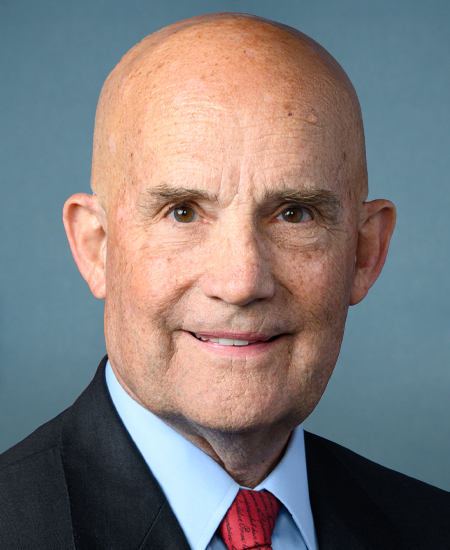
Rep. Keith Self
Sponsored bills
Maddy summaryHR 992, the PATROL Act, prohibits the federal Attorney General from suing states that build border barriers (like walls or fences) to prevent illegal entry or protect state territory. It specifically blocks civil lawsuits under existing border laws (33 U.S.C. 401/403) against states for such barrier projects. The bill defines key terms like "barrier" (including walls or fences) and "immigration laws" to clarify its scope. This directly affects states constructing border infrastructure and limits federal legal actions against those efforts. The bill does not create new border policies but changes the legal landscape for state-led border security measures.
Maddy summaryHR 1037, the Voter Eligibility Verification Act of 2025, amends a 1996 federal law to require state election officials to provide immigration status information for individuals on potential voter lists within 15 days when requested by a state Attorney General or Secretary of State. This bill directly affects state election administrators who must now verify voter eligibility using immigration data upon formal request. The key provision establishes a 15-day deadline for states to share this information, creating a new administrative requirement for voter eligibility checks. The bill focuses on modifying existing federal law to facilitate state-level verification processes without changing voter eligibility criteria.
Fair Access to Banking Act This bill places restrictions on certain banks, credit unions, and payment card networks if they refuse to do business with a person who complies with the law. Restrictions include prohibiting the use of electronic funds transfer systems and lending programs, termination of an institution's depository insurance, and specified civil penalties. Banks and other specified financial institutions are allowed to deny financial services to a person only if the denial is justified by a documented failure of that person to meet quantitative, impartial, risk-based standards established in advance by the institution. This justification may not be based upon reputational risks to the institution. The bill establishes the right for a person to bring a civil action for a violation of this bill.
Maddy summaryThis bill designates the U.S. Postal Service facility at 2600 Wesley Street in Greenville, Texas, as the "Cooper Dawson Post Office Building." It updates all official references in federal laws, documents, and records to use this new name. The bill affects the specific post office location and its administrative records, with no policy changes or direct impact on residents or services. It is a purely procedural naming resolution with no substantive legislative provisions.
Maddy summaryHR 925, the "Dismantle DEI Act of 2025," would eliminate diversity, equity, and inclusion (DEI) programs across federal government operations. The bill requires federal agencies to close DEI offices, rescind related executive orders, and prohibit the use of federal funds for DEI training, offices, or initiatives. It defines "prohibited diversity, equity, or inclusion practice" as any activity that discriminates based on race, ethnicity, religion, biological sex, or national origin, or requires employees to complete training asserting that certain groups are inherently superior or inferior. The legislation also prohibits requiring employees to sign statements about race, ethnicity, or gender, and establishes private lawsuits for violations with potential damages of $1,000 per violation per day. This bill would directly affect federal agencies, contractors, grantees, and advisory committees receiving federal funding.
Maddy summaryHR 895 requires the Attorney General to investigate whether the 2022 discovery of five baby remains in Washington, DC, violated the existing Partial-Birth Abortion Ban Act of 2003, with a report due within six months. It mandates that healthcare workers must immediately report suspected violations of the ban to law enforcement and requires annual reports from the Attorney General detailing enforcement efforts, violations, and prosecutions over the past decade. The bill also directs the GAO to review enforcement actions from 2004-2024 and submit recommendations. This legislation focuses on strengthening enforcement of the existing 2003 ban, directly affecting healthcare providers, law enforcement, and the Department of Justice.
Maddy summaryThis bill designates the U.S. Postal Service facility at 4400 East Paisano Drive in El Paso, Texas, as the "Enedina Sanchez Cordero Post Office Building" to honor her contributions. It requires all federal references in laws, maps, regulations, and documents to use the new name for the building. The change applies immediately to all official government records and communications. This is a ceremonial naming resolution with no new policy or funding provisions.
Maddy summaryHR 899 would end the U.S. Department of Education by December 31, 2026, terminating its federal agency status. This bill directly affects all federal education programs and operations currently managed by the Department, such as student aid and school funding. The key mechanism is a fixed termination date, requiring the transfer of the Department's responsibilities to other federal agencies without specifying new administrative structures. The bill focuses solely on ending the agency's existence, not altering education policy or funding mechanisms.
Drug Cartel Terrorist Designation Act This bill directs the Department of State to designate four specified drug cartels as foreign terrorist organizations. (Among other things, such a designation allows the Department of the Treasury to require U.S. financial institutions to block transactions involving the organization.) The four specified cartels in the bill are the Gulf Cartel, the Cartel Del Noreste, the Cartel de Sinaloa, and the Cartel de Jalisco Nueva Generacion. The bill also requires the State Department to submit a detailed report on those four cartels and any other cartels it may identify. Based on this report, the State Department must designate as a foreign terrorist organization any such identified cartel (or faction thereof) that meets certain criteria for designation as a foreign terrorist organization. The bill specifies that it may not be construed to expand eligibility for asylum.