

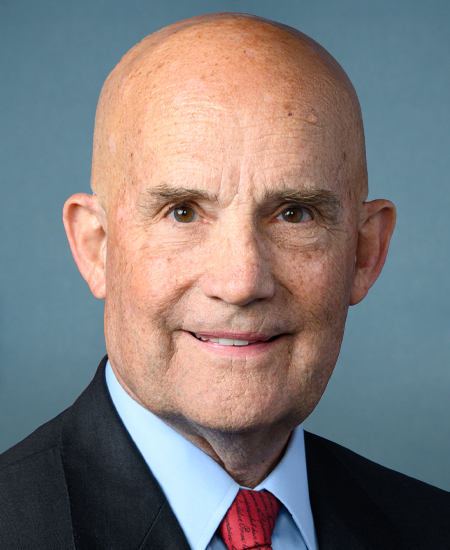
Photo of Keith Self
R United States House · District 3 · Texas On the 2026 ballot

Rep. Keith Self

Compare
Total votes
1,879
all sessions
Attendance
99%
23 missed
Near the chamber average
With party
85%
of cast votes
Lower than 98% of chamber peers
Bipartisan score
8%
crosses aisle rarely
Higher than 97% of chamber peers
Sponsored
705
bills & resolutions
Near the chamber average
Committees
8
assignments
705 bills and resolutions

Sponsored bills

Total
705
Primary
82
Co-sponsor
623
This page
705
matching current filters
Co-sponsor HR 255
In committee · Indiana House · Co-sponsor
To name the Department of Veterans Affairs community-based outpatient clinic in Lubbock, Texas, as the "General Bernie Mittemeyer VA Clinic".

Maddy summaryThis bill designates the Department of Veterans Affairs community-based outpatient clinic in Lubbock, Texas, as the "General Bernie Mittemeyer VA Clinic" upon enactment. It updates all official references in federal laws, documents, and records to reflect this new name. The bill does not alter services, funding, or operations at the clinic - its sole purpose is to honor General Bernie Mittemeyer through a ceremonial naming designation. This change affects only the clinic's official identification within federal systems.

In committee Feb 11, 2025 1 co-sponsor
Co-sponsor HR 1137
In committee · Indiana House · Co-sponsor
No Kill Switches in Cars Act

Maddy summaryHR 1137, the "No Kill Switches in Cars Act," repeals Section 24220 of the Infrastructure Investment and Jobs Act (Public Law 117-58), which previously required vehicle manufacturers to implement advanced impaired driving technology. This bill directly affects car manufacturers by removing a mandate to integrate specific safety technology designed to detect driver impairment. The key provision is the repeal itself, eliminating the requirement without creating new obligations or altering existing vehicle safety standards.

In committee Feb 7, 2025 1 co-sponsor
Co-sponsor HR 1131
In committee · Indiana House · Co-sponsor
Family Farm and Small Business Exemption Act

Maddy summaryHR 1131 exempts certain family farms and small businesses from being counted as assets when calculating financial need for federal student aid under the Higher Education Act. Specifically, it amends the law to exclude the net value of a family farm where the family resides and small businesses (with ≤100 employees) owned by the family from need analysis calculations. This change directly affects students from qualifying family farm or small business households when applying for federal financial aid. The exemption applies to need analysis conducted for award years beginning after the bill's enactment date. The bill modifies Section 480(f)(2) of the Higher Education Act of 1965 to implement this policy change.

In committee Feb 7, 2025 1 co-sponsor
Co-sponsor HR 1151
In committee · Indiana House · Co-sponsor
Freedom to Invest in Tomorrow’s Workforce Act

Maddy summaryThis bill expands 529 college savings account flexibility by allowing funds to cover costs for industry-recognized postsecondary credentials, not just traditional degrees. It defines "qualified expenses" to include tuition/fees for recognized credential programs (like certifications or apprenticeships), required testing fees, and continuing education needed to maintain credentials. To qualify, programs must meet specific criteria, such as appearing on state lists under the Workforce Innovation and Opportunity Act or being listed in VA or Defense directories. The change applies to 529 distributions made after the law's enactment, giving families more options to use these accounts for job-focused training.

In committee Feb 7, 2025 1 co-sponsor
Co-sponsor HCONRES 8
In committee · Indiana House · Co-sponsor
Expressing the sense of Congress that the United States should resume normal diplomatic relations with Taiwan, negotiate a bilateral free trade agreement with Taiwan, and support Taiwans membership in international organizations.

Maddy summaryHCONRES 8 is a non-binding congressional resolution urging the U.S. President to end the current "One China Policy" and recognize Taiwan as an independent country. It specifically calls for resuming normal diplomatic relations (including appointing ambassadors), negotiating a bilateral free trade agreement with Taiwan, and advocating for Taiwan's full membership in international organizations like the UN and WHO. The resolution argues that Taiwan has maintained democratic governance and independence for over 70 years, separate from the People's Republic of China. This resolution does not change U.S. law but expresses Congress's position on foreign policy toward Taiwan.

In committee Feb 6, 2025 1 co-sponsor
Co-sponsor HR 1094
In committee · Indiana House · Co-sponsor
Amateur Radio Emergency Preparedness Act

Maddy summaryHR 1094, the Amateur Radio Emergency Preparedness Act, prevents private restrictions (such as those in homeowners associations) from blocking amateur radio operators from installing and maintaining antennas for emergency communications. The bill directly affects over 770,000 licensed amateur radio operators in the U.S. who face such restrictions on their residential property. Key provisions include overriding unreasonable restrictions, requiring reasonable safety and building code compliance for allowed rules, setting a 45-day approval period for antenna installations (with deemed approval if not acted on), and exempting small antennas (under 1 meter, flagpoles ≤43 feet, or minimal wire antennas) from prior approval. This ensures amateur radio operators can quickly establish emergency communication systems without unnecessary delays or costs during crises.

In committee Feb 6, 2025 1 co-sponsor
Co-sponsor HR 1052
In committee · Indiana House · Co-sponsor
UNPLUG EVs Act

Maddy summaryHR 1052, the UNPLUG EVs Act, rescinds unobligated federal funds from two electric vehicle infrastructure programs. It targets unused balances from the National Electric Vehicle Infrastructure Formula Program (established by the Infrastructure Investment and Jobs Act) and charging/fueling grant programs under federal highway law. These rescinded funds will be deposited into the U.S. Treasury's general fund to reduce the federal deficit. The bill does not alter existing program requirements or affect current EV infrastructure projects, only redirecting unspent allocated funds.

In committee Feb 6, 2025 1 co-sponsor
Co-sponsor HR 1066
In committee · Indiana House · Co-sponsor
Ending Green Giveaways Act

Maddy summaryThe Ending Green Giveaways Act (HR 1066) repeals a Clean Air Act provision (Section 138) that authorized federal funding for environmental and climate justice initiatives. It also cancels any unspent funds previously allocated for these programs. This would terminate the funding stream, preventing future allocations for community-based environmental projects. As a result, the program would end without new resources for communities addressing environmental challenges.

In committee Feb 6, 2025 1 co-sponsor
Co-sponsor HR 992
In committee · Indiana House · Co-sponsor
PATROL Act

Maddy summaryHR 992, the PATROL Act, prohibits the federal Attorney General from suing states that build border barriers (like walls or fences) to prevent illegal entry or protect state territory. It specifically blocks civil lawsuits under existing border laws (33 U.S.C. 401/403) against states for such barrier projects. The bill defines key terms like "barrier" (including walls or fences) and "immigration laws" to clarify its scope. This directly affects states constructing border infrastructure and limits federal legal actions against those efforts. The bill does not create new border policies but changes the legal landscape for state-led border security measures.

In committee Feb 5, 2025 1 co-sponsor
Co-sponsor HR 1037
In committee · Indiana House · Co-sponsor
Voter Eligibility Verification Act of 2025

Maddy summaryHR 1037, the Voter Eligibility Verification Act of 2025, amends a 1996 federal law to require state election officials to provide immigration status information for individuals on potential voter lists within 15 days when requested by a state Attorney General or Secretary of State. This bill directly affects state election administrators who must now verify voter eligibility using immigration data upon formal request. The key provision establishes a 15-day deadline for states to share this information, creating a new administrative requirement for voter eligibility checks. The bill focuses on modifying existing federal law to facilitate state-level verification processes without changing voter eligibility criteria.

In committee Feb 5, 2025 1 co-sponsor
Showing 301 to 310 of 705 bills
Previous 1 … 30 31 32 … 71 Next