

Maddy summaryThis resolution urges the U.S. Secretary of State to designate Nigeria as a Country of Particular Concern (CPC) under the International Religious Freedom Act of 1998, citing ongoing violence against religious minorities. It specifically calls for Nigeria to protect religious minorities, prosecute perpetrators of attacks, and address displacement of millions caused by religiously motivated violence. The resolution also recommends increased U.S. diplomatic engagement with Nigeria and targeted sanctions against those responsible for religious freedom violations. This follows the State Department's omission of Nigeria from its CPC list in 2021-2023 and its 2024 failure to release an annual report.
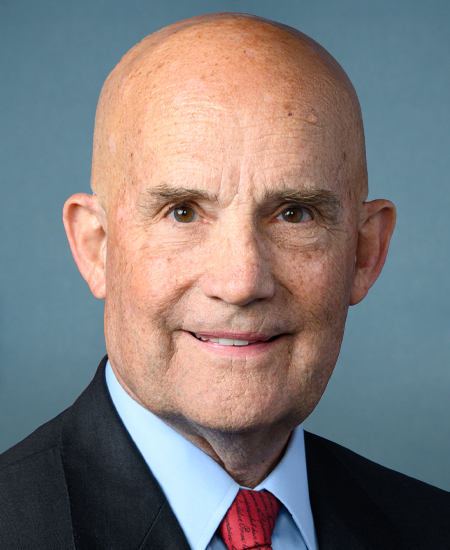
Rep. Keith Self
Sponsored bills
Maddy summaryThis bill prohibits federal funding, support, or approval for research using human fetal tissue obtained from induced abortions. It allows research on tissue from miscarriages (under 20 weeks) or stillbirths (20+ weeks) under existing Public Health Service Act rules, and permits development of new cell lines for vaccines or genetic vectors if not derived from abortion tissue. The bill amends the Public Health Service Act to restrict federal research to tissue from miscarriages or stillbirths and clarifies definitions for terms like "miscarriage" and "stillbirth." It directly affects federal agencies like the NIH and researchers relying on federal grants for biomedical studies.
Maddy summaryThis is a non-binding resolution (HRES 206), not a legislative bill. It expresses the House's support for preserving the "stepped-up basis" tax provision (Section 1014 of the Internal Revenue Code), which allows heirs to reset the tax cost basis of inherited assets like farmland or business equipment to their current market value. The resolution cites that 98% of farms and 19% of businesses are family-owned, noting that eliminating this provision could increase taxes for 66% of midsized farms. It specifically urges opposition to new taxes on family farms and small businesses but does not change any tax law or policy.
Maddy summaryHR 2006, the DOGE Act, makes Executive Order 14210 a permanent law. This order directs the executive branch to implement the President's "Department of Government Efficiency workforce optimization initiative." The bill directly affects federal government operations by legally binding the executive branch to follow this specific workforce optimization plan. It does not create new programs but elevates an existing executive order to statutory force.
Maddy summaryHR 2012, the Iran Sanctions Relief Review Act of 2025, requires the President to submit a detailed report to Congress before terminating, waiving, or significantly altering U.S. sanctions on Iran. The bill directly affects the President and Congress, mandating a 30-day (or 60-day during specific summer months) congressional review period for such actions. During this period, relevant committees must review the proposal, and Congress can block the action via a joint resolution of disapproval. The bill does not change sanctions policy itself but establishes a formal process for congressional oversight of any major sanctions-related decisions. It applies to sanctions under multiple existing laws, including the Iran Sanctions Act of 1996 and the 2010 Comprehensive Iran Sanctions Act.
This bill designates the facility of the United States Postal Service located at 620 East Pecan Boulevard in McAllen, Texas, as the "Agent Raul H. Gonzalez Jr. Memorial Post Office Building".
Farm Credit Administration Independent Authority Act This bill specifies that the Farm Credit Administration (FCA) is the sole regulator of the Farm Credit System (FCS) and establishes reporting requirements for FCS institutions (i.e., lenders). Specifically, the bill states that the FCA is the sole and independent regulator of the FCS and exempts entities that are supervised by the FCA from the Equal Credit Opportunity Act (ECOA). As background, the bill addresses a rule issued by the Consumer Financial Protection Bureau (CFPB) that implements provisions of the ECOA by requiring covered financial institutions, including FCS institutions, to collect and report to the CFPB data on credit applications for small businesses, including the principal owner's race, sex, and ethnicity. This 2023 rule has been challenged in court. The bill also requires FCS institutions to (1) request that loan applicants and borrowers that are small farmers disclose information identifying their race, sex, and ethnicity; and (2) annually report the collected information to the FCA. The FCA must make the collected information available to the public on annual basis. If an FCS institution customer does not voluntarily report the requested information, the FCA may not require the institution to use other means to deduce the information. In addition, the bill specifies that FCS institutions shall not be required to comply with the bill's requirements if financial institutions are not required to comply with the CFPB rule due to a court invalidating the rule or a repeal of the rule.
Maddy summaryThis resolution formally censures Representative Al Green (D-TX) for disrupting President Trump's address during a joint session of Congress on March 4, 2025. It requires him to appear in the House chamber for the public reading of the censure resolution, which states his actions violated decorum rules and brought disrepute to Congress. As a procedural resolution, it does not enact policy changes but serves as a formal reprimand for conduct during a congressional session.
Maddy summaryHR 813, the FIZZ-NO Act of 2025, amends the Food and Nutrition Act to prohibit using SNAP benefits for carbonated drinks containing more than 1 gram of added sugar, artificial sweetener, or flavoring per serving. This directly affects SNAP recipients by restricting their ability to purchase these specific beverages with their benefits. The bill defines "soda" in the law and adds it to the list of items ineligible for purchase with SNAP funds, alongside alcoholic beverages. The changes will take effect 180 days after the bill is enacted.
Maddy summaryHR 620, the FARM Act, expands the Committee on Foreign Investment in the United States (CFIUS) to review foreign investments in U.S. agriculture. It requires CFIUS to assess transactions where foreign entities gain control of U.S. agricultural businesses (including those using agricultural products defined under 7 U.S.C. 451) and adds agricultural supply chains to the list of critical infrastructure and critical technologies. The bill mandates annual reports from the Secretary of Agriculture and the Comptroller General to Congress, detailing foreign investments in U.S. agriculture, potential threats to supply chains, and espionage risks targeting agricultural research or data. This directly affects foreign investors seeking to acquire U.S. agricultural assets and reshapes CFIUS review processes for the sector.