

Maddy summaryThis bill amends Title 5 of the U.S. Code to eliminate "official time" for federal employees engaging in union activities. It requires employees to perform all union-related work during non-duty time (e.g., personal time, not paid work hours), directly affecting federal workers who are union members. The key provision changes Section 7131 to state that any labor organization business must occur when employees are in a non-duty status. This policy shift removes the previous allowance for using paid work time for union duties, making it a concrete change to federal employment rules.
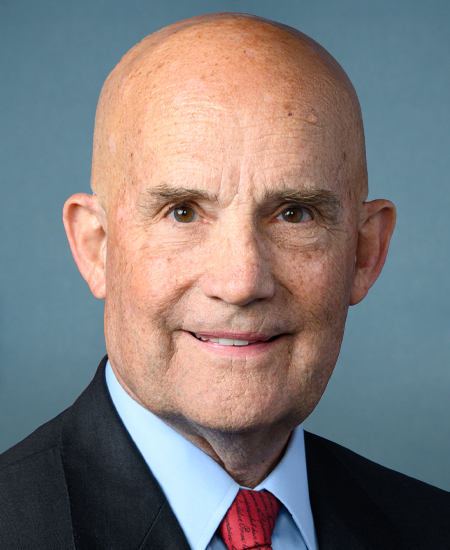
Rep. Keith Self
Sponsored bills
Maddy summaryHR 2644, the "Love Them Both Act of 2025," prohibits the Equal Employment Opportunity Commission (EEOC) and the Office of Congressional Workplace Rights from finalizing, implementing, or enforcing any regulations related to abortion or abortion-related services under the Pregnant Workers Fairness Act. This bill directly affects federal agencies responsible for workplace regulations, blocking them from creating rules about abortion coverage in employment contexts. The key mechanism is a specific restriction on regulatory actions, preventing agencies from developing policies on abortion-related services under the existing Pregnant Workers Fairness Act. It does not alter the core protections of the Pregnant Workers Fairness Act but limits how its regulations can address abortion coverage.
Maddy summaryThe Free Speech Fairness Act (HR 2501) would amend tax law to allow 501(c)(3) organizations, such as charities and educational nonprofits, to make political campaign statements as part of their regular activities without risking their tax-exempt status. The bill specifies that these statements must be made in the ordinary course of the organization's exempt purpose and result in only minimal additional costs. This change clarifies that routine political commentary by these groups does not violate their tax-exempt status under current rules. The provision would apply to tax years beginning after the bill's enactment.
Maddy summaryHJRES 82 disapproves the District of Columbia Council's approval of the Insurance Regulation Amendment Act of 2024 (D.C. Act 25-699), a local law that would have amended insurance regulations in Washington, D.C. This procedural resolution, submitted under the District of Columbia Home Rule Act, allows Congress to reject the District's legislative action. The bill itself does not change insurance regulations but formally expresses disapproval of the District's law, preventing it from taking effect.
Maddy summaryThe SHORT Act (HR 2395) redefines federal firearm definitions to exclude antique and collector firearms from being classified as firearms, and removes distinctions between short-barreled rifles and shotguns in federal regulations. It prevents state laws from imposing taxes or registration requirements on short-barreled rifles and shotguns, requiring state rules to align with federal compliance instead. The bill also mandates the federal government to destroy specific records related to these firearms within one year of enactment.
Maddy summaryHR 2443, the NPR and PBS Act, would ban all federal funding for National Public Radio (NPR) and the Public Broadcasting Service (PBS), including funds used indirectly by public broadcast stations. This bill directly affects NPR, PBS, and any future organizations replacing them, as it prohibits government money from supporting them through any channel - like station dues or programming purchases. The key provision blocks all federal funds, both direct and indirect, from flowing to these entities after the bill's enactment. This would require NPR and PBS to find new funding sources, as they currently rely on federal support. The bill does not change how public broadcasting operates but eliminates its primary government funding stream.
Maddy summaryThis bill amends Title IX to prohibit individuals assigned male at birth (based on reproductive biology and genetics at birth) from using locker rooms designated for females during active use in school programs. It directly affects transgender girls and schools implementing gender-segregated facilities. The key provision makes it unlawful under federal law to use such facilities when they are actively used by individuals of a different sex. The policy change takes effect 30 days after enactment.
Maddy summaryHR 1741, the Veteran Appeals Transparency Act of 2025, requires the Board of Veterans' Appeals to publish weekly online notices showing which cases are assigned to individual Board members for decision that week. This applies to most cases but excludes those advanced under special procedures or remanded by the Court of Appeals for Veterans Claims. The notices clarify that assignment does not mean a decision will be issued that week. The bill directly affects veterans navigating appeals by making case assignment timelines publicly visible, aiming to improve transparency in the appeals process.
Maddy summaryHR 2360 permanently exempts school bus drivers from the engine compartment inspection requirement during their commercial driver's license skills test, which was previously granted as a temporary measure in a 2024 federal notice. This affects school bus drivers in states that choose to participate in the exemption program. For six years after the bill's enactment, participating states must submit annual reports to the Transportation Secretary detailing how many drivers use this exemption. The exemption maintains the specific conditions established in the 2024 notice.
Fairness for High-Skilled Americans Act of 2025 This bill eliminates the Optional Practical Training Program or any successor program, unless Congress expressly authorizes such a program. (The program provides an F-1 student visa holder temporary employment authorization before or after completion of the student's studies, or both.)