

Stop Child Hunger Act of 2021 This bill establishes a permanent program and provides funds for electronic benefit transfer (EBT) cards to cover meals for children during extended school closures. Specifically, the Department of Agriculture must establish a program to provide EBT cards to cover meals for children who are enrolled in the National School Lunch Program or School Breakfast Program when a school is closed, operating remotely, or a combination of both for a period of five days or more. Cards may be used to purchase food from approved retailers under the Supplemental Nutrition Assistance Program.
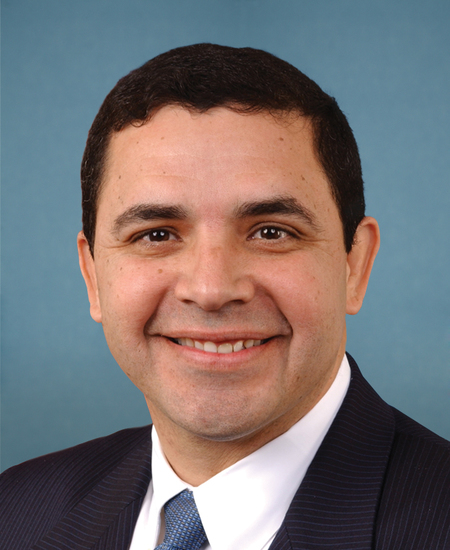
Rep. Henry Cuellar
Sponsored bills
Dentist and Optometric Care Access Act of 2021 or the DOC Access Act of 20 21 This bill prohibits private health insurance plans from setting rates for items and services, except for dental cleanings, provided by a doctor of optometry, of dental surgery, or of dental medicine for which the plan does not pay a substantial amount. Additionally, an agreement between a plan and such a doctor for limited scope dental or vision benefits may last longer than two years only with the prior acceptance of the doctor for each term extension. Plans also may not restrict such a doctor's choice of laboratories or suppliers. Such doctors may elect to waive the application of the payment amount and choice of laboratories provisions of this bill. The bill establishes a private right of action for a person adversely affected by a violation of this bill. The bill does not supersede state laws regarding health insurers and dental or vision benefit plans.
Substance Use Disorder Workforce Act This bill increases the number of residency positions eligible for graduate medical education payments under Medicare for hospitals that have addiction or pain medicine programs, with an aggregate increase of 1,000 positions over a five-year period.
Home Health Emergency Access to Telehealth Act or the HEAT Act This bill provides for Medicare coverage of home health services that are furnished via telehealth during a public health emergency, in accordance with specified requirements. Specifically, the bill allows telehealth services to substitute for in-person home health services and to be considered as home health visits for purposes of payment under Medicare during a public health emergency. Such services (1) may not constitute more than 50% of the number of billable visits in a 30-day period, (2) must be furnished under a plan of care established by a practitioner with whom the beneficiary has an existing care relationship, and (3) must be furnished in accordance with the beneficiary's consent.
Rehabilitating Economic Success Through Overcoming Rural Emergencies Act or the RESTORE Act This bill expands the Department of Agriculture's Wildfire and Hurricane Indemnity Program Plus (WHIP+) to include coverage for losses of crops due to high winds or derechos, polar vortexes (including losses to dairy cooperatives due to power outages or curtailments), hailstorms, freeze, and droughts occurring in the 2020 and 2021 calendar years, with specified limitations. Under current law, the program provides disaster payments to agricultural producers who suffered crop, tree, bush, and vine losses resulting from hurricanes, wildfires, and other qualifying natural disasters that occurred in the 2018 and 2019 calendar years.
This resolution expresses support for the designation of National Lyme and Tick-Borne Disease and Conditions Awareness Month.
Student Agriculture Protection Act of 2021 This bill modifies the requirements for calculating taxable income to exclude from the gross income of a student agriculturist up to $5,000 of the gain from the sale or exchange of personal property (including livestock, crops, and agricultural mechanics or shop products) produced or raised by the student agriculturist. A student agriculturist is an individual who is under 22 years of age and is enrolled in (1) an FFA (Future Farmers of America) chapter or a program established by the National FFA Organization; (2) a 4H Club or other program established by 4H; or (3) a student agriculture program that is under the direction or guidance of an agricultural educator, advisor, or club leader.
Opportunity To Address College Hunger Act This bill requires institutions of higher education (IHEs) that receive grants to operate work-study programs to notify a student receiving work-study assistance that the student may be eligible for participation in the Supplemental Nutrition Assistance Program (SNAP). The Department of Education must provide guidance to states and IHEs on how to identify and communicate with students who are potentially eligible for SNAP.
SOS: Sustaining Outpatient Services Act This bill allows for payment under the Medicare prospective payment system for hospital outpatient department services of certain items and services that are furnished at off-campus outpatient departments. Specifically, the bill allows for payment of items and services for which payments to physician specialists (under the Medicare physician fee schedule) did not exceed $2 million during the previous year.
Get the Lead Out Act This bill requires community water systems (i.e., public water systems that provide drinking water) to identify and replace lead service lines (e.g., pipes) and allows the systems to use assistance from drinking water state revolving funds to replace those lines. Specifically, the bill requires community water systems to submit to the Environmental Protection Agency (EPA) by specified deadlines (1) plans to inventory and replace lead service lines, and (2) certifications that lead service lines have been replaced except for any line that is not owned by the system and for which the owner declined replacement. Community water systems must pay the full costs of all lead service line replacements and any filters required under their plans. Systems may incorporate into their base rates the costs of the line replacements and filters not fully covered by grants and other assistance.