This bill requires the Department of Agriculture (USDA) to submit a report on the potential costs and benefits of its proposed rule governing the importation of live sheep, goats, other ruminants, and products derived from sheep and goats. It also bars USDA from finalizing, implementing, administering, or enforcing the rule until one year after the date that USDA submits the report.
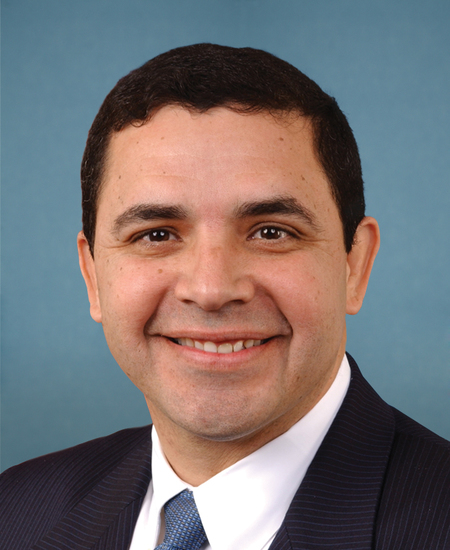
Rep. Henry Cuellar
Sponsored bills
Cures 2.0 Act This bill addresses pandemic preparedness and public health issues, caregiver and patient engagement, drug development, insurance coverage, and biomedical research. The Department of Health and Human Services (HHS) must undertake research and other activities concerning COVID-19 and develop a strategy for future pandemics and declared emergencies. Additionally, the bill specifies actions to combat antimicrobial resistance. HHS may award grants for caregiver training. The bill also addresses diversity in clinical trials, collecting patient experience data during clinical trials, and coverage for care related to participation in specified clinical trials. The bill modifies the timeframe and requires additional guidance relating to expedited approval of certain breakthrough drugs, devices, or products. It also establishes two intercenter institutes within the Food and Drug Administration (FDA) focused on particular diseases that meet specified criteria. The bill also addresses (1) coverage in Medicare, Medicaid, and the Children's Health Insurance Program for telehealth, genetic and genomic testing, and other services; (2) electronic prescribing standards for Medicare drug benefits; and (3) access to Medicare and Medicaid claims data by certain registries. Furthermore, the bill prohibits the use of geographic tracking or biometrics in Medicaid electronic visit verification systems. The bill establishes the Advanced Research Projects Agency for Health (ARPA-H) within the National Institutes of Health to accelerate biomedical research and innovation through grants, contracts, cash prizes, and other means. The FDA may work with ARPA-H to expedite the development of medical products through specified activities.

Accelerating Access to Critical Therapies for ALS Act This bill establishes grant programs to address neurodegenerative diseases, such as amyotrophic lateral sclerosis (also known as ALS or Lou Gehrig's disease), and contains other related provisions. The Department of Health and Human Services (HHS) shall award grants to eligible entities for scientific research utilizing data from expanded access to investigational ALS treatments for individuals who are not otherwise eligible for clinical trials. The Food and Drug Administration (FDA) shall award grants to public and private entities to cover the costs of research and development of drugs that diagnose or treat ALS and other rare neurodegenerative diseases. HHS shall also establish the Public-Private Partnership for Neurodegenerative Diseases between the National Institutes of Health, the FDA, and at least one eligible entity (generally, an institution of higher education or a nonprofit organization). The partnership shall support the development and regulatory review of drugs that address ALS and other rare neurodegenerative diseases. The FDA shall publish on its website a five-year action plan for fostering the development of drugs that improve or extend the lives of people living with rare neurodegenerative diseases. The Government Accountability Office must report to Congress about the grants provided under this bill, including an analysis of the impact of such grants on research and development of treatments for ALS.
This bill posthumously provides for the award of a Congressional Gold Medal in commemoration of the 13 service members who died on August 26, 2021, while stationed at Hamid Karzai International Airport in Afghanistan.
Chronic Wasting Disease Research and Management Act This bill directs the Department of Agriculture (USDA) to address chronic wasting disease afflicting deer, elk, and moose populations. Specifically, the bill directs USDA to establish a program to research and manage the disease. Under the program, USDA must offer to enter into agreements with state or tribal wildlife agencies and departments of agriculture, institutions of higher education, and research centers to support research on the transmission of, resistance to, and diagnosis of the disease. In addition, USDA must offer to enter into agreements with such agencies and departments to support state and tribal efforts to develop and implement management strategies that address the disease. USDA must also develop and maintain materials to inform the public on chronic wasting disease and techniques to help prevent the spread of the disease. In addition, USDA must solicit public feedback on potential updates and improvements to standards of the chronic wasting disease herd certification program.
Cattle Contract Library Act of 2021 This bill directs the Department of Agriculture (USDA) to establish and maintain a library or catalog of each type of contract offered by packers to producers for the purchase of all or part of the production of fed cattle (including cattle that are purchased or committed for delivery), including any schedules of premiums or discounts associated with the contract. USDA must make the library or catalog publicly available in a user-friendly format and provide weekly or monthly reports as applicable. The bill makes it unlawful for any packer to willfully fail or refuse to provide USDA with accurate contractual information or to comply with any other requirements under the bill. The Agricultural Marketing Service must provide competitive grants to state agricultural experiment stations, universities, national laboratories, and other entities for producer outreach and education efforts on best uses of cattle market information, including information made available through the livestock mandatory reporting program and the library or catalog.
Improving the Health of Children Act This bill reauthorizes through FY2026 programs and activities of the Centers for Disease Control and Prevention for researching and preventing birth defects, developmental disabilities, and other conditions. Specifically, the bill reauthorizes the National Center on Birth Defects and Developmental Disabilities. The center carries out activities to advance the health and well-being of vulnerable populations, including infants with birth defects, children with developmental disabilities, and individuals of all ages with disabilities or blood disorders.
Ocean Shipping Reform Act of 2021 This bill revises provisions related to ocean shipping policies and is designed to support the growth and development of U.S. exports and promote reciprocal trade in the common carriage of goods by water in the foreign commerce of the United States. Among other provisions, the bill sets forth requirements for operating a shipping exchange involving ocean transportation in the foreign commerce of the United States; requires ocean common carriers to report to the Federal Maritime Commission (FMC) each calendar quarter on total import and export tonnage and the total loaded and empty 20-foot equivalent units per vessel that makes port in the United States; requires the FMC to publish and annually update all its findings of false certifications by ocean common carriers or marine terminal operators and all penalties assessed against such carriers or operators; revises annual reporting requirements for the FMC on foreign laws and practices to include practices by ocean common carriers; prohibits ocean common carriers and marine terminal operators from retaliating or discriminating against shippers because such shippers have patronized another carrier, or filed a complaint; directs the FMC to establish rules prohibiting ocean common carriers and marine terminal operators from adopting and applying unjust and unreasonable demurrage and detention fees; authorizes the FMC to initiate investigations of an ocean common carrier's fees or charges and apply enforcement measures, as appropriate; directs the Department of Transportation to seek to enter into an agreement with the National Academy of Sciences to study the U.S. supply chain industry, including data constraints that impede the flow of maritime cargo and add to supply chain inefficiencies; and provides authority for the FMC to issue an emergency order requiring ocean common carriers or marine terminal operators to share directly with relevant shippers, rail carriers, or motor carriers information relating to cargo throughput and availability.
Strength in Diversity Act of 2021 This bill establishes a program through which the Department of Education may award planning and implementation grants to specified educational agencies (e.g., local educational agencies) to improve diversity and reduce or eliminate racial or socioeconomic isolation in publicly funded early childhood education programs, public elementary schools, or public secondary schools.
Maddy summaryHRES 815 is a symbolic resolution introduced in the U.S. House of Representatives on November 18, 2021. It expresses congressional support for National Rural Health Day, which recognizes the importance of rural health care and celebrates providers serving rural communities. The resolution highlights challenges like hospital closures and access barriers faced by rural health facilities but does not create new laws or funding. It simply affirms commitment to improving rural health care accessibility through policy, without specifying concrete changes. As a procedural resolution, it has no binding effect on legislation or funding.