

Maddy summaryHR 3526, the Uplifting First-Time Homebuyers Act of 2025, increases the maximum amount first-time homebuyers can withdraw penalty-free from retirement accounts. It amends the Internal Revenue Code to raise the limit from $10,000 to $50,000 for qualified first-time homebuyer distributions. This change directly affects individuals using retirement savings to purchase their first home, allowing them to access significantly more funds without incurring the usual 10% early withdrawal penalty. The provision applies to taxable years beginning after December 31, 2024.
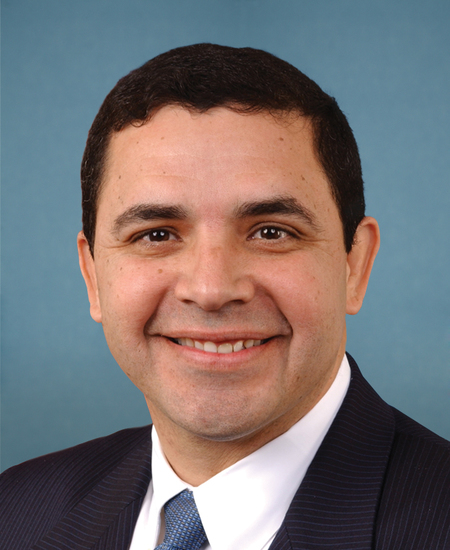
Rep. Henry Cuellar
Sponsored bills
Maddy summaryHR 2240 requires federal agencies to analyze data gaps related to law enforcement safety and wellness. Specifically, it mandates three reports within 270 days of enactment: one on attacks against officers (including ambushes), another on unreported aggressive incidents not meeting crime thresholds, and a third on officer mental health impacts and existing wellness resources. The reports will examine current data collection limitations, training effectiveness, and potential improvements to reporting systems like the Law Enforcement Officers Killed and Assaulted Data Collection. This bill focuses on gathering information to inform future policy decisions, not on creating new programs or funding. It directly affects federal agencies (Attorney General, FBI, National Institute of Justice) and aims to improve understanding of officer safety challenges.
Maddy summaryHR 2243, the LEOSA Reform Act, updates the Law Enforcement Officers Safety Act to clarify and expand firearm carry rights for qualified current and retired law enforcement officers. It modifies training requirements to allow officers to meet standards set by their former agency, their state, any local agency in their state, or a certified instructor within the state. The bill also adds exceptions for transportation property and public spaces when applying state laws, and permits qualified officers to carry concealed firearms in certain federal facilities (Security Level I/II civilian public access facilities). These changes aim to provide clearer, more flexible standards for firearm carry while maintaining existing safety frameworks.
Maddy summaryHR 3392, the STOP Screwworms Act, requires the U.S. Department of Agriculture to build modular facilities for rearing sterile New World screwworm flies within 180 days of enactment. These facilities will disperse sterile flies into at-risk agricultural areas - identified based on migratory patterns and suitability for dispersal - to prevent infestations that threaten livestock. The bill authorizes $300 million in funding for construction, operation, and annual reporting to Congress on threat assessments and effectiveness. It directly affects livestock producers and agricultural regions vulnerable to screwworm fly migration, using sterile insect technique as a preventive measure.
Maddy summaryThe Public Safety Retirees Healthcare Protection Act of 2025 increases the tax exclusion for health and long-term care insurance premiums paid by retired public safety officers from $3,000 to $6,000 annually. This change applies to distributions from governmental retirement plans used for these insurance costs, directly affecting retired police officers, firefighters, and other public safety personnel. The bill amends the Internal Revenue Code to allow a higher portion of retirement income to remain tax-free for these retirees. It takes effect for taxable years beginning after December 31, 2025.
Maddy summaryThe Fiscal Commission Act establishes a 16-member commission to address the federal government's fiscal challenges, including reducing debt and deficit while aiming for a debt-to-GDP ratio of 100% by 2039. The commission must educate the public about fiscal issues, identify policy recommendations, and submit a detailed report with legislative language by November 2026 (with possible extension to April 2027). This report requires bipartisan approval, needing at least two Republican and two Democratic members for majority support. If approved, the recommended legislation would become an "implementing bill" considered under expedited procedures in both congressional chambers. The commission's work directly affects federal budget decisions and public awareness of fiscal policy, with hearings required to gather input from experts and government officials.
Maddy summaryThe Law Enforcement Officers Equity Act expands federal retirement benefits to include specific non-traditional law enforcement roles, such as IRS tax collection officers, U.S. Postal Inspection Service employees, Department of Veterans Affairs police, and certain U.S. Customs and Border Protection seized property specialists. It directly affects current and future federal workers in these positions who were previously excluded from law enforcement retirement benefits under the Federal Employees Retirement System and Civil Service Retirement System. The bill allows current employees (incumbents) to elect to count prior service toward retirement by paying a deposit covering the difference in retirement contributions, with government contributions made over 10 years. It also temporarily exempts law enforcement officers from mandatory separation for three years after enactment.
Maddy summaryHR 3206, the Protecting America's Property Rights Act, requires Fannie Mae and Freddie Mac (the "Enterprises") to use third-party insurance products regulated by state authorities for mortgage lien and title protection. It mandates that any mortgage purchased by these entities must involve products regulated by state insurance or financial authorities, as defined in existing federal law. To enforce this, the bill adds a 1.00% capital requirement on the unpaid principal balance of mortgages that don’t meet this standard. The Director of the Federal Housing Finance Agency must issue implementing regulations within 180 days of the bill’s enactment.
Maddy summaryHRES 384 is a non-binding House resolution recognizing Cinco de Mayo's cultural and historical significance. It commemorates Mexico's 1862 victory at the Battle of Puebla against French forces, highlighting its role in Mexico's fight for independence and freedom. The resolution encourages U.S. citizens to observe Cinco de Mayo through ceremonies and activities, acknowledging its importance to Mexican and Mexican-American communities. As a ceremonial resolution, it has no legal effect or policy changes.
Maddy summaryThe TAKE IT DOWN Act makes it a crime to intentionally share intimate images or digital forgeries of people without their consent, with penalties of up to 2 years in prison for adults and 3 years for minors. It requires major online platforms to establish a 48-hour process for victims to request removal of such content, with platforms protected from liability when acting in good faith. The bill defines "digital forgery" as AI-generated content that appears authentic and applies to websites and apps primarily hosting user-generated content, excluding email services and broadband providers. The Federal Trade Commission will enforce these notice and takedown requirements. This legislation directly affects victims of nonconsensual intimate content, the platforms hosting such material, and individuals who distribute it.