

Maddy summary# Summary of the Energy Development and Permitting Bill This document is a comprehensive energy policy bill focused on streamlining permitting processes, accelerating energy development, and reducing regulatory burdens for oil, gas, and geothermal projects on public lands. ## Key Provisions: 1. **Leasing and Permitting Reforms:** - Requires annual oil and gas lease sales in the Gulf of Mexico and Alaska regions - Sets 30-day deadlines for processing permit to drill applications - Mandates annual reports on permit processing status - Establishes 50-year terms for pipeline rights-of-way (replacing previous 30-year terms) 2. **Environmental Review Streamlining:** - Introduces "categorical exclusions" for certain activities that don't require environmental review - Sets page limits for environmental documents (150 pages for EIS, 75 for EA) - Establishes deadlines for completing environmental reviews (1-2 years) - Limits judicial review of environmental decisions - Requires "statement of purpose and need" in environmental impact statements 3. **Special Provisions:** - Allows drilling on non-Federal surface estate without Federal permit (if State permit is provided) - Prohibits Chinese Communist Party ownership interest in Federal leases - Sets royalty rates at not more than 12.5% for onshore Federal oil and gas leases - Exempts certain activities from "major Federal action" definition 4. **Transparency Requirements:** - Requires public posting of pending applications and processing status - Mandates annual reports on permit processing timelines - Requires publication of data on lease sales and permit approvals 5. **Judicial Limitations:** - Bars claims for judicial review of environmental decisions unless filed within 120 days - Limits challenges to environmental reviews to specific issues - Prohibits injunctions against lease sales unless imminent environmental harm is proven This bill represents a significant effort to accelerate energy development on public lands while reducing regulatory complexity and environmental review requirements, with particular emphasis on oil, gas, and geothermal projects.
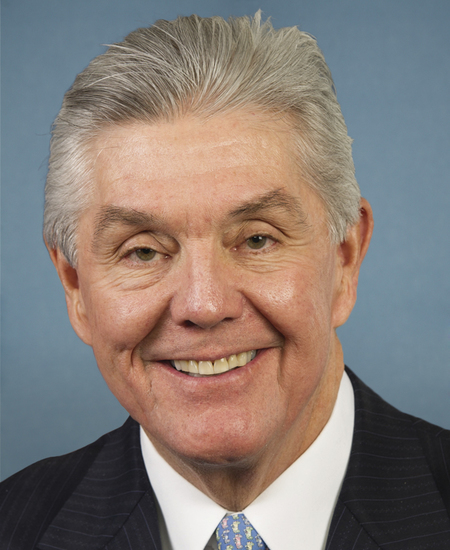
Rep. Roger Williams
Sponsored bills
Scope 3 Act This bill prohibits any securities law requirement that an issuer of securities must disclose the greenhouse gas emissions of its value chain (i.e., scope 3 emissions).
Maddy summaryThis bill prohibits financial institutions (like banks and credit card processors) from using special transaction codes that separately identify firearm or ammunition sellers. It directly affects gun retailers and the financial services they use, ensuring these businesses are treated the same as other merchants for payment processing. The key provision amends the Truth in Lending Act to ban covered entities from categorizing firearm transactions differently, requiring uniform handling of all business types. This changes how payment systems classify transactions but does not alter gun ownership laws.
Maddy summaryHR 2895, the Time Is Up Act of 2023, sets strict deadlines for the President to act on foreign investment reviews under the Committee on Foreign Investment in the United States (CFIUS). It requires the President to announce any suspension or prohibition of a covered foreign investment deal within 15 days of the bill's enactment if more than 105 days (or 60 days for certain investigations) have passed since review began without a decision. For any announcement made before or after the bill's enactment, the President must complete the suspension or prohibition within 30 days of the announcement. This bill directly affects foreign entities seeking to invest in U.S. businesses and the federal process reviewing those deals for national security risks.
Maddy summaryThe Employee Rights Act (HR 2700) amends key labor laws to strengthen employee rights in collective bargaining and privacy. It requires employers to use secret ballot elections for selecting bargaining representatives and to provide labor organizations with voter lists containing employee names and one form of contact information (chosen by the employee) within two business days of an election. The bill prohibits employers from using employee personal information for non-organizing purposes and mandates written authorization for using union dues on non-bargaining activities, with authorizations expiring after one year. Additionally, it clarifies joint employment standards to prevent misclassification and adds tribal sovereignty protections to labor law definitions.
Maddy summaryHRES 90 is a resolution demanding the Chinese government immediately release Mark Swidan, a U.S. citizen from Texas who has been detained since 2012 on drug trafficking charges. The resolution cites the UN Human Rights Council Working Group finding his detention arbitrary, with no evidence of drug offenses, passport records showing he wasn’t in China during the alleged crimes, and China denying his family contact and medical care. It specifically condemns China for blocking U.S. diplomatic access and calls on the U.S. government to prioritize Swidan’s release through diplomatic channels. The resolution focuses on the case’s documented legal and humanitarian issues, not broader policy implications.
Maddy summaryHR 2826, the Save Local Business Act, clarifies when multiple businesses can be held jointly responsible for labor laws. It amends the National Labor Relations Act and Fair Labor Standards Act to state that a business is only a joint employer if it directly controls key employment terms like hiring, pay, schedules, or discipline for another business's workers. This directly affects franchisors, contractors, and similar business models that might previously have been deemed joint employers under broader interpretations. The bill aims to limit joint employer liability to cases where one business has clear, day-to-day control over essential worker conditions.
Maddy summaryThis bill would make the Migrant Protection Protocols (MPP) mandatory under U.S. immigration law. Currently, the law permits border officials to use MPP (a policy requiring certain non-citizens arriving at the border to wait in Mexico while their case is processed), but this bill changes the language from "may" to "shall" in the Immigration and Nationality Act. This means the government would be required to implement MPP for eligible cases instead of having the option to choose. The change would directly affect border processing for non-citizens subject to MPP, altering how immigration cases are handled at the U.S. border.
Maddy summaryHR 2743 prohibits large financial institutions (over $100 billion in assets) from denying banking services to lawful businesses based on subjective political reasons, industry type, or reputational concerns. It requires these institutions to use objective, risk-based assessments for service decisions and provide written justifications for denials. The law applies to banks, credit unions, and payment networks, with civil penalties for violations including fines up to $10,000 per incident. It specifically ensures businesses operating legally under federal law receive fair access to financial services without discrimination. The bill mandates that denials be based on documented risk factors, not political bias or category-based exclusion.
Maddy summaryHJRES 27 is a congressional resolution seeking to block a federal rule that redefined which waterways fall under the Clean Water Act's protections. It targets a rule submitted by the Army Corps of Engineers, Department of Defense, and Environmental Protection Agency (EPA) on January 18, 2023, which aimed to revise the "Waters of the United States" definition. The resolution would formally disapprove this rule under a specific federal procedure (Chapter 8 of Title 5), preventing it from taking effect. This would directly affect how federal agencies regulate pollution and development near water bodies, including wetlands and smaller streams.