

Maddy summaryThe Safer Schools Act of 2023 establishes a 5-year pilot program providing federal grants to public schools for security assessments and physical safety upgrades. It offers two types of grants: (1) funding for independent security risk assessments (prioritizing schools that have experienced violent incidents), and (2) grants for "hard security improvements" like panic alarms linked to local law enforcement, with 50% federal funding (waivable for financial need). Schools must submit financial reports and security assessment results to qualify, and recipients must report on vulnerability fixes and student safety perceptions. The program allocates $100-300 million annually over five years, ending in 2028, with mandatory annual reports to Congress on school security outcomes.
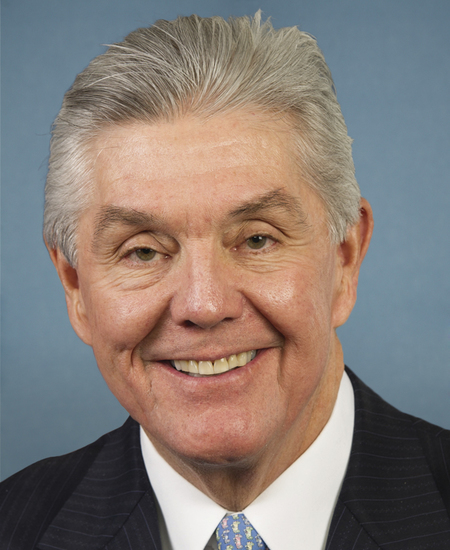
Rep. Roger Williams
Sponsored bills
Maddy summaryHRES 425 is a non-binding House resolution designating July 19, 2023, as "Glioblastoma Awareness Day" to increase public recognition of glioblastoma, an aggressive brain cancer. It directly supports patients, caregivers, and families affected by the disease, which has a low 5-year survival rate (6.9%) and no effective screening methods. The resolution encourages greater public awareness, honors those impacted by the disease, and urges continued research investments, including through the Glioblastoma Therapeutics Network. It does not create new laws or alter funding but serves as a symbolic statement to advance understanding and support for glioblastoma research.
Maddy summaryThis bill requires that AM radio receivers be included as standard equipment in all new motor vehicles (such as cars and trucks) sold in the United States, with a rule to be issued by the Department of Transportation within one year. The rule must ensure AM radio is easily accessible on the dashboard and allows manufacturers to use digital AM radio technology instead of traditional AM. During the one-year period between the bill's enactment and the rule's effective date, manufacturers must clearly label vehicles without AM radio. The bill also directs a study to evaluate whether an alternative system could deliver emergency alerts as reliably as AM radio across the country, especially during crises.
Maddy summaryThis bill clarifies that the Department of Housing and Urban Development (HUD) has final authority over energy efficiency standards for manufactured housing. It requires any energy standards developed under federal law (like those from the Energy Independence and Security Act) to be formally adopted into HUD's manufactured housing construction standards before becoming enforceable. The bill directly affects manufactured housing manufacturers and HUD, as it ensures HUD - not other agencies - controls which energy standards apply. Key provisions eliminate references to the International Energy Conservation Code (IECC) and establish HUD as the sole authority for adopting these standards into its code. This streamlines the process but does not create new energy requirements.
Maddy summaryThe United States Secret Service Mission Improvement and Realignment Act of 2023 transfers the Secret Service from the Department of Homeland Security to the Department of the Treasury, while maintaining it as a distinct entity within Treasury. The bill includes transition provisions to ensure ongoing operations, administrative actions, and legal proceedings continue without disruption. It also requires an annual report on travel protection expenditures for protected individuals like the President, Vice President, and their immediate families. This change affects how the Secret Service is organized and overseen, with the Treasury Department now responsible for the agency's functions.
Maddy summaryHR 3492, the Gun Owner Registration Information Protection Act, prohibits federal agencies from funding or supporting state databases that track lawfully owned firearms or their owners. This directly affects states maintaining such databases, requiring them to cover costs themselves if they choose to keep these systems operational. The bill allows federal funding for databases tracking lost or stolen firearms, as specified in the exception. The key policy change is blocking federal financial support for databases compiling information on legal gun ownership, without banning the databases outright.
Maddy summaryThe Housing PLUS Act of 2023 modifies federal homeless assistance funding under the McKinney-Vento Act to ensure grantees providing supportive services (like job training or addiction treatment) or requiring conditions for housing (such as sobriety) cannot be restricted from receiving funds. It mandates that at least 30% of Continuum of Care funds each year must support entities offering these wraparound services. The bill directly affects homeless assistance grantees, project sponsors, and faith-based organizations receiving federal housing funds. It also requires the Secretary to report annually to Congress confirming compliance with these funding rules.
Maddy summaryHRES 396 is a non-binding House resolution recognizing motherhood on Mother's Day. It expresses support for the term "mother" and criticizes language alternatives like "pregnant people" or "birthing person," while stating mothers are defined as women. The resolution contains no policy changes or concrete effects - it is purely symbolic, affirming traditional definitions of motherhood without altering laws or impacting any programs. It was introduced by multiple House members and referred to the Education and Workforce Committee.
Maddy summaryHR 3238, the Affordable Housing Credit Improvement Act of 2023, updates the Low-Income Housing Tax Credit (LIHTC) program to increase the availability of affordable housing across the United States. The bill makes several key changes including increasing state funding formulas, modifying tenant eligibility rules to better serve vulnerable populations (such as domestic violence victims and students), and expanding credit eligibility for projects in rural and Native American communities. Specific provisions raise the credit for properties serving extremely low-income households, clarify rules around tenant income increases, and require housing providers to protect victims of domestic violence. The bill also updates terminology from "low-income" to "affordable" throughout the tax code and enhances program transparency through data sharing requirements. These changes aim to make the LIHTC program more effective at creating and preserving affordable housing units for low-income households nationwide.
Maddy summaryThe ACRE Act of 2023 amends the tax code to exclude interest income from certain rural and agricultural loans from taxable income for eligible lenders. It directly affects banks, savings associations, and their wholly-owned entities that provide qualified loans secured by rural or agricultural real estate, including single-family homes in designated rural areas (with a $750,000 loan balance cap) or aquaculture facilities. The key provision allows these lenders to exclude interest earned on qualifying loans from their gross income, effectively reducing their tax liability on such lending activity. The bill applies to loans made after its enactment date and aligns with existing definitions of rural property from the Agricultural Credit Act of 1987.