

Maddy summaryHR 758 aims to improve financial access in communities affected by bank branch closures, primarily targeting rural and underserved urban areas. It establishes a 3-year phase-in period for new financial institutions to meet federal capital requirements and reduces the leverage ratio for qualifying rural community banks (under $10 billion in assets) to 8% during this period. The bill also allows banks to request temporary deviations from approved business plans and expands agricultural loan authority for savings associations. Additionally, it mandates a federal study on barriers to new bank formation in underserved areas, with a report due to Congress within one year. The law directly affects community banks, their regulators, and residents in counties identified as "deeply affected" by branch closures.
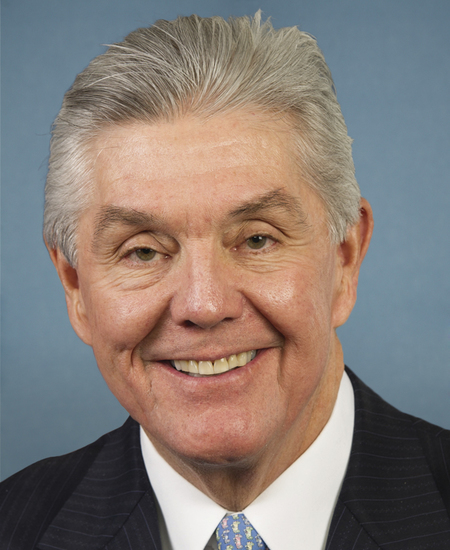
Rep. Roger Williams
Sponsored bills
Maddy summaryThe Working Dog Commemorative Coin Act (HR 807) directs the U.S. Treasury to mint three types of commemorative coins honoring working dogs' service: $5 gold coins, $1 silver coins, and half-dollar coins with specific weight and composition requirements. Each coin will carry a surcharge ($35 for $5 coins, $10 for $1 coins, $5 for half-dollars) that will be paid directly to America's VetDogs to support their programs providing service dogs for veterans, the disabled, and others. The coins will be issued in 2027 with designs reflecting working dogs' roles in military, detection, therapy, and assistance work. The legislation specifies that all surcharge revenue must fund America's VetDogs' operations without creating new government programs. This is a commemorative measure focused on honoring working dogs' contributions through coin sales, with all surcharge funds going to a specific nonprofit organization.
Maddy summaryHR 8706, the "Dismantle DEI Act of 2024," would prohibit federal agencies from maintaining diversity, equity, and inclusion (DEI) offices, programs, or training by requiring the closure of existing DEI offices within 90 days and banning federal funding for DEI-related activities. The bill defines "prohibited diversity, equity, and inclusion practices" as those that discriminate based on race, color, ethnicity, religion, biological sex, or national origin, or require training that asserts a particular group is inherently superior or inferior. It would rescind several executive orders related to racial equity and gender inclusion, and prohibit the use of federal funds for DEI-related activities across all federal agencies, contractors, and grant recipients. The bill contains limited exceptions for Equal Employment Opportunity offices and disability rights enforcement offices as historically organized and operated.
Maddy summaryThis bill reauthorizes federal funding for graduate medical education (GME) programs at children's hospitals through fiscal year 2028. It prohibits payments to any children's hospital that provided gender-affirming care to minors during the previous fiscal year (with a special rule for 2024 payments covering July-September 2023). The bill defines "gender-affirming care" as specific medical treatments like surgeries or puberty-blocking medications for gender transition, but excludes care for certain medical conditions or gender dysphoria treatment not classified as such. This directly affects hospitals receiving GME funding that serve minors, potentially impacting their federal support if they provided the specified care. The policy change modifies existing funding rules without altering broader healthcare access for minors.
Maddy summary# Summary of Proposed Higher Education Act Amendments This document outlines significant proposed amendments to the Higher Education Act of 1965, primarily as part of the "College Cost Reduction Act." The key elements include: ## Accreditation Reform - Major overhaul of accreditation standards, requiring accrediting agencies to demonstrate independence from trade associations - New requirements for accrediting agencies to assess student achievement outcomes, including median value-added earnings relative to median total price charged - Introduction of an "Alternative Quality Assurance Experimental Site Initiative" to test non-accredited institutions - Protections for religious institutions, including a new process for appealing accreditation decisions related to religious mission - Removal of "litmus tests" that would require institutions to support specific political viewpoints ## Student Success Initiatives - Establishment of "Postsecondary Student Success Grants" to increase participation, retention, and completion rates for high-need students - Focus on evidence-based practices, with tiered requirements (tier 1, 2, and 3 reforms) - Mandatory inclusion of high-need student populations (low-income, first-generation, military-connected, etc.) - Requirements for institutions to report on completion rates, retention rates, and student demographics ## Regulatory Changes - Repeal of numerous existing regulations including: * Closed school discharges * Borrower defense to repayment * Pre-dispute arbitration * False certification requirements * Ability-to-benefit rules * Financial responsibility regulations - New restrictions on incentive compensation for recruiters - Changes to third-party servicer definitions and regulations ## Transfer and Credit Policies - New requirement that institutions cannot deny transfer credit based solely on the source of accreditation - Requirements for transparent transfer policies - Changes to reverse transfer policies ## Other Key Provisions - Modifications to the National Advisory Committee on Institutional Quality and Integrity (NACIQI) - New definitions for "total price" and "value-added earnings" - Changes to the process for institutions to change accrediting agencies - New requirements for institutions to report on student outcomes The overall focus of these proposed amendments is to reduce regulatory burden on institutions, promote transparency, improve student outcomes (particularly for high-need students), modernize accreditation processes, and protect religious institutions' rights in accreditation decisions.
Maddy summaryHRES 1574 is a non-binding House resolution calling for the immediate removal of Federal Deposit Insurance Corporation (FDIC) Chairman Martin J. Gruenberg. It cites concerns about his leadership, including alleged mistreatment of staff, a "toxic workplace," staffing shortages, and failures in bank supervision that contributed to financial institution failures. The resolution does not change law or remove Gruenberg (as the President appoints FDIC leaders), but formally demands his removal. It was introduced by 25 Republican representatives and referred to the Financial Services Committee.
Maddy summaryThis bill would change how Social Security benefits are calculated for public servants who worked in jobs not covered by Social Security (such as many state and local government positions). It replaces the current Windfall Elimination Provision with a new formula that accounts for both covered and noncovered earnings when calculating benefits, rather than reducing benefits based on noncovered employment. The bill would provide additional monthly payments of $100 for some affected individuals and $50 for others, starting 270 days after enactment. It also requires Social Security account statements to show noncovered earnings and directs the Social Security Administration to study ways to improve information sharing with state pension systems about noncovered pensions. The changes would apply to benefits payable starting January 1, 2025.
Maddy summaryThis bill provides one-time financial assistance to U.S. farmers growing specific crops (like corn, soybeans, wheat, cotton, and rice) during the 2024 crop year if their expected costs exceed expected returns. Payments equal 60% of the difference between the expected cost of production per acre (based on USDA cost forecasts) and the expected gross return per acre (based on projected farm prices and yields). Payments are calculated using actual planted acreage plus 50% of acreage prevented from planting due to natural disasters, with annual caps of $175,000 or $350,000 depending on the farm’s primary income source. The program uses existing USDA data sources and applies standard farm payment limits.
Maddy summaryHR 9950, the "Miracle on Ice Congressional Gold Medal Act," authorizes three gold medals to be awarded to the members of the 1980 U.S. Olympic men's ice hockey team for their historic victory over the Soviet Union during the Winter Olympics. The medals, designed by the Treasury Secretary, will be presented by Congress to honor the team's achievement, which revitalized American morale during the Cold War. One medal will be displayed at the Lake Placid Olympic Center, one at the USA Hockey Hall of Fame in Eveleth, Minnesota, and one at the U.S. Olympic Museum in Colorado Springs. The bill also permits the sale of bronze duplicates to cover production costs. This is a ceremonial honor, not a policy change, directly recognizing the team members and their legacy.
Maddy summaryThis bill limits the Consumer Financial Protection Bureau's (CFPB) unused budget funds to 5% of its annual budget each fiscal year. Any excess funds above this 5% cap must be transferred to the U.S. Treasury. The CFPB must also report on how it uses any remaining unobligated balances, increasing transparency around its spending. The bill directly affects the CFPB's budget management practices.