

Operation Lone Star Reimbursement Act This bill allows Texas to receive reimbursement for expenses incurred from 2021 through 2025 related to securing the southern U.S. border. Texas must submit these expenses to the Department of Homeland Security (DHS) and the Department of the Treasury. DHS must review the submission within 120 days and determine which expenses are eligible for reimbursement. Treasury must pay such reimbursable expenses within 60 days.
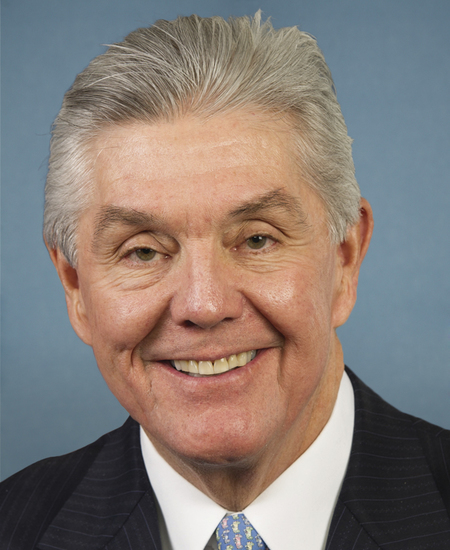
Rep. Roger Williams
Sponsored bills
Maddy summaryThis bill designates the Department of Veterans Affairs community-based outpatient clinic in Lubbock, Texas, as the "General Bernie Mittemeyer VA Clinic" upon enactment. It updates all official references in federal laws, documents, and records to reflect this new name. The bill does not alter services, funding, or operations at the clinic - its sole purpose is to honor General Bernie Mittemeyer through a ceremonial naming designation. This change affects only the clinic's official identification within federal systems.
Maddy summaryHR 1172 would amend the Social Security Act to prevent undocumented immigrants from earning Social Security credits for work performed in the U.S. without authorization. It specifically excludes wages earned and self-employment income derived during periods when an individual lacked work authorization from counting toward Social Security benefits. This change applies retroactively to all wages earned before, on, or after the law's enactment, affecting future benefit calculations for undocumented workers. The bill directly impacts individuals working without legal status, ensuring such work does not contribute to their Social Security eligibility or future benefits.
Maddy summaryHCONRES 8 is a non-binding congressional resolution urging the U.S. President to end the current "One China Policy" and recognize Taiwan as an independent country. It specifically calls for resuming normal diplomatic relations (including appointing ambassadors), negotiating a bilateral free trade agreement with Taiwan, and advocating for Taiwan's full membership in international organizations like the UN and WHO. The resolution argues that Taiwan has maintained democratic governance and independence for over 70 years, separate from the People's Republic of China. This resolution does not change U.S. law but expresses Congress's position on foreign policy toward Taiwan.
This resolution supports the designation of Career and Technical Education Month to celebrate career and technical education across the United States.
Maddy summaryHR 1046, the Marc Fischer Memorial Act, requires the Bureau of Prisons to implement digital mail scanning technology at all federal prisons to detect fentanyl and other synthetic drugs in inmate mail. It mandates a strategy within 90 days of an evaluation, including 100% scanning of all mail, digital copies of mail to inmates within 24 hours, and physical mail delivery within 30 days for non-contaminated items. The bill directly affects federal prison staff, inmates, and the Bureau of Prisons by aiming to reduce drug-related overdoses and alleviate staff workload tied to mail processing. Implementation must be completed within three years, with annual reports tracking detected drugs and strategy efficiency. The legislation focuses on concrete technological and procedural changes to enhance safety, referencing a successful pilot program at two facilities.
Maddy summaryHR 1094, the Amateur Radio Emergency Preparedness Act, prevents private restrictions (such as those in homeowners associations) from blocking amateur radio operators from installing and maintaining antennas for emergency communications. The bill directly affects over 770,000 licensed amateur radio operators in the U.S. who face such restrictions on their residential property. Key provisions include overriding unreasonable restrictions, requiring reasonable safety and building code compliance for allowed rules, setting a 45-day approval period for antenna installations (with deemed approval if not acted on), and exempting small antennas (under 1 meter, flagpoles ≤43 feet, or minimal wire antennas) from prior approval. This ensures amateur radio operators can quickly establish emergency communication systems without unnecessary delays or costs during crises.
Maddy summaryHR 1052, the UNPLUG EVs Act, rescinds unobligated federal funds from two electric vehicle infrastructure programs. It targets unused balances from the National Electric Vehicle Infrastructure Formula Program (established by the Infrastructure Investment and Jobs Act) and charging/fueling grant programs under federal highway law. These rescinded funds will be deposited into the U.S. Treasury's general fund to reduce the federal deficit. The bill does not alter existing program requirements or affect current EV infrastructure projects, only redirecting unspent allocated funds.
Fair Access to Banking Act This bill places restrictions on certain banks, credit unions, and payment card networks if they refuse to do business with a person who complies with the law. Restrictions include prohibiting the use of electronic funds transfer systems and lending programs, termination of an institution's depository insurance, and specified civil penalties. Banks and other specified financial institutions are allowed to deny financial services to a person only if the denial is justified by a documented failure of that person to meet quantitative, impartial, risk-based standards established in advance by the institution. This justification may not be based upon reputational risks to the institution. The bill establishes the right for a person to bring a civil action for a violation of this bill.
Maddy summaryHR 925, the "Dismantle DEI Act of 2025," would eliminate diversity, equity, and inclusion (DEI) programs across federal government operations. The bill requires federal agencies to close DEI offices, rescind related executive orders, and prohibit the use of federal funds for DEI training, offices, or initiatives. It defines "prohibited diversity, equity, or inclusion practice" as any activity that discriminates based on race, ethnicity, religion, biological sex, or national origin, or requires employees to complete training asserting that certain groups are inherently superior or inferior. The legislation also prohibits requiring employees to sign statements about race, ethnicity, or gender, and establishes private lawsuits for violations with potential damages of $1,000 per violation per day. This bill would directly affect federal agencies, contractors, grantees, and advisory committees receiving federal funding.