Maddy summaryHR 3033, the "Protecting the Mailing of Firearms Act," repeals a federal law (18 U.S.C. §1715) that previously prohibited mailing firearms and related items. This bill directly affects firearm sellers, buyers, and the U.S. Postal Service by removing the ban on mailing firearms, ammunition, and components. It also prohibits the Postmaster General from creating rules that would block firearm mailings or require disclosure of sales receipts, transaction records, or firearm serial numbers. The law takes effect immediately for pending cases and prevents new restrictions on firearm shipping through the postal system.
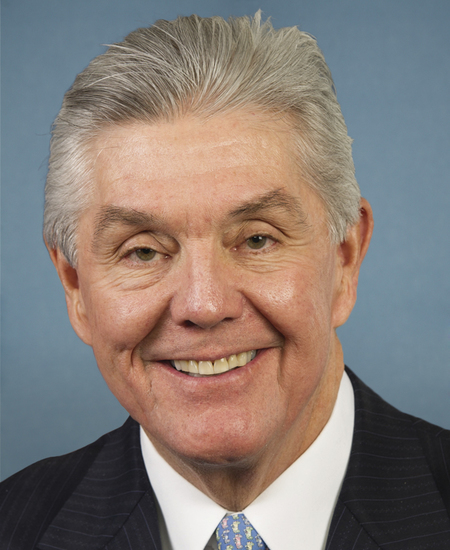
Rep. Roger Williams
Sponsored bills
Maddy summaryThe TAKE IT DOWN Act makes it a crime to intentionally share intimate images or digital forgeries of people without their consent, with penalties of up to 2 years in prison for adults and 3 years for minors. It requires major online platforms to establish a 48-hour process for victims to request removal of such content, with platforms protected from liability when acting in good faith. The bill defines "digital forgery" as AI-generated content that appears authentic and applies to websites and apps primarily hosting user-generated content, excluding email services and broadband providers. The Federal Trade Commission will enforce these notice and takedown requirements. This legislation directly affects victims of nonconsensual intimate content, the platforms hosting such material, and individuals who distribute it.
Maddy summaryHR 3028, the Duty Drawback Clarification Act, clarifies tariff classifications for whisky imports by updating the Harmonized Tariff Schedule. It replaces a general whisky tariff code with specific subheadings based on whisky type (Irish/Scotch, Bourbon, Rye, or "other") and container size (under or over 4 liters), adding 8 new statistical suffixes. This change directly affects whisky importers and U.S. Customs officials by standardizing how these products are classified for duty-free entry (as indicated by "Free" in the tariff). The new classifications take effect 15 days after the bill's enactment.
Maddy summaryHRES 343 is a ceremonial resolution commemorating the Battle of San Jacinto on April 21, 1836, where Texan forces defeated Mexican troops to secure Texas independence. It does not create new laws or affect any individuals or policies; it is a symbolic gesture recognizing this historical event. The resolution supports San Jacinto Day, honors the bravery of those who fought for Texas independence, and encourages reflection on freedom. As a commemorative measure, it has no legislative or binding effect.
Maddy summaryHRES 339 is a non-binding House resolution supporting the Second Amendment and criticizing the Biden administration's firearm-related policies. It does not create new laws or directly affect anyone; instead, it formally disapproves of specific Biden-era actions by the Bureau of Alcohol, Tobacco, Firearms, and Explosives (ATF) and Bureau of Industry and Security (BIS) that the resolution claims restricted constitutional rights. Key provisions include condemning ATF rules limiting firearm access, BIS policies restricting firearm exports, and the Biden administration's "gun control agenda," while commending former President Trump for seeking to reverse these policies. The resolution reaffirms the constitutional right to bear arms but has no legal effect, as it is a symbolic statement of legislative opinion.
Safeguard American Voter Eligibility Act or the SAVE Act This bill requires individuals to provide documentary proof of U.S. citizenship when registering to vote in federal elections. Specifically, the bill prohibits states from accepting and processing an application to register to vote in a federal election unless the applicant presents documentary proof of U.S. citizenship. The bill specifies what documents are considered acceptable proof of U.S. citizenship, such as identification that complies with the REAL ID Act of 2005 that indicates U.S. citizenship. Further, the bill (1) prohibits states from registering an individual to vote in a federal election unless, at the time the individual applies to register to vote, the individual provides documentary proof of U.S. citizenship; and (2) requires states to establish an alternative process under which an applicant may submit other evidence to demonstrate U.S. citizenship. Each state must take affirmative steps on an ongoing basis to ensure that only U.S. citizens are registered to vote, which shall include establishing a program to identify individuals who are not U.S. citizens using information supplied by certain sources. Additionally, states must remove noncitizens from their official lists of eligible voters. The bill allows for a private right of action against an election official who registers an applicant to vote in a federal election who fails to present documentary proof of U.S. citizenship. The bill establishes criminal penalties for certain offenses, including registering an applicant to vote in a federal election who fails to present documentary proof of U.S. citizenship.

Maddy summaryThis bill creates a $500 non-refundable tax credit for homeowners who purchase emergency generators for their primary residence. It applies only to individuals whose homes were in areas affected by two or more federally declared major disasters (excluding public health emergencies) within the past five years, and who previously received individual disaster assistance. The credit phases out for higher-income households ($300,000 joint filer limit, $150,000 for others) and expires two years after the bill becomes law. The credit covers generator costs up to $500 per household, aiming to help disaster-prone communities prepare for power outages.
Maddy summaryThis bill codifies a "maximum pressure" policy toward Iran, requiring the U.S. to maintain all sanctions until Iran meets specific conditions related to its nuclear program, missile development, support for terrorism, and human rights violations. It expands sanctions on Iran's Revolutionary Guard Corps (IRGC) and entities supporting Iran's ballistic missile program, while prohibiting waivers of sanctions on these entities. The bill mandates regular reports to Congress on Iran's nuclear activities, support for terrorist groups like Hamas and Hezbollah, and human rights abuses within Iran. It also directs the use of frozen Iranian assets to support victims of state-sponsored terrorism and prevents the release of funds that could benefit Iran's terrorist proxies. The bill aims to maintain economic and diplomatic pressure on Iran until it changes its behavior across multiple fronts.
Maddy summaryHR 2575 terminates specific financial authorizations related to Iran. It ends a 2023 waiver allowing funds transfer from South Korea to Qatar and all related licenses issued by the Treasury's Office of Foreign Assets Control (OFAC). The bill also prohibits the President from reissuing similar waivers or licenses that would permit the Iranian government or Iranian individuals to access certain financial accounts. This directly affects Iran's ability to access designated funds previously authorized under prior legislation. The law creates a permanent restriction on these financial arrangements without requiring new congressional approval.
Maddy summaryHR 2552, the RIFLE Act, repeals the federal tax on firearm transfers (Section 5811 of the Internal Revenue Code). This directly affects firearm sellers and purchasers by removing the tax paid when transferring firearms. The bill also updates related tax code references to reflect the repeal and specifies the tax removal applies to transfers after the law's enactment. It clarifies that the repeal does not change how firearms are regulated under the National Firearms Act or involve the Consumer Product Safety Commission.