

Maddy summaryThis bill repeals a law (18 U.S.C. § 1715) that previously prohibited mailing firearms without a license. It directly affects the U.S. Postal Service, firearm sellers, and individuals mailing firearms by preventing the Postal Service from creating rules that would block firearm mailings or require disclosure of sensitive records like sales receipts or firearm serial numbers. Key provisions include removing the existing ban on mailing firearms and prohibiting the Postal Service from imposing new restrictions on firearm mailings or demanding customer transaction data. The bill ensures that firearm mailings can proceed without these specific federal restrictions, while applying to ongoing legal cases under the repealed law.
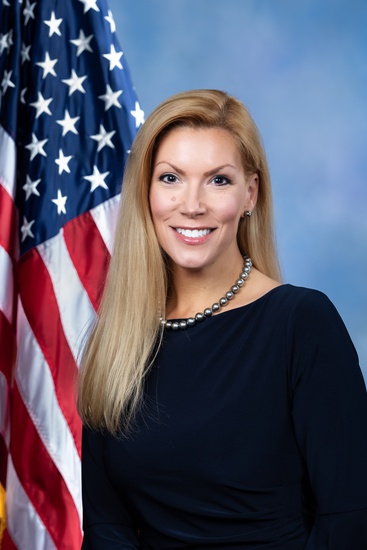
Rep. Beth Van Duyne
Sponsored bills
Maddy summaryThe Death Tax Repeal Act would eliminate the federal estate tax and generation-skipping transfer tax for estates of people who die on or after the bill's enactment date, and for generation-skipping transfers made after that date. It would also establish a new $10 million lifetime gift tax exemption (adjusted annually for inflation) and replace the existing gift tax rate schedule with a revised structure. These changes would primarily affect high-net-worth individuals and their heirs, as the estate tax and gift tax typically apply to large estates or gifts exceeding the new exemption threshold. The bill's provisions would take effect on the date of enactment, with transitional rules for the year the bill is signed into law.
Maddy summaryThe RIFLE Act of 2024 changes how the federal government handles violations by firearms licensees, affecting gun dealers and manufacturers who hold federal licenses. It creates a graduated penalty system where non-willful violations require the Attorney General to work with licensees to fix issues before taking action, while willful violations may lead to license suspension or revocation only after proper notice, hearing, and evidence of continued noncompliance. The bill establishes new procedures for administrative hearings, defines "willful" violations more clearly, and gives licensees 90 days to liquidate inventory after license expiration or revocation, with extensions possible for reasonable cause. These changes aim to create a more transparent process for addressing violations while maintaining public safety standards.
Maddy summaryThis bill raises the dollar threshold that determines when the National Labor Relations Board (NLRB) can handle labor disputes involving small businesses. It increases the threshold for 2023 to ten times the previous year’s amount and sets up an automatic annual adjustment using the Personal Consumption Expenditure Per Capita Index (starting in 2024) to keep pace with inflation. Small businesses with payroll below this higher threshold will no longer fall under the NLRB’s jurisdiction for labor disputes. The change directly affects small businesses and the NLRB’s ability to assert jurisdiction over their labor issues, shifting oversight away from the agency for smaller employers. The amendment applies to all NLRB decisions made after the bill’s enactment date.
Maddy summaryHR 6926, the Safe and Open Streets Act, makes it a federal crime to intentionally block public roads or highways to disrupt the movement of goods or commerce. The bill adds a specific offense under federal law for purposefully obstructing, delaying, or affecting commerce by blocking roads, with penalties including fines or up to five years in prison. It directly affects individuals who block roads to interfere with transportation or delivery of goods, such as during protests or demonstrations. The law updates existing statutes to clarify and strengthen penalties for this specific type of obstruction, without changing broader traffic or protest laws.
Maddy summaryHR 6762, the Protecting American Advanced Manufacturing Act, blocks tax credits for manufacturing components produced by companies linked to foreign adversaries (like China or Russia). It prohibits the Advanced Manufacturing Production Credit under tax code section 45X for any component made by a "disqualified entity," defined as companies with 10%+ ownership by foreign adversaries, subject to their control, or involved in prohibited financial arrangements (like debt or leases). This directly affects manufacturers relying on components from such entities, requiring them to source domestically or from non-adversary suppliers to qualify for the credit. The law takes effect for taxable years after its enactment, with the IRS given authority to establish implementation rules.
Maddy summaryHR 6734 prohibits the use of federal funds to finalize, implement, or enforce the Bureau of Alcohol, Tobacco, Firearms, and Explosives' (ATF) proposed rule (2022R-17) defining "engaged in the business as a dealer in firearms." This bill directly affects the ATF by blocking funding for this specific regulatory rule, which was proposed in August 2023. The legislation does not create new requirements but prevents federal resources from being used to advance this particular ATF regulation.
Maddy summaryThis bill establishes tax relief for qualified residents of Taiwan earning income in the United States by reducing tax rates on interest, dividends, and royalties to 10% or 15% (instead of the standard 30%). It also exempts certain wages and income from entertainment activities under $30,000 from U.S. taxation. To qualify, individuals must meet specific residency requirements, and entities must demonstrate substantial business activity in Taiwan. The bill modifies withholding tax procedures to implement these new rates and requires reciprocal tax benefits from Taiwan to be in place.
Maddy summaryHJRES 88 is a resolution seeking to block a Department of Education rule that would have improved income-driven repayment options for federal student loan borrowers. The rule, published in the Federal Register on July 10, 2023, targeted the William D. Ford Direct Loan Program and the Federal Family Education Loan (FFEL) Program. This resolution uses the Congressional Review Act process to disapprove the rule, preventing it from taking effect and preserving the current repayment structure. If enacted, it would stop the proposed changes to repayment terms without altering existing loan policies.
Maddy summaryHR 6619, the PATROL Act, prevents the federal government from suing states for building border barriers. It specifically blocks the Attorney General from filing civil lawsuits under the 1899 Act against states that construct physical barriers (like walls, fences, or buoys) along the border to stop illegal entry or protect state territory. The law directly affects states building such barriers and the federal government’s legal authority to challenge those actions. This is a procedural change that removes a legal obstacle for states pursuing border security measures.