

Maddy summaryHRES 396 is a non-binding House resolution recognizing motherhood on Mother's Day. It expresses support for the term "mother" and criticizes language alternatives like "pregnant people" or "birthing person," while stating mothers are defined as women. The resolution contains no policy changes or concrete effects - it is purely symbolic, affirming traditional definitions of motherhood without altering laws or impacting any programs. It was introduced by multiple House members and referred to the Education and Workforce Committee.
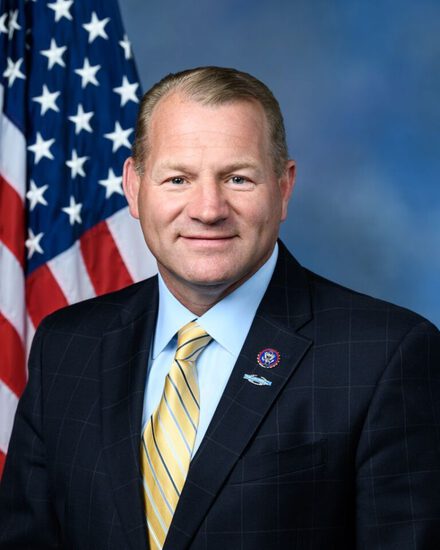
Rep. Troy E. Nehls
Sponsored bills
Direct Capital Access Act of 2023 or the DCA Act of 2023 This bill increases the number of daily round-trip flights allowed at Ronald Reagan Washington National Airport (DCA). Specifically, this bill adds 56 new slots at DCA to allow for 28 additional daily round-trip flights. (Airlines flying to and from DCA are subject to slot and perimeter rules set by federal law and regulation. The slot rules determine the total number of flight slots that can be handled in a given time period. In addition, a statutory perimeter rule limits nonstop flights to a 1,250-mile radius unless they are granted an exemption in law.) Current law limits DCA to a maximum of 67 hourly slots for flights both within- and beyond-perimeter; a round-trip flight serving DCA requires two slots (or a slot pair). Of those slots, 40 daily slots are exempt from the perimeter rule. Under the bill's slot increase, operations at DCA may not increase by more than eight flights per hour.
Maddy summaryThe HELPER Act of 2023 creates a new FHA mortgage insurance program specifically for first responders and K-12 teachers. It allows eligible first-time homebuyers in these professions to secure mortgages with 100% financing (no down payment required) for purchasing or repairing a primary residence. To qualify, applicants must be employed as law enforcement, firefighters, paramedics, or K-12 teachers, have completed housing counseling, and meet specific employment history requirements (e.g., 4 years in the role or disability-related release). The program authorizes $660,000 for fiscal year 2024 and $160,000 annually through 2030, with authority expiring after 5 years.
Airlines Independent of Restrictions Act or the AIR Act This bill directs the Department of Transportation (DOT) to rescind no fly zone restrictions over Disney World in Orlando, Florida, and Disneyland in Anaheim, California, imposed under Federal Aviation Administration Notices to Air Missions (NOTAMs) and stop maintaining the restrictions imposed under such notices. DOT may not issue a regulation or a NOTAM to impose a no fly zone over Disney World or Disneyland for a period longer than 30 days, with specified exceptions for national security concerns.
Maddy summaryHRES 339 is a non-binding House resolution expressing that an "all-of-the-above" energy strategy - including oil, gas, nuclear, coal, hydropower, and renewables - is the most viable approach to U.S. energy policy. It states this strategy would strengthen national security, lower consumer energy prices, and reduce reliance on foreign energy sources. The resolution highlights that domestic energy production supports infrastructure funding, job creation, and energy independence, while noting U.S. energy sources like Gulf of Mexico oil and nuclear power provide clean, reliable electricity. As a statement of congressional opinion, it does not create new laws or policy changes.
Maddy summaryHR 3115, the Public Service Reform Act, changes employment rules for most federal career employees (non-political appointees) by establishing at-will employment, meaning they can be fired for any reason - including no reason - without needing cause. It abolishes the Merit Systems Protection Board (MSPB), replaces its role with agency-level procedures for removals (including a 14-day response window for employees), and limits appeals to the agency head or federal courts for specific claims like whistleblower retaliation. The bill also redirects certain appeals to the Equal Employment Opportunity Commission (EEOC) for discrimination cases and modifies whistleblower protections to allow direct court appeals for retaliation claims. These changes directly affect over 1 million career federal workers across executive agencies.
Maddy summaryHR 3039, the DRIVE Act, prohibits the Federal Motor Carrier Safety Administration (FMCSA) from requiring speed limiting devices on trucks weighing over 26,000 pounds operating in interstate commerce. This directly affects commercial trucking companies and drivers transporting goods across state lines. The bill's key provision explicitly bans the FMCSA from issuing any rule mandating such devices, which are typically set to limit vehicle speed. The law applies specifically to interstate trucking operations and does not affect state-level regulations.
Scope 3 Act This bill prohibits any securities law requirement that an issuer of securities must disclose the greenhouse gas emissions of its value chain (i.e., scope 3 emissions).
Maddy summaryHR 2991, the TEACH Act of 2023, modifies federal education law to tie funding to school firearm policies and create grants for defensive training. It prohibits the Department of Education from funding schools that restrict firearm possession beyond existing federal limits (Section 2(b)), and directs the Secretary to award competitive grants using ESEA funds for "defensive training programs" focused on firearm use for school safety (Section 3(a)). These programs include training on carrying, using, and storing firearms on school property to protect students from intruders (Section 3(e)(1)). The bill directly affects schools receiving federal education funds by requiring them to allow firearm possession for training or face funding restrictions, and prioritizes grant applications from entities supporting Second Amendment rights.
Maddy summaryThis bill creates a federally chartered National Center for the Advancement of Aviation to develop the U.S. aviation and aerospace workforce. The Center will provide grants for education and training programs, including scholarships, internships, and curriculum development for middle schools, high schools, and colleges focused on aviation careers. It will specifically support underrepresented groups and veterans transitioning to aviation careers while coordinating with government agencies to avoid duplicating existing programs. The Center must operate as a non-profit entity, maintain tax-exempt status, and submit annual reports to Congress on its activities.