

Maddy summaryHR 3933, the TAP Promotion Act, requires standardized presentations about Veterans Affairs (VA) benefits during military transition counseling for service members separating from the armed forces. These presentations must be approved by the VA, delivered by authorized veterans service organizations (VSOs), and include information on how VSOs assist with VA claims - without encouraging membership in specific organizations. The bill mandates a one-hour limit per presentation and requires the VA to submit annual reports to Congress detailing which VSOs presented, attendance numbers, and recommendations for improvement. This policy directly affects service members preparing for civilian life and the VSOs providing these transition resources.
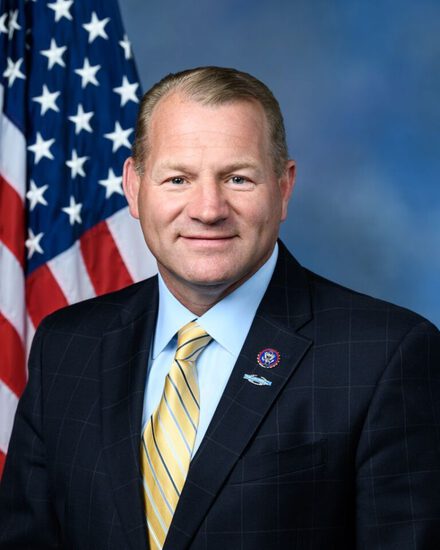
Rep. Troy E. Nehls
Sponsored bills
Maddy summaryThis bill directs the U.S. Treasury to mint commemorative coins marking the Marine Corps' 250th anniversary in 2025. It authorizes three coin types: $5 gold coins (max 50,000), $1 silver coins (max 400,000), and half-dollar coins (max 750,000), with surcharges of $35, $10, and $5 respectively. The surcharge proceeds will fund the Marine Corps Heritage Center's educational programs, with no net cost to taxpayers as the Treasury must recover all minting costs through the surcharges. The coins can only be issued during 2025, and the Treasury must ensure all costs are covered before distributing funds to the Heritage Foundation.
Maddy summaryThis bill would prohibit government employees from directing or encouraging social media platforms to censor protected speech. It defines "covered information" to include phone calls, digital communications, photos, shopping history, location data, and other user information. The bill creates a private right of action for people affected by government interference with their speech, requires government agencies to report communications with platforms about content moderation, and terminates the Disinformation Governance Board. It directly affects government employees, social media platforms, and users whose speech might be impacted by government requests to moderate content.
Cease Animal Research Grants Overseas Act of 2023 or the CARGO Act of 2023 This bill prohibits the National Institutes of Health from awarding support for any research that uses live animals unless the research occurs in the United States (including U.S. territories and possessions).
Maddy summaryHR 4678, the PLANE Act, requires federal agencies to develop procedures for deploying small nuclear microreactors (under 20 megawatts) as backup power at airports during natural disasters, replacing current diesel generators. The bill mandates that the Nuclear Regulatory Commission, FAA, FEMA, and Energy Secretary collaborate within 270 days to create deployment plans, considering factors like transportation, grid integration, and maintenance. This directly affects FAA-certified airports by requiring updates to emergency plans and airport operational regulations (14 CFR §139.325) to include microreactors as a backup power option. The law aims to address the 72-hour fuel limit of diesel generators by enabling reliable, clean energy during power disruptions, with agencies required to submit reports and update guidance within 120-180 days of finalizing procedures.
Maddy summaryHR 4675, the Advisory Committee on Reactor Safeguards Reform Act, reforms the Nuclear Regulatory Commission's (NRC) Advisory Committee on Reactor Safeguards (ACRS) to modernize its role. The bill requires the ACRS to limit reviews to "novel or safety-significant" reactor issues (not routine topics), changes how the ACRS chairman is selected (by NRC Commission majority), and prohibits the committee from forming subcommittees. It also exempts ACRS-related costs (like meeting preparation) from fee recovery requirements. This directly affects the ACRS, NRC staff, and nuclear reactor licensing applicants by streamlining the review process for safety-critical applications.
Maddy summaryHR 4676, the Nuclear Red Tape Reduction Act, streamlines nuclear licensing by requiring the Nuclear Regulatory Commission (NRC) to use risk-informed, performance-based techniques "to the maximum extent practicable" when reviewing applications. It shortens deadlines for certain hearings (from 60 to 45 days for combined licenses) and clarifies when hearings are mandatory for construction permits. The bill also mandates the NRC to submit a report within 120 days detailing how it determines license renewal terms and "adequacy of licensee programs" under existing rules. These changes directly affect nuclear power companies seeking licenses and the NRC, aiming to reduce regulatory delays without altering substantive safety standards.
Maddy summaryHR 4674, the Advanced Nuclear Feasibility Act, provides federal grants to fund feasibility studies for siting, constructing, and operating advanced nuclear reactors. Eligible applicants include universities, private companies (like airport or hospital owners), and state/local governments in states with approved nuclear deployment plans. The studies must analyze electricity demand, grid capacity, environmental impacts, licensing, workforce needs, and economic feasibility, with applicants covering 60% of costs (reducible under specific conditions). The program requires competitive grants and mandates reports on study details for congressional review.
Maddy summaryHR 4677, the LOAN Act, extends eligibility for federal loan guarantees to advanced nuclear reactor demonstration projects under the Energy Policy Act of 2005's Section 959A(b) for 15 years from its enactment. This change modifies existing provisions in the Department of Energy Loan Programs Office, the Omnibus Appropriations Act of 2009, and the Department of Defense Appropriations Act of 2011 to include these projects under the same loan guarantee rules as other energy infrastructure. It directly affects developers of advanced nuclear reactor demonstration projects seeking federal financial support through the Energy Policy Act's established program. The bill makes no new funding commitments but adjusts eligibility criteria for existing loan guarantee programs.
Maddy summaryHR 4663, the Federal Mechanical Insulation Act, defines "mechanical insulation" (insulation around pipes and equipment in federal buildings) as an eligible energy efficiency measure. It requires federal agencies to include mechanical insulation in their required energy and water evaluations, specifically mandating that evaluations identify this insulation as a potential efficiency measure. The bill specifies that such insulation must meet minimum standards under Reference Standard 90.1 to qualify. This change directly affects federal building managers and contractors by formally recognizing mechanical insulation as a standard efficiency option in compliance with existing energy conservation laws.