

Maddy summaryHR 5084 designates the U.S. Postal Service facility at 1106 Main Street in Bastrop, Texas, as the "Sergeant Major Billy D. Waugh Post Office." This bill updates all official federal references - including laws, maps, and documents - to use the new name for the location. It directly affects the Bastrop post office and federal records referencing it, without altering postal services or policies. The change is purely ceremonial and procedural, honoring Sergeant Major Billy D. Waugh through the facility's name.
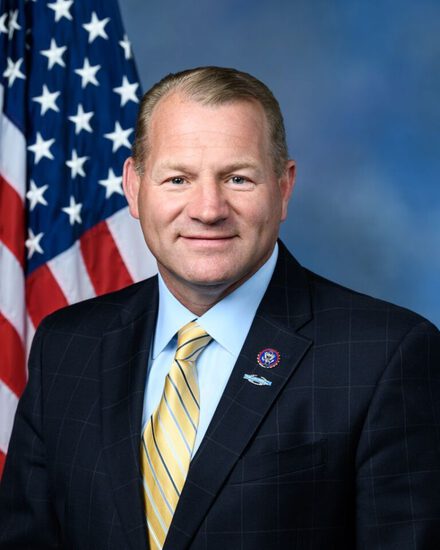
Rep. Troy E. Nehls
Sponsored bills
Maddy summaryHR 5073, titled the "Promoting Domestic Energy Production Act," is a tax code amendment affecting oil and gas companies. It changes how businesses calculate adjusted financial statement income by removing specific deductions related to intangible drilling and development costs from their financial reports. The bill requires companies to disregard depreciation and depletion expenses taken into account on their financial statements for these costs when computing taxable income. This applies to tax years beginning after December 31, 2022, directly impacting oil and gas producers who use these accounting methods. The bill does not create new energy policies but alters tax accounting rules for the industry.
Maddy summaryThis bill amends U.S. Code to allow capital construction funds - previously used for vessel upgrades - to cover the replacement or purchase of cargo handling equipment at U.S. marine terminals. It defines "cargo handling equipment" to include U.S.-manufactured gear or foreign-made equipment if U.S. supply is insufficient or low-quality, as determined by terminal operators. The bill prohibits using funds for cranes made in China or fully automated equipment that could cause job losses at terminals. Marine terminal operators (not individual vessels) are the primary beneficiaries, with eligibility tied to equipment meeting specific U.S. manufacturing or supply criteria.
Maddy summaryThis bill prohibits federal involvement in commercial greyhound racing, live lure training, and open field coursing by banning interstate activities related to these practices. It makes it unlawful to conduct betting on greyhound races (including remote gambling), use live animals as bait, or transport animals for these purposes. The law specifically targets the declining greyhound racing industry (now operating at only two tracks in West Virginia), banning federal facilitation of betting, live bait use, and interstate transport of animals for racing or training. It does not affect horse racing or state laws already prohibiting these activities in most states.
This resolution condemns Iran for the 1988 massacre of political prisoners. It also urges the Biden Administration and U.S. allies to publicly condemn the massacre and to pressure Iran to provide information to the families of the victims.
Maddy summaryHRES 628 would terminate the Office of Diversity and Inclusion within the U.S. House of Representatives. The bill specifically eliminates the office and amends House Rules (including Rule II and Rule X) to remove all references to it. This resolution would end the office's existence and its role in overseeing diversity and inclusion initiatives for House staff and operations. The change applies solely to the House's internal structure and does not affect other legislative functions or external policies.
Maddy summaryHR 4922, the Lacey Act Amendments of 2023, establishes a new rule that generally prohibits importing non-native wildlife species (including mammals, birds, fish, amphibians, and reptiles) into the U.S. unless they were imported in "more than minimal quantities" during the year before the law passed or the Secretary of the Interior determines they pose no significant invasion risk. This directly affects importers and businesses handling non-native wildlife, requiring them to meet specific criteria to legally import such species. The bill also grants the Secretary emergency authority to immediately ban imports of a species deemed an imminent threat to humans, agriculture, or wildlife, with a 3-year limit on such bans. The new rules take effect one year after enactment, with the Secretary required to define "minimal quantities" within that timeframe.
Maddy summaryThis bill clarifies legal pathways for victims of terrorism to collect judgments against foreign states that sponsor attacks. It removes barriers by updating references in federal law to ensure victims can pursue claims under Section 2333(d)(1) without being blocked by prior legal interpretations. The bill also expands the definition of "national of the United States" to include U.S.-organized entities for these cases, making it easier for more victims to qualify. These changes apply to all pending or future lawsuits filed after the bill's enactment.
Maddy summaryHR 4517, the Ensuring Voluntary Actions are Compensated Act of 2023 (EVAC Act), requires the Secretary of State to create a plan within 120 days to reimburse U.S. citizens, lawful permanent residents, and eligible Afghan allies for personal expenses paid to evacuate during August 1-November 1, 2021. The plan must detail eligibility, reimbursement limits, claim processes, required documentation, and processing timelines for those who used personal funds to evacuate. It mandates consultation with the Defense Secretary and relevant NGOs/veteran groups, and includes cost estimates and a list of consulted organizations. The bill directly affects individuals and entities who covered evacuation costs during this specific period, aiming to provide financial compensation for voluntary evacuation efforts.
Maddy summaryHR 4461 requires the Department of Veterans Affairs (VA) to mandate that disability benefit questionnaires collected by non-VA medical professionals be transmitted to the VA in a machine-readable digital format within 180 days of enactment. This affects veterans applying for disability benefits (claimants), non-VA healthcare providers conducting examinations, and the VA itself. The bill mandates the VA to issue technical standards for this format within 90 days and update questionnaires to maintain machine-readability, while also requiring the VA to submit an IT system modification plan to Congress. The VA must publicly post these standards and the IT plan on its website.