

Maddy summaryThe PRIDE Act of 2023 amends the Internal Revenue Code to replace gender-specific terms like "husband and wife" with gender-neutral language such as "married couple" or "spouses" across numerous tax code sections. This bill affects all legally married couples who file federal tax returns by updating language in over 30 sections of the tax code related to filing status, deductions, credits, and other tax matters. The bill is a language update that makes the tax code more inclusive without changing existing tax treatment for married couples. It does not alter tax rates, benefits, or policies, but ensures all provisions apply equally regardless of gender.
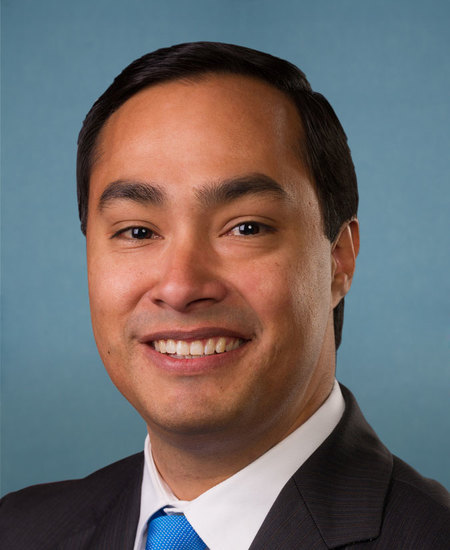
Rep. Joaquin Castro
Sponsored bills
Maddy summaryThe SAFE Act of 2023 extends a 2018 law that prohibits slaughtering animals for human consumption to include horses, donkeys, and other equine animals, such as ponies. It amends Section 12515 of the Agriculture Improvement Act of 2018 by updating the language to replace "dog or cat" with "dog, cat, or equine" in both the section title and the main prohibition. This change directly affects the livestock industry and slaughter facilities by banning the processing of equines for food. The bill modifies existing law without adding new enforcement mechanisms, closing a gap in animal protection.
Maddy summaryHR 4285, titled the Protect Vulnerable Immigrant Youth Act, would amend the Immigration and Nationality Act to remove numerical caps on certain employment-based visas. Specifically, it changes two sections to add a new visa category (J) to the list of categories exempt from annual numerical limits, allowing more employment-based visas to be issued without current restrictions. This change would directly affect employers and foreign workers seeking employment-based visas under the newly designated category (J), though the bill does not specify what the (J) category entails. The bill focuses solely on adjusting visa allocation rules rather than addressing youth protection or other aspects implied by its title.
Maddy summaryHJRES 76 proposes renaming the Robert E. Lee Memorial in Arlington National Cemetery to the "Arlington House National Historic Site." This procedural bill would replace all official references to the memorial with the new name and repeal two prior resolutions (1955 and 1972) that established the memorial. The change affects how the site is identified in federal laws, documents, and records but does not alter its management or historical significance. The bill focuses solely on the official designation, not on policy changes or historical interpretation.
Maddy summaryThe Equality Act (HR 15) would amend federal civil rights laws to explicitly prohibit discrimination based on sexual orientation and gender identity in public accommodations, housing, employment, credit, and jury service. It amends the Civil Rights Act of 1964 to include sexual orientation and gender identity as protected characteristics under existing sex discrimination provisions. The bill would require businesses, housing providers, employers, and government entities to provide equal access and services without regard to a person's sexual orientation or gender identity. It includes specific definitions for gender identity and sexual orientation to clarify protections across all covered areas. The law would apply to all entities covered by the Civil Rights Act of 1964, including those receiving federal funding.
Maddy summaryHR 4121, the Right to Contraception Act, establishes a federal statutory right for individuals to access contraceptives and contraception services without government restriction or coercion, directly affecting all people seeking reproductive care and health care providers. The bill prohibits state or federal laws that limit access to contraceptives (defined broadly to include devices, drugs, and fertility methods), prevent individuals from obtaining or using them, or allow providers to refuse services based on personal beliefs. It preempts conflicting state laws, requires any restrictions to be justified by "clear and convincing evidence" of advancing access with no less restrictive alternative, and allows private lawsuits to challenge violations. The Act applies nationwide to all health care providers and individuals, protecting access regardless of factors like race, income, or location.
Maddy summaryThis symbolic resolution (HRES 517) expresses congressional support for the existing tradition of observing the third Sunday in June as "Father's Day," which has been recognized since 1972. It acknowledges fathers' roles in families and society, citing statistics about fatherhood in the U.S. The resolution specifically urges support for policies like universal paid family leave, affordable childcare, and a permanent child tax credit - though these are framed as recommendations, not new laws. It does not create new legal requirements or change the Father's Day designation itself.
Maddy summaryHR 4179, the Reverse Transfer Efficiency Act of 2023, allows students to request their previous college coursework records be sent back to earlier institutions to apply toward completing a degree or recognized credential. It directly affects students who attended multiple colleges but didn’t finish a degree at their first school. The bill amends federal education privacy law to add a new provision (M), permitting institutions to share student records with prior schools *only* after the student provides written consent. This creates a clear process for students to use transferred credits toward a completed credential without requiring additional enrollment. The change simplifies a common barrier to degree completion for transfer students.
Maddy summaryHR 4169 repeals the 25% cap on U.S. contributions to United Nations peacekeeping operations, which has caused over $1.28 billion in unpaid arrears since 2017. The bill directly affects U.S. financial obligations to the UN, requiring full payment of assessed contributions to restore U.S. influence and address funding shortfalls impacting peacekeeping missions. Key mechanisms include removing the statutory cap (repealing Section 404 of the 1994 Foreign Relations Authorization Act) and mandating reports on U.S. efforts to advance UN peacekeeping reforms. These reforms include promoting gender equality in peacekeeping, improving accountability for misconduct, and strengthening mission transitions.
Maddy summaryHR 4166, the Support UNFPA Funding Act, authorizes annual U.S. funding for the United Nations Population Fund (UNFPA) over five years. It directly supports UNFPA’s global programs serving women and girls in over 150 countries, particularly focusing on reducing preventable maternal deaths, expanding access to contraception, ending gender-based violence, and addressing harmful practices like female genital mutilation and child marriage. The bill specifically directs funding toward UNFPA’s core work in developing nations, humanitarian crises (such as in Ukraine and Yemen), and rebuilding health systems post-pandemic, without altering UNFPA’s existing operations or policies.