

Maddy summaryHR 9082, the Summit of the Americas Act, authorizes the U.S. government to regularly host the Summit of the Americas every four years (or more frequently with funding) to strengthen cooperation with Western Hemisphere nations and partner groups. It specifically directs the Secretary of State to coordinate a separate "Cities Summit of the Americas" as part of each main summit, focusing on subnational city and regional leaders. The bill creates a new State Department implementation unit to track U.S. and partner commitments from these summits, requiring quarterly public updates and annual congressional reports for five years. This act directly affects the State Department's operations and U.S. diplomatic engagement with Western Hemisphere partners.
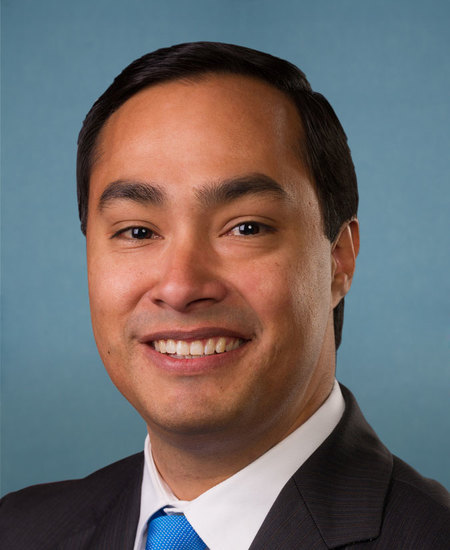
Rep. Joaquin Castro
Sponsored bills
Maddy summaryHR 3433, the "Give Kids a Chance Act of 2024," requires pharmaceutical companies developing certain cancer drugs to conduct pediatric studies if the drugs target molecular pathways relevant to childhood cancers. It directly affects drug manufacturers submitting new applications for cancer treatments, particularly those combining previously approved adult cancer drugs or containing a single new active ingredient. The bill amends FDA regulations to mandate these pediatric investigations only when specific conditions are met, such as when a drug's molecular target is relevant to pediatric cancer growth. The FDA must issue implementing guidance within 12 months, and reports to Congress will track implementation and effectiveness starting 2 years after enactment.
Maddy summaryThis House resolution (HRES 1471) condemns disinformation campaigns by foreign actors like Russia, China, and Venezuela in Latin America and the Caribbean, and calls for multi-stakeholder action to protect democratic governance and human rights. It directly urges social media companies to improve Spanish-language content moderation, boost fact-checking partnerships, and increase transparency, while requesting regional governments strengthen independent media and coordinate anti-disinformation efforts. The resolution also asks U.S. agencies to expand support for media literacy, public diplomacy, and cross-platform cooperation to counter disinformation, without creating new laws or imposing penalties. It focuses on concrete policy steps like better detection of non-English disinformation and bolstering local fact-checking initiatives.
Maddy summaryThis resolution (HRES 1472) symbolically recognizes the heritage, culture, and contributions of Latinas in the United States. It highlights their economic impact (over 2 million Latina-owned businesses), societal roles (48,000+ active-duty Latinas in the military, 18% of women-owned businesses), and ongoing challenges like the pay gap (Latinas earn 57 cents for every dollar earned by White, non-Hispanic men). The resolution notes that Latinas represent 1 in 5 U.S. women and will comprise 25% of the female population by 2060. As a non-binding resolution, it does not create new policies or allocate funds, but formally honors their contributions and acknowledges the need for continued progress.
Maddy summaryHR 6319 (the 911 SAVES Act of 2023) requires the Office of Management and Budget to reclassify public safety telecommunicators as "Protective Service Occupations" within 30 days of enactment. This change corrects their current misclassification in the federal Standard Occupational Classification (SOC) system, which is used for statistical data on jobs. The bill directly affects how these professionals - critical in emergency calls involving missing children, active threats, and officer safety - are officially categorized in government workforce data. It does not create new benefits or funding but aims to better recognize their lifesaving role through accurate federal job classification.
Maddy summaryThis bill directs the U.S. government to immediately restore funding to the United Nations Relief and Works Agency for Palestine Refugees (UNRWA), reversing a temporary funding pause. It repeals two appropriations acts that halted payments and requires the Secretary of State to resume UNRWA funding under existing authorities. The legislation specifically aims to support UNRWA’s critical humanitarian work - providing shelter, education, healthcare, and aid to Palestinian refugees across Gaza, the West Bank, Syria, Lebanon, and Jordan - during an acute famine risk in Gaza. It also mandates quarterly reports to Congress on UNRWA’s implementation of reforms from an independent review, ensuring accountability for its humanitarian mission.
Maddy summaryThe Strengthening Science Through Diplomacy Act (HR 9619) would authorize the U.S. President to extend existing legal protections - such as immunity from certain lawsuits - to CERN, the European Organization for Nuclear Research. This would allow CERN to operate in the U.S. with the same legal safeguards typically granted to international scientific organizations the U.S. collaborates with through treaties. The bill does not involve funding changes or new programs but adjusts the legal framework to formally include CERN under current international organization immunity provisions.
Maddy summaryHRES 1437 is a ceremonial resolution designating the week beginning September 9, 2024, as "National Hispanic-Serving Institutions Week." It recognizes Hispanic-serving institutions (HSIs) - colleges and universities with at least 25% Hispanic enrollment - and their role in educating low-income students, advancing economic mobility, and serving 31.7% of all undergraduate students. The resolution calls for the public and organizations to observe this week with ceremonies and activities during Hispanic Heritage Month. It does not create new laws, allocate funding, or change existing policies - it is purely a symbolic gesture of recognition.
Maddy summaryHRES 1056 is a non-binding House resolution recognizing recent trilateral cooperation among the United States, Japan, and South Korea. It formally acknowledges specific collaborative efforts, including resumed summitry, joint military exercises, shared missile warning systems, economic partnerships, and coordinated responses to regional challenges like North Korea and crises in Sudan and Israel. The resolution does not create new policies or funding but expresses congressional support for strengthening this alliance framework. It highlights the importance of continued cooperation across diplomatic, security, and economic domains to promote stability in the Western Pacific. The resolution was introduced by multiple House members and referred to the Foreign Affairs Committee.
Maddy summaryThis resolution (HRES 1406) commemorates the 175th anniversary of formal diplomatic relations between the United States and Guatemala, established on January 31, 2024. It honors the contributions of Guatemalan-Americans to U.S. society, recognizes Ambassador Francisco Villagrán de León’s service, and acknowledges ongoing U.S.-Guatemala cooperation on trade, migration, anti-corruption efforts, and shared democratic values. The resolution includes non-binding statements urging Guatemala to address corruption, support indigenous communities, protect activists, and continue recognizing Taiwan, while calling on the U.S. to counter Chinese economic coercion against Guatemala. As a commemorative resolution, it does not create new laws or obligations but formally acknowledges historical and current bilateral ties.