

Maddy summaryHR 6751 authorizes the U.S. Mint to produce commemorative coins honoring Roberto Clemente, a Hall of Fame baseball player and humanitarian, including 50,000 $5 gold coins, 400,000 $1 silver coins, and 750,000 half-dollar coins. The coins must feature Clemente's image and inscriptions like "Roberto Clemente" and "2027," with all sales including a surcharge ($5-$35 per coin) paid to the Roberto Clemente Foundation. The foundation, which supports youth sports, education, and disaster relief programs, will use these funds for its mission, while the U.S. Treasury must recover all production costs. The coins will be sold exclusively in 2027, with no net cost to the government.
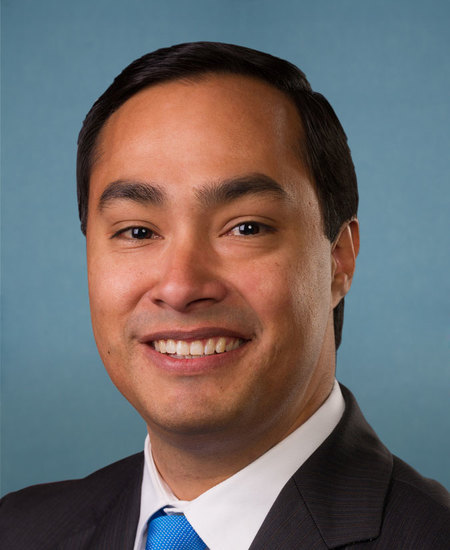
Rep. Joaquin Castro
Sponsored bills
Maddy summaryThis bill allows the U.S. section of the International Boundary and Water Commission (IBWC) to accept funding from federal or non-federal sources - including grants - to support wastewater treatment and flood control projects along the U.S.-Mexico border. It specifies that funds received must be deposited into a designated Treasury account and used solely for studying, building, operating, and maintaining these specific infrastructure works. The bill directly affects the IBWC’s ability to secure external funding for border water management, benefiting communities and ecosystems in border regions reliant on these systems. It does not change existing policies but streamlines the Commission’s process for managing such projects.
Maddy summaryH.J. Res. 226 would block a proposed U.S. military sale to the United Arab Emirates (UAE) of specific defense systems, including 259 rocket pods (holding 1,554 guided missiles) and 203 missile systems. The resolution prohibits the transfer of these defense articles and services to the UAE government by requiring congressional disapproval under the Arms Export Control Act. If passed, it would halt the sale described in Transmittal No. 20-79.
Maddy summaryHR 10224 requires individuals nominated for certain senior civilian positions in the Department of Defense, Treasury, State Department, and intelligence agencies to publicly disclose foreign financial ties and work within 5 days of nomination. It mandates a detailed statement about foreign government funds received or services provided (over the past 5 years) on a public website. If nominees have foreign work history requiring a waiver, the relevant agency head must report that information to the Senate Foreign Relations or Armed Services Committees. The bill directly affects presidential nominees for these specific national security roles, focusing on transparency about potential foreign connections before Senate confirmation.
Maddy summaryThis bill establishes a Coordinator within the State Department to manage the relocation and resettlement of eligible Afghan allies and to assist U.S. citizens and lawful permanent residents in Afghanistan who seek U.S. support to leave the country. The Coordinator can hire temporary staff (preferring Foreign Service appointments), enter contracts, and coordinate with other federal agencies to use their funds for these efforts. The Coordinator must notify relevant congressional committees 15 days before transferring funds between agencies. The position and its authorities will expire three years after the bill becomes law.
Maddy summaryThis bill establishes the Advisory Council on African Diaspora Engagement within the U.S. Department of State. The council, composed of up to 12 members representing diverse African American and African immigrant communities, advises the Secretary of State on strengthening U.S. government connections with the African diaspora in the United States. Key functions include recommending strategies to advance equity, support UN initiatives, expand cultural and economic programs (like the Young African Leaders Initiative), and foster diaspora engagement in trade and development. The council meets quarterly, reports to relevant congressional committees, and operates using existing Department of State funding.
Maddy summaryHCONRES 131 is a symbolic resolution recognizing the wage gap between Latina women and White, non-Hispanic men in the U.S. workforce. It highlights that Latina women working full-time earn 58 cents for every dollar earned by White, non-Hispanic men, with an average lifetime earnings loss of over $1.2 million. The resolution designates October 3, 2024, as "Latina Equal Pay Day" to draw attention to this disparity, citing Bureau of Census data showing the gap has persisted for decades. It does not create new laws or policies but formally acknowledges the economic impact on Latina women and their families.
Maddy summaryHRES 1516 is a resolution passed by the U.S. House of Representatives to commend Big Brothers-Big Sisters of America on its 120th anniversary. It recognizes the organization’s work in providing youth mentorship that helps young people graduate from school and plan for their future. The resolution highlights how the organization, operating in over 5,000 communities nationwide, has supported millions of young people through long-term mentor relationships. As a symbolic gesture, it does not create new laws or policies but expresses congressional support for the organization’s mission.
Maddy summaryHRES 1499 is a symbolic resolution expressing concern about rising book bans in U.S. schools and libraries, citing PEN America data showing over 10,000 individual book bans in public schools between July 2023 and June 2024 - more than double the previous year. It highlights how bans disproportionately target books featuring LGBTQ+ themes, racial history, and marginalized voices (like *The Handmaid’s Tale*, *Maus*, and *Fry Bread*), while emphasizing students’ First Amendment rights to access diverse materials. The resolution calls on school districts and libraries to follow established best practices for handling book challenges and to protect students’ right to read widely, including works reflecting diverse perspectives. As a non-binding resolution, it does not create new law but urges local education entities to uphold free expression.
Maddy summaryThe DISPOSE Act authorizes the U.S. government to partner with Colombia, Mexico, and Peru to safely destroy chemicals used in illegal drug production. It requires the State Department, in coordination with Justice and Defense, to create a detailed implementation plan within 90 days - including timelines, budgets, and measurable goals - and provide annual progress reports to Congress on chemical destruction efforts. The initiative aims to prevent these chemicals from re-entering drug manufacturing, free storage space for future seizures, and reduce environmental harm from hazardous waste.