

Protecting Election Administration from Interference Act of 2021 This bill revises preservation and retention requirements for federal election records. It also revises criminal penalties related to election records and the voting process. Under current law, election officials must, for a period of 22 months from the federal election, retain and preserve all election-related records and papers. This bill extends the requirement to electronic records and electronic equipment. Next, the bill directs the Cybersecurity and Infrastructure Security Agency to issue minimum standards and best practices for retaining and preserving records (including electronic records), papers, and electronic equipment, including protocols for observing their preservation, security, and transfer by the Department of Justice (DOJ) and a representative of each political party. In addition, the bill revises the federal criminal offense related to election records or papers to include reckless disregard of election record requirements resulting in the theft, destruction, concealment, mutilation, or alteration of a record, paper, or electronic equipment. Further, the bill allows DOJ to demand electronic records and electronic equipment for inspection and generally prohibits DOJ from disclosing this information. The bill allows DOJ and candidates for federal office to bring an action in a district court to compel compliance with election record requirements. Finally, the bill extends criminal penalties related to voting interference to include intimidating, threatening, or coercing (or attempting to do so) an individual for processing or scanning ballots, tabulating, canvassing, or certifying voting results.
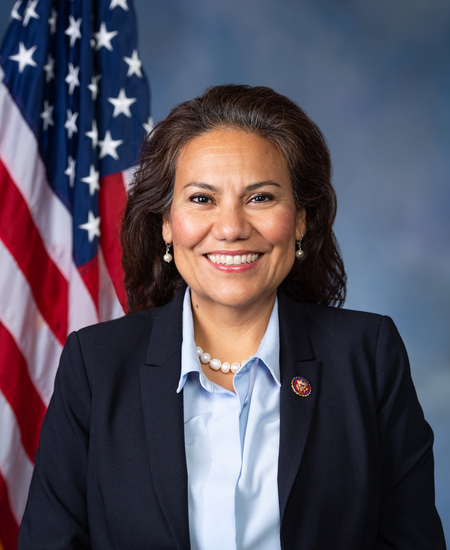
Rep. Veronica Escobar
Sponsored bills
Hold Accountable and Lend Transparency on Campus Sexual Violence Act of 2021 or the HALT Campus Sexual Violence Act of 2021 This bill addresses dating violence, domestic violence, sexual assault, or stalking incidents on college campuses, including by expanding requirements governing the disclosure of such incidents and efforts to prevent them. Specifically, the bill requires the Department of Education (ED) to make available an online survey tool regarding student experiences with domestic violence, dating violence, sexual assault, harassment, and stalking. ED must publish a biennial report that includes campus-level data for each institution of higher education (IHE). The bill permits ED to impose civil penalties on IHEs that have violated a law under the jurisdiction of its Office for Civil Rights. In addition, the bill directs ED, the Department of Health and Human Services, and the Department of Justice to create a task force on sex-based harassment and violence in education.
Unlawful Gun Buyer Alert Act This bill establishes a notification requirement following a firearms-related background check that results in a denial. Specifically, the bill requires the national instant criminal background check system to notify federal, state, and local law enforcement agencies if a firearms-related background check determines that an individual is ineligible to receive or possess a firearm. The notification requirement applies even if more than three business days have elapsed since the background check was initiated, and a firearm has already been transferred to the individual.
Customs Business Fairness Act of 2021 This bill modifies the treatment of claims by customs brokers for unpaid customs duties in chapter 11 (reorganization) bankruptcy proceedings.
Supreme Court Ethics Act This bill establishes a new statutory requirement for the Judicial Conference of the United States to issue a judicial code of conduct for judges and justices of U.S. courts, including Justices of the Supreme Court. Currently, the Judicial Conference issues a code of conduct for judges of U.S. courts (but not for Justices of the Supreme Court).
Improving Access for Afghan Refugees Act This bill requires the Department of State to provide priority refugee status to eligible habitual residents of Afghanistan. To be eligible for such priority status, a habitual resident of Afghanistan must also be a national of Afghanistan or stateless. Such an individual shall receive priority refugee status if the individual (1) has suffered persecution or has a well-founded fear of persecution and worked in a specified field that makes the individual a target of persecution on account of race, religion, or other characteristics; (2) was employed for at least one year in Afghanistan by U.S.-based media or nongovernmental entities or an entity that received a contract or grant from the U.S. government; or (3) is the beneficiary of a visa petition sponsored by a relative who is a U.S. citizen or permanent resident. The State Department may also provide priority status to other groups of individuals who are nationals and residents of Afghanistan. Certain annual numerical limits on refugee admissions shall not apply to individuals who receive priority status under this bill. For refugee applications under this bill, the State Department and the Department of Homeland Security shall ensure that all steps in the approval process in the U.S. government's control are completed within six months of an application's submission, with exceptions for cases that need more time to address national security concerns.
Daniel Anderl Judicial Security and Privacy Act of 2021 This bill generally prohibits federal agencies and private businesses from publicly posting the personally identifiable information (e.g., home addresses) of federal judges and their immediate family members. It also (1) requires information to be removed upon written request from the federal judge concerned, (2) prohibits data brokers from purchasing or selling such information, and (3) establishes programs to protect such information at the state and local level and to enhance security for judges.
America's Cultivation of Hope and Inclusion for Long-term Dependents Raised and Educated Natively Act of 2021 or the America's CHILDREN Act of 2021 This bill provides lawful permanent resident status to certain college graduates who entered the United States as children and addresses other immigration-related issues. Specifically, this bill allows an alien to apply for lawful permanent resident status if the alien (1) was lawfully admitted into the United States as a dependent child of an alien on a temporary worker visa, (2) was in the United States with such status for at least four years, (3) has graduated from an institution of higher education in the United States, and (4) is not deportable or otherwise inadmissible. In addition, the alien must have been lawfully present in the United States for at least 10 years at the time of the application. The bill also modifies various provisions related to the calculation of an alien's age for immigration purposes and the priority date of certain immigration-related applications.
Inclusive Elections Act of 2021 This bill requires courts, when hearing challenges to election laws, to consider whether the law has a disparate impact on members of a protected class of citizens. Specifically, the bill requires courts to consider whether (1) the challenged standard, practice, or procedure imposes a disparate burden on members of a protected class of citizens; and (2) the disparate burden is related to social and historical conditions that produce discrimination against members of the protected class.
Even Playing Field Act This bill addresses pay equity for amateur athletes and other personnel. It allows recognition, or continued recognition, of a national governing body of an amateur sports organization only if it provides equal investment, promotional support, working conditions (including staff support and facilities and equipment for training and competition), and wages and other compensation to all amateur athletes, without discrimination based on sex. National governing bodies must report periodically to Congress regarding pay equity. Each report shall include (1) the median compensation for amateur athletes, coaches, trainers, managers, administrators, and officials, disaggregated by race, gender, and employment category; and (2) the minimum and maximum compensation paid to such personnel, disaggregated by race, gender, and employment category.