

Maddy summaryThis bill removes a barrier for college students seeking food assistance by amending the SNAP program rules. It directly affects students enrolled at least half-time in recognized colleges or training programs, who were previously automatically ineligible unless they met separate requirements. The key change eliminates the prior restriction (in section 6(e)) that barred most higher education students from SNAP, allowing them to qualify under the new provision in section 3(m)(5)(F). The changes take effect January 2, 2024.
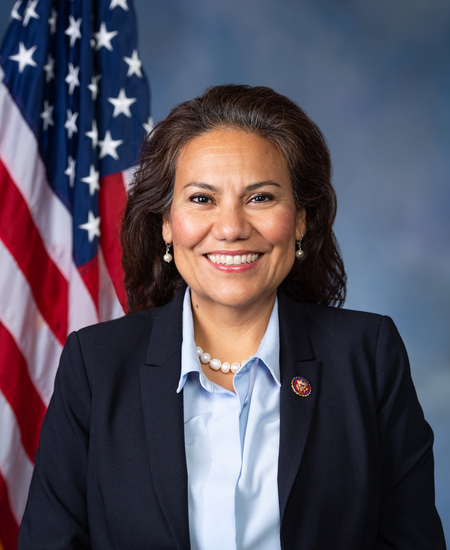
Rep. Veronica Escobar
Sponsored bills
Maddy summaryThe SHOPP Act (HR 3127) expands the types of healthy foods SNAP participants can buy with their benefits. It allows fresh frozen fruits and vegetables to count toward nutrition incentives year-round and adds legumes (like beans and lentils) to the list of eligible items. This directly affects SNAP recipients by increasing access to affordable, nutritious options beyond just fresh produce. The changes take effect March 6, 2024, modifying the 2008 Food, Conservation, and Energy Act.
Pigs in Gestation Stalls Act of 2023 or the PIGS Act of 2023 This bill expands the Animal Welfare Act to prohibit certain methods of confining breeding pigs that restrict their movement. In addition, it establishes a program that provides financial assistance to pig producers to assist them in complying with the prohibitions.
Maddy summaryHR 3165, the Military Housing Transparency and Accountability Act, requires the military to create a new database tracking complaints about housing units occupied by service members and their families who do not own their housing. It mandates an annual report to Congress summarizing all complaints, categorized into specific types like mold or lead hazards (physiological), security issues (psychological), safety risks, and maintenance problems (timeliness and quality). This directly affects military members and their dependents living in government-provided housing. The bill aims to improve transparency by making complaint data publicly available and requiring the military to report on actions taken to resolve issues.
Tribal Gaming Regulatory Compliance Act This bill allows the Ysleta del Sur Pueblo and Alabama-Coushatta tribes to conduct gaming activities on their land in Texas if certain conditions are met. Currently, the Ysleta del Sur Pueblo and Alabama-Coushatta Indian Tribes of Texas Restoration Act prohibits the tribes from conducting gaming activities on their land if those activities are prohibited by Texas law. The bill repeals those provisions and instead applies the Indian Gaming Regulatory Act (IGRA) to gaming activities on Indian lands of the tribes.
Maddy summaryHR 3548, the Pursuing Equity in Mental Health Act, aims to reduce mental health disparities for racial and ethnic minority groups by directing federal funding and policy changes. It increases annual grants for primary/behavioral health services to $60 million in 2023 and $80 million yearly through 2029, prioritizing entities serving minority communities. The bill requires the NIH to study mental health disparities within 9 months and mandates new training for mental health professionals (including social work and psychiatry) on culturally appropriate care. Additionally, it funds a $15 million annual outreach strategy to combat stigma and improve access to care, requiring materials tailored to cultural and language needs of minority groups.
Maddy summaryHR 3523, the Perinatal Workforce Act, provides $15 million annually from 2024 to 2028 to expand and diversify maternity care providers. It directs HHS to issue guidance for states on recruiting diverse providers (including midwives, nurses, and community health workers) and requires grant recipients to prioritize students from racial/ethnic minority groups, implement bias training, and target health professional shortage areas. The bill also mandates annual reporting on workforce diversity and outcomes, and requires a GAO report assessing barriers to equitable access in maternal healthcare. This legislation directly affects hospitals, nursing schools, midwifery programs, and insurers by funding targeted workforce development to address racial disparities in maternal care.
Maddy summaryHR 3420, the My Body, My Data Act of 2023, restricts how companies can handle reproductive and sexual health data - such as pregnancy details, contraceptive use, or abortion-related information - by requiring them to collect only what’s necessary for requested services and limiting employee access. It gives individuals the right to access, correct, or delete their data, see which third parties received it, and get clear privacy policies explaining data practices. The Federal Trade Commission enforces the law, with penalties for violations including $100-$1,000 per violation per day, and bans retaliation for exercising these rights. The law applies to companies (like health apps or insurers) but excludes HIPAA-covered healthcare providers and entities subject to existing federal health privacy rules.
Maddy summaryThe Maternal Vaccination Act amends public health law to specifically target vaccination outreach for pregnant and postpartum individuals and their children, directly affecting public health campaigns and health agencies. It updates existing provisions to include these groups in awareness efforts, requires new activities to increase vaccination rates - particularly among racial and ethnic minority communities - and increases annual funding from $15 million to $17 million for fiscal years 2024-2028. Key mechanisms include revising language in the Public Health Service Act to explicitly cover pregnant/postpartum individuals in campaign descriptions and adding a new requirement (Section 317(k)(1)(E)(vii)) to address vaccination equity. The bill focuses on concrete policy changes to expand access and awareness, not on predicting outcomes.
Maddy summaryThe Kira Johnson Act (HR 3310) provides $100 million annually from 2024-2028 to fund community-based organizations working to improve maternal health outcomes for racial and ethnic minority groups with elevated rates of maternal mortality, severe maternal morbidity, and health disparities. It requires hospitals to establish respectful maternity care compliance programs allowing patients to report racism or bias, and mandates training for all maternity care employees to address bias, racism, and discrimination. The bill also requires annual reports on program effectiveness and studies to evaluate strategies for reducing bias in maternity care settings. These provisions directly affect hospitals, maternity care providers, community-based organizations, and pregnant and postpartum individuals from racial and ethnic minority groups.