

Maddy summaryHRES 90 is a resolution demanding the Chinese government immediately release Mark Swidan, a U.S. citizen from Texas who has been detained since 2012 on drug trafficking charges. The resolution cites the UN Human Rights Council Working Group finding his detention arbitrary, with no evidence of drug offenses, passport records showing he wasn’t in China during the alleged crimes, and China denying his family contact and medical care. It specifically condemns China for blocking U.S. diplomatic access and calls on the U.S. government to prioritize Swidan’s release through diplomatic channels. The resolution focuses on the case’s documented legal and humanitarian issues, not broader policy implications.
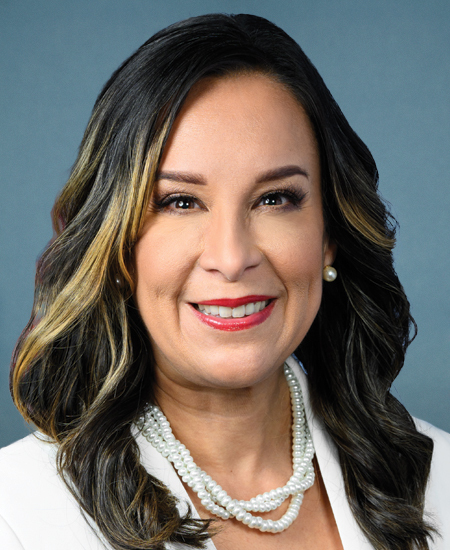
Rep. Monica De La Cruz
Sponsored bills
Maddy summaryHR 2420 requires the USDA to contract with land-grant universities to review the Cattle Fever Tick Eradication Program. The review must evaluate the program's effectiveness, benefits and compliance burden for cattle producers, treatment protocols, and funding allocation. Within one year, the USDA must submit a report to Congress with findings and recommendations for improving the program, including reducing producer burdens. This bill focuses on reviewing an existing program, not changing its operations.
Maddy summaryHR 734, the Protection of Women and Girls in Sports Act of 2023, amends Title IX to prohibit federally funded schools and athletic programs from allowing individuals assigned male at birth to participate in women's or girls' sports teams. The bill defines "sex" for this purpose as "reproductive biology and genetics at birth," making it a violation of federal law to permit such participation in designated women's or girls' programs. It allows males to train with women's teams only if no female is deprived of a roster spot, competition opportunity, scholarship, or other benefit tied to the team. This law directly affects public and private schools receiving federal financial assistance that operate athletic programs.
Maddy summaryHR 2808, the Arnold Daniel Palmer Commemorative Coin Act, authorizes the U.S. Mint to produce three commemorative coins in 2029 honoring golfer Arnold Palmer: $5 gold coins (50,000 max), $1 silver coins (400,000 max), and half-dollar clad coins (750,000 max). The bill requires coin designs to feature Palmer's image and includes surcharges ($35 for gold, $10 for silver, $5 for half-dollar) that fund the Arnold & Winnie Palmer Foundation. All surcharge revenue must support the Foundation's work in youth health, character development through golf, and nature wellness programs. The coins are legal tender but will only be issued in 2029, with all funds covering minting costs before surcharges are directed to the Foundation.
This resolution condemns the deliberate gas attacks on schoolgirls in Iran (up to 7,000 schoolgirls were poisoned in at least 290 attacks, according to human rights groups) and Iran's suppression of individuals participating in demonstrations. The resolution also urges the United States to initiate a formal process for an independent investigation and to work with the United Nations in investigating the gas attacks on schoolgirls in Iran.
Maddy summaryHR 2743 prohibits large financial institutions (over $100 billion in assets) from denying banking services to lawful businesses based on subjective political reasons, industry type, or reputational concerns. It requires these institutions to use objective, risk-based assessments for service decisions and provide written justifications for denials. The law applies to banks, credit unions, and payment networks, with civil penalties for violations including fines up to $10,000 per incident. It specifically ensures businesses operating legally under federal law receive fair access to financial services without discrimination. The bill mandates that denials be based on documented risk factors, not political bias or category-based exclusion.
American Innovation and R&D Competitiveness Act of 2023 This bill eliminates the five-year amortization requirement for research and experimental expenditures, thus allowing continued expensing of such expenditures in the taxable years in which they are incurred.
Maddy summaryHR 2728, the Young Farmer Success Act, expands student loan forgiveness eligibility under the Higher Education Act to include full-time farm and ranch workers. It directly affects young agricultural workers employed as employees or managers at farms meeting specific revenue thresholds. The key provision adds "full-time job engaged in farm work" as a qualifying employment type for loan forgiveness, requiring farms to earn at least $35,000 in gross revenue from agricultural sales in 2023 (with annual inflation adjustments based on the Consumer Price Index). This amendment modifies existing loan forgiveness rules without creating new programs, applying to workers meeting the farm revenue criteria.
Maddy summaryHJRES 27 is a congressional resolution seeking to block a federal rule that redefined which waterways fall under the Clean Water Act's protections. It targets a rule submitted by the Army Corps of Engineers, Department of Defense, and Environmental Protection Agency (EPA) on January 18, 2023, which aimed to revise the "Waters of the United States" definition. The resolution would formally disapprove this rule under a specific federal procedure (Chapter 8 of Title 5), preventing it from taking effect. This would directly affect how federal agencies regulate pollution and development near water bodies, including wetlands and smaller streams.
Maddy summaryHR 2665 delays Medicaid payment reductions for safety net hospitals by two years, changing the effective date from 2024 to 2026 under Section 1923(f)(7)(A) of the Social Security Act. This bill directly affects hospitals that serve high numbers of low-income and uninsured patients, providing them with additional time before facing reduced federal Medicaid payments. The key mechanism is a technical amendment to existing law, postponing an already scheduled payment adjustment without altering funding levels or eligibility. As a procedural bill, it does not create new programs or change hospital requirements.