

Prison Staff Safety Enhancement Act This bill requires the Department of Justice to adopt national standards for the prevention, reduction, and punishment of sexual harassment and sexual assault by incarcerated individuals against correctional officers or other employees of the Bureau of Prisons.
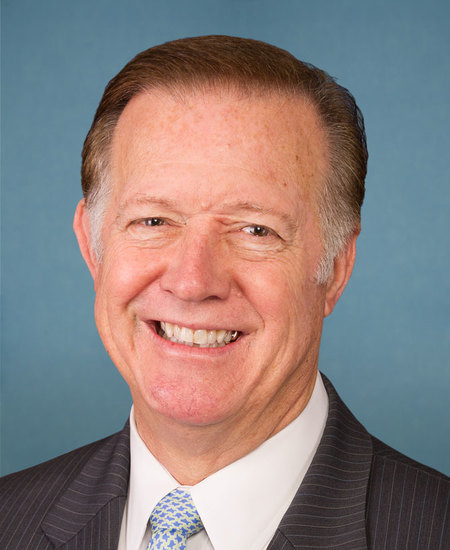
Rep. Randy K. Weber, Sr.
Sponsored bills
Maddy summaryThis bill expands the Anti-Boycott Act of 2018 to cover boycotts promoted or enforced by international governmental organizations (IGOs), not just foreign countries. It adds "international governmental organization" to key definitions in the law and requires the President to annually report to Congress on foreign countries and IGOs that foster or impose such boycotts. The law directly affects U.S. businesses and entities subject to boycotts by IGOs, like the United Nations or World Trade Organization. The changes are technical amendments to existing definitions and reporting requirements.
Medicare Patient Access and Practice Stabilization Act of 2025 This bill increases certain payment adjustments under the Medicare physician fee schedule for services furnished between April 1, 2025, and January 1, 2026.
Maddy summaryHR 833 creates a federal tax credit for individuals and corporations that contribute to scholarship granting organizations (SGOs) providing scholarships for elementary and secondary education. The credit allows taxpayers to deduct up to 10% of their adjusted gross income or $5,000 (whichever is less) for contributions to SGOs serving students from households with income up to 300% of the area median income. The bill establishes a $10 billion annual cap on the tax credit program, requires SGOs to verify student eligibility and maintain separate accounts, and prohibits government control over SGOs or private schools. It ensures scholarships can be used at public, private, or religious schools without discrimination based on religious character. The tax credit would be available for contributions made after December 31, 2025, with annual volume cap increases based on usage.
Maddy summaryHR 899 would end the U.S. Department of Education by December 31, 2026, terminating its federal agency status. This bill directly affects all federal education programs and operations currently managed by the Department, such as student aid and school funding. The key mechanism is a fixed termination date, requiring the transfer of the Department's responsibilities to other federal agencies without specifying new administrative structures. The bill focuses solely on ending the agency's existence, not altering education policy or funding mechanisms.
Drug Cartel Terrorist Designation Act This bill directs the Department of State to designate four specified drug cartels as foreign terrorist organizations. (Among other things, such a designation allows the Department of the Treasury to require U.S. financial institutions to block transactions involving the organization.) The four specified cartels in the bill are the Gulf Cartel, the Cartel Del Noreste, the Cartel de Sinaloa, and the Cartel de Jalisco Nueva Generacion. The bill also requires the State Department to submit a detailed report on those four cartels and any other cartels it may identify. Based on this report, the State Department must designate as a foreign terrorist organization any such identified cartel (or faction thereof) that meets certain criteria for designation as a foreign terrorist organization. The bill specifies that it may not be construed to expand eligibility for asylum.
Maddy summaryThe RULES Act requires asylum seekers to apply only at official U.S. ports of entry, not elsewhere in the country. It prohibits releasing applicants into the United States while their asylum application is pending. This directly affects individuals seeking asylum who cross the border without entering through designated ports. The law does not apply to people already inside the U.S. without authorization or who overstayed their visa.
Maddy summaryHRES 71 is a symbolic House resolution condemning Mexico for not meeting annual water delivery obligations to the U.S. under the 1944 U.S.-Mexico treaty governing the Colorado, Tijuana, and Rio Grande rivers. The resolution specifically states that the House "condemns the Government of Mexico for failing to fulfill its water deliveries" as required by the treaty. It does not impose new requirements or penalties but serves as a formal expression of disapproval. This resolution directly addresses the U.S. government's position regarding Mexico's compliance with the existing treaty terms. As a procedural resolution, it has no binding legal effect on water delivery operations.
Maddy summaryHR 768, the Holocaust Education and Antisemitism Lessons Act, requires the U.S. Holocaust Memorial Museum Director to study how states and school districts currently teach about the Holocaust and antisemitism in K-12 schools. The study will examine curriculum requirements, teacher training, educational materials used, and assessment methods across all states and a representative sample of school districts and schools. It specifically aims to identify gaps, resources needed, and how schools address antisemitism and genocide prevention in their teaching. The Museum must submit a report to Congress within three years of the bill's enactment, detailing findings on current practices and challenges. This bill does not mandate new teaching requirements but seeks to understand existing approaches to Holocaust education.
Maddy summaryThe GORAC Act of 2025 requires the government's watchdog office (Comptroller General) to conduct a comprehensive evaluation of federal agencies and programs every 10 years, starting within one year of the bill's enactment. A non-Federal auditor will identify duplicative, wasteful, or outdated programs - recommending consolidation of agencies with identical functions or elimination of those that wasted funds, completed their purpose, or failed to meet goals. Any savings from these changes must be used to reduce the national debt, and affected federal employees must be offered relocation assistance within government positions. The bill applies broadly to most federal agencies and programs (excluding military installations and pure entitlement programs), with Congress required to consider implementation bills based on the auditor's recommendations within 15 days of submission.