

Maddy summaryHR 3592, the Protect LNG Act of 2025, prevents court challenges from halting LNG export permits during litigation. It requires courts to send environmental review disputes back to federal agencies (like the Department of Energy or FERC) instead of canceling permits, and mandates that agencies continue processing all LNG facility applications. The bill also sets a strict 90-day deadline for filing legal challenges after a permit is finalized. This directly affects LNG companies seeking export approvals and federal agencies overseeing these projects.
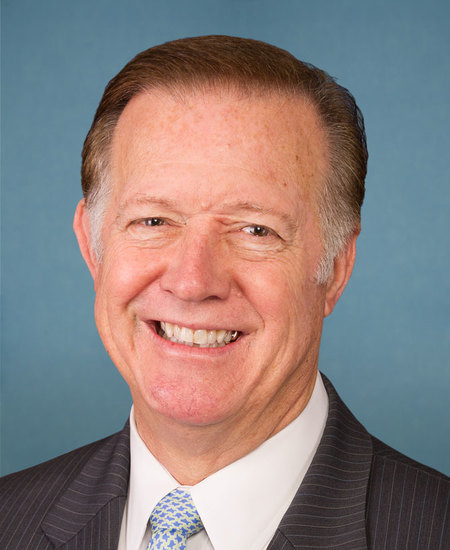
Rep. Randy K. Weber, Sr.
Sponsored bills
Maddy summaryThe Critical Infrastructure Security Act expands the scope of foreign investment reviews by requiring the Committee on Foreign Investment in the United States to evaluate transactions involving critical infrastructure (including drinking water systems) and facilities of the intelligence community or National Laboratories. It mandates that federal agencies annually review and update a list of sensitive facilities for national security or critical infrastructure reasons, then submit these reports to Congress. The bill also requires the committee to publicly report on reviews of such transactions. This law directly affects how the government assesses foreign investments in key infrastructure and government facilities.
Maddy summaryThe REACT Act directs FEMA to provide technical and financial support to state, local, and tribal emergency management authorities to improve their alert systems. It requires funding for community exercises, clear role definitions in alert chains, standardized message templates based on research, and metrics to measure system effectiveness. The bill mandates annual reports tracking training participation, system coverage, public feedback, and opt-out rates, with $30 million annually allocated from 2025-2035. It does not require specific alert systems but focuses on enhancing coordination and public understanding of existing emergency alerts. The program expires after 10 years.
Maddy summaryHR 5108 prohibits U.S. states from receiving federal Edward Byrne Memorial Justice Assistance Grant Program funds if they issue driver licenses to individuals without proof of U.S. citizenship or lawful presence, or if they restrict government entities from sharing immigration enforcement data with Homeland Security. States violating these rules must return unspent federal grant funds within 30 days and remain ineligible for future grants until they pass laws requiring driver license eligibility proof and permitting immigration data sharing. The bill directly affects states that currently issue licenses to undocumented immigrants or block information sharing with federal immigration authorities. It imposes concrete financial penalties rather than altering driver licensing rules themselves.
Maddy summaryH.J.Res. 118 is a symbolic resolution proposing that September 12, 2025, be designated as "The Day of the Bible" in the U.S. It does not create new laws or affect specific groups. The resolution asks Congress to express support for the designation and encourages schools, civic groups, and communities to hold educational activities about the Bible's historical role. It also requires the President to issue an annual proclamation for this day, recognizing the 1782 approval of the Aitken Bible as a milestone in American history. The bill is purely ceremonial with no legal obligations.
Maddy summaryHR 5075, the GRACE Act, requires schools receiving federal education funds to allow religious exemptions from vaccination requirements without requiring documentation. It directly affects K-12 public schools and school agencies that receive federal funding, as they must permit students (or their parents/guardians for minors under 18) to skip vaccinations based on religious belief. The key provision mandates that schools cannot demand proof of a religious belief to grant such exemptions. This changes how schools handle vaccination policies for enrollment, attendance, and school activities when receiving federal education dollars.
Maddy summaryThis bill amends Title IX to clarify that "female," "male," and "sex" refer to biological characteristics (egg-producing or sperm-producing reproductive systems). It explicitly states that schools receiving federal funding cannot be forced to eliminate sex-segregated spaces (like bathrooms or locker rooms) or sex-segregated athletic/academic programs. The bill directly affects all schools and colleges that accept federal education funding, ensuring they may maintain such programs without losing that funding. Key mechanisms include adding specific definitions to Title IX and prohibiting the Secretary of Education from making funding contingent on ending sex-segregated facilities or programs.
Maddy summaryThis bill creates a federal database identifying state or local governments that conflict with immigration enforcement laws. It prohibits federal funding for any jurisdiction listed in this database, which includes entities that block cooperation with immigration detainers, restrict arrests of certain immigrants, or prevent officials from interviewing incarcerated individuals about immigration status. The database must be updated quarterly and made public within 90 days of the bill's enactment. This directly affects local governments that have policies limiting collaboration with federal immigration authorities.
Maddy summaryThe Primacy Certainty Act of 2025 sets strict deadlines for the Environmental Protection Agency (EPA) to review state applications for regulating Class VI wells (used for carbon sequestration). If the EPA fails to approve, deny, or partially approve a complete state application within 180 days, the application is automatically approved 30 days later - provided the state already regulates other well types. The bill requires the EPA to explain delays, list deficiencies in incomplete applications, and process pending permits before states assume oversight. This directly affects states seeking to manage carbon sequestration well regulation instead of relying on federal oversight.
Maddy summaryHR 4871, the COVID-19 Military Backpay Act of 2025, allows military members discharged for non-compliance with the 2021 Department of Defense COVID-19 vaccination mandate to seek legal remedies. It provides a pathway for affected service members (active/reserve, National Guard) to file civil actions in the Court of Federal Claims, arguing their discharges were involuntary. If successful, the court can award compensation for missed inactive-duty training, retroactively count service time toward retirement (including 20-year or 18-year milestones), restore retirement benefits, and deem members eligible for reenlistment with two additional years of service. The bill specifically restores benefits like retirement pay and medical care that were lost due to the discharge, without reducing compensation for civilian employment earned afterward.