Natural Immunity Is Real Act This bill requires all federal agencies to acknowledge and consider natural immunity to COVID-19 when promulgating any regulation related to the COVID-19 public health emergency.
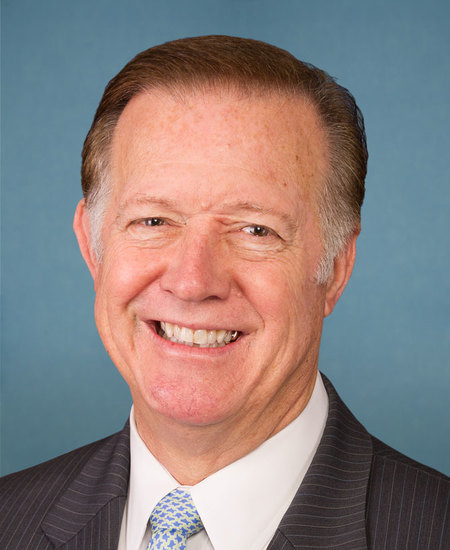
Rep. Randy K. Weber, Sr.
Sponsored bills
Prohibiting IRS Financial Surveillance Act This bill prohibits the Department of the Treasury from requiring a financial institution to report the transfers into and out of a financial account. This prohibition does not apply to laws or regulations in effect on October 1, 2021.
Accountability in Foreign Animal Research Act This bill prohibits the National Institutes of Health from conducting or supporting research that involves testing on vertebrate animals in China, Cuba, Iran, North Korea, Russia, or other countries determined to be a foreign adversary.
National Security and Federal Lands Protection Act This bill prohibits the Department of the Interior and the Department of Agriculture from restricting certain U.S. Customs and Border Protection (CBP) activities pertaining to border enforcement and addresses related issues. Specifically, neither department may impose restrictions on CBP actions taking place on federal land under their respective jurisdictions and located within 100 miles of an international border if the CBP actions involve search and rescue operations and the prevention of all unlawful entries into the United States. CBP shall have immediate access to such federal lands to conduct various activities, including the installation and maintenance of roads, barriers, and surveillance equipment. Furthermore, the Department of Homeland Security (DHS) may waive the application of certain legal requirements on such federal lands if DHS determines that the waiver is necessary to ensure the expeditious construction of border barriers and roads. DHS may waive only specified laws, including the National Environmental Policy Act of 1969, the National Historic Preservation Act, and certain provisions of the Administrative Procedure Act.
No Taxation Without Congressional Consent Act This bill prohibits assessing a fine, fee, or tax against any person who violates a COVID-19 vaccine mandate issued by the Occupational Safety and Health Administration or other executive agency.
This resolution condemns any actions taken by any terrorist organization or government in Afghanistan to oppress women and girls. It also demands that the Taliban preserve and advance the rights and freedoms of all women and girls.
Israel Relations Normalization Act of 2021 This bill requires the Department of State to take certain actions promoting the normalization of relations between Israel, Arab states, and other relevant countries and regions. Specifically, the State Department must develop a strategy on expanding and strengthening the Abraham Accords (the term used to refer collectively to agreements between Israel and the United Arab Emirates and between Israel and Bahrain marking the public normalization of relations between the two Arab countries and Israel). The strategy must include a description of how the U.S. government will encourage further normalization of relations with Israel. In addition, the State Department must report on options for U.S. international efforts to promote the strengthening of ties between Israel, Arab states, and other relevant countries and regions. The State Department must also report on the status of the normalization of relations with Israel, including information on (1) laws that punish individuals for people-to-people relations with Israelis (i.e., anti-normalization laws), and (2) evidence of steps taken by Arab governments toward permitting or encouraging normalized relations between their citizens or residents and Israeli citizens.

Governing Effectively, with Transparency, Integrity, and Timeliness and Doing Our Necessary Expenditures Act or the GET IT DONE Act This bill withholds the salaries of senior government officials and restricts the use of federal funds for official travel by senior government officials if all of the regular appropriations bills for a fiscal year have not been enacted by the first day of the fiscal year. Under the bill, senior government officials include a Member of Congress; the President; the Vice President; the head of any executive department; and any employee of, or detailee to, the Executive Office of the President whose annual rate of basic pay is at least $158,000. If a chamber of Congress has not approved all of the annual appropriations bills for a fiscal year by the first day of the fiscal year, the bill prohibits the chamber from adjourning for a period of more than 12 hours until it has approved the bills. The bill also provides continuing appropriations to prevent a government shutdown if any appropriations measure for a fiscal year has not been enacted before the fiscal year begins or a joint resolution making continuing appropriations is not in effect. For an initial 30-day period, the bill provides appropriations to continue programs, projects, and activities for which funds were provided in the preceding fiscal year. The bill reduces the continuing appropriations by 2.5% after the first 30-day period and by an additional 2.5% for each subsequent 30-day period until the applicable appropriations legislation is enacted.
All Seniors Always Paid (ASAP) Too Act This bill provides funding for the Social Security Administration to continue to administer the payment of Social Security benefits without interruption if there is a lapse in appropriations.
Intergenerational Financial Obligations Reform Act This bill requires the Congressional Budget Office, the Office of Management and Budget, and the Government Accountability Office to provide various reports that include a fiscal gap analysis and a generational accounting analysis. Under the bill, the fiscal gap generally refers to the sum of (1) the total amount of Treasury liabilities outstanding on the last day of the budget year, and (2) the discounted present value of the projected difference between federal spending and revenues during the period of the budget year and at least the next 75 fiscal years (excluding spending for net interest and principal payments on Treasury liabilities). A generational accounting analysis addresses the fiscal impact that projected federal spending and tax burdens will have on various generations of individuals.