

Maddy summaryThis bill authorizes a single Congressional Gold Medal to honor all U.S. Army Dustoff crews who served during the Vietnam War (1962-1973). It recognizes their critical role in evacuating nearly 900,000 wounded personnel, including U.S., South Vietnamese, and allied forces, under extreme combat conditions. The medal, designed with input from the Secretary of Defense, will be presented to the U.S. Army Medical Department Museum for permanent display. Duplicate bronze medals may be sold to cover costs, but the primary action is the commemorative recognition of these crews' service.
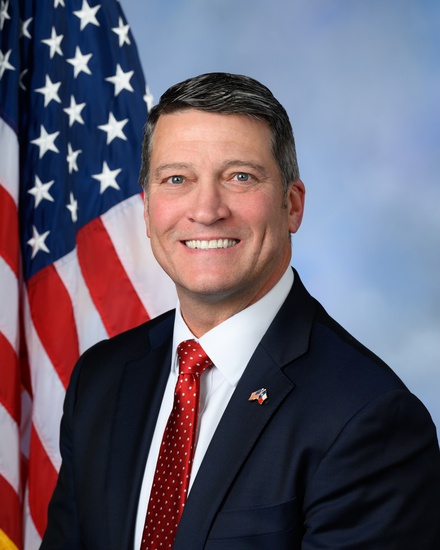
Rep. Ronny Jackson
Sponsored bills
Maddy summaryThis bill bans all federal funding to the Wuhan Institute of Virology for any purpose. It also requires the Government Accountability Office (GAO) to study whether U.S. funds were provided to the institute or related Chinese entities (including affiliated researchers, China, the Chinese Communist Party, or their agencies) over the 15 years prior to enactment. The GAO must complete this study and report to Congress within two years of the bill becoming law. This directly affects U.S. funding decisions for the institute and its connections to Chinese research networks.
Maddy summaryThis bill requires the Office of Management and Budget to audit unspent funds from major pandemic relief packages - including the CARES Act, American Rescue Plan, and related bills - within 30 days of enactment. It mandates a report listing all unobligated funds remaining under these laws. The unspent amounts would then be automatically returned to the Treasury’s general fund for deficit reduction, with no further congressional action needed. The bill directly affects how the federal government handles leftover pandemic relief funds, focusing on accounting and fiscal responsibility rather than new program benefits.
Butcher Block Act This bill authorizes the Department of Agriculture (USDA) to make (or guarantee) loans and award grants for establishing, expanding, and otherwise supporting livestock and poultry processing and related activities. In awarding grants and making or guaranteeing loans, USDA shall prioritize applicants that have experience in livestock and poultry processing and can quickly scale-up to increase overall processing capacity in the region involved.
Maddy summaryHR 976, the TCJA Permanency Act, makes permanent many tax provisions from the 2017 Tax Cuts and Jobs Act (TCJA) that were scheduled to expire after 2025. The bill affects individual taxpayers by keeping lower tax rates, higher standard deductions, increased child tax credits, and other key changes permanently. Key provisions include permanent modifications to income tax brackets, repeal of personal exemptions, limits on state and local tax deductions, and increased estate and gift tax exemptions. These changes would prevent the tax code from reverting to pre-TCJA rates and rules for millions of taxpayers.
Protecting Kids from Candy-Flavored Drugs Act This bill establishes enhanced criminal penalties for certain federal drug offenses involving the manufacture or distribution of candy-flavored controlled substances or similar products for minors. Specifically, the bill imposes enhanced criminal penalties for a federal drug offense that involves manufacturing, creating, distributing, dispensing, or possessing with intent to distribute a controlled substance listed in schedule I or II that is combined with a candy or drink, marketed to appear similar to a candy or drink, or modified by flavoring or coloring to appear similar to a candy or drink. To be subject to an enhanced penalty, the individual must have knowledge or reasonable cause to believe that the controlled substance will be distributed, dispensed, or sold to an individual who is under 18 years of age.
Maddy summaryHR 800, the "DO NOT Call Act of 2023," amends the Telephone Consumer Protection Act of 1991 to increase penalties for intentional telemarketing violations. It adds criminal penalties of up to one year in prison or fines for willfully and knowingly making unwanted calls, with harsher penalties (up to three years) for severe offenses like sending over 100,000 calls in 24 hours, causing $5,000+ in damages, or committing calls to further a felony. The bill also raises civil penalties for providing false caller identification information from $10,000 to $20,000 per violation. This directly affects telemarketers, debt collectors, and businesses making unsolicited calls, increasing legal consequences for repeated or large-scale violations.
Maddy summaryThis bill requires states receiving Medicaid funds for family planning services to submit standardized abortion data to the CDC annually. Specifically, states must report 10 mandatory data points (including maternal age, gestational age, race, ethnicity, procedure type, and survival status) by December 31 of the prior year, starting two years after enactment. Failure to submit accurate data or submitting false information could result in loss of Medicaid funding for family planning services in the following fiscal year. The law aims to create uniform national abortion data collection, addressing current gaps where some states report no data at all. The CDC will maintain a standardized surveillance system and publish annual reports by the third year following the data year.
This resolution expresses the sense of the House of Representatives that (1) for purposes of federal law, a person's sex means the person's biological sex at birth; and (2) distinctions between the sexes are justified in certain settings, laws, and policies.
This resolution recognizes that current retirees and those nearing retirement expect certain Social Security commitments to be made. It further expresses the policy of the House of Representatives to exclude cuts to Social Security from debt ceiling negotiations.