

Maddy summaryHR 1228 prohibits the U.S. military and Department of Defense-operated academic institutions from promoting specific anti-American or racist theories in training. It bans military programs that teach ideas such as "the U.S. is fundamentally racist," "the Constitution is fundamentally racist," or that "an individual’s worth is determined by race." The bill explicitly states it does not restrict protected speech, research access, or educational contexts that clearly disavow military endorsement of such theories. This directly affects military training curricula, workshops, and educational materials within the armed forces.
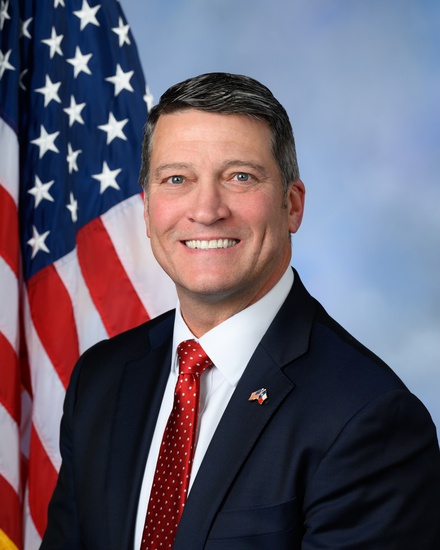
Rep. Ronny Jackson
Sponsored bills
Maddy summaryHR 1200, the National Right-to-Work Act, prohibits requiring workers to join a union or pay dues as a condition of employment in both private-sector workplaces (covered by the National Labor Relations Act) and railroad industries (covered by the Railway Labor Act). The bill amends key sections of these laws to eliminate provisions that allowed union security agreements, meaning workers in unionized settings would no longer be forced to pay dues to retain their jobs. This directly affects employees in unionized workplaces across the U.S., particularly those in industries with existing union contracts that included mandatory dues. The law changes the legal framework to ensure union membership and dues payment remain voluntary for all workers.
Maddy summaryThe Stop the Cartels Act (HR 597) aims to disrupt drug trafficking organizations and related criminal activities by requiring enhanced intelligence gathering on cartels in Mexico and Central American countries, mandating improved U.S.-Mexico law enforcement cooperation, and cutting federal funding from jurisdictions that restrict immigration enforcement. The bill creates a "Special Transnational Criminal Organization" designation for major cartels like the Sinaloa Cartel and Jalisco New Generation Cartel, requires monthly reports on migrant encounters at the border, and establishes refugee processing centers in Mexico and Central America. It also increases staffing for immigration courts by 500 judges, prohibits asylum applications from nationals of countries with refugee processing centers, and reauthorizes substance abuse prevention funding at higher levels while repealing several existing drug programs. These provisions directly affect U.S. intelligence and law enforcement agencies, Mexican and Central American governments, local jurisdictions receiving federal funds, and migrants seeking asylum or refugee status.
Women's Public Health and Safety Act This bill allows a state to exclude from participation in the state's Medicaid program a provider that performs an abortion, unless (1) the pregnancy is the result of rape or incest, or (2) the woman suffers from a physical issue that would place her in danger of death unless an abortion is performed. Under current law, a state plan for medical assistance must provide that any individual eligible for medical assistance may obtain required services from any provider qualified to perform them.
CBDC Anti-Surveillance State Act This bill limits the ability of the Federal Reserve to (1) provide direct services to individuals, and (2) use a central bank digital currency. A central bank digital currency is a digital currency (e.g., Bitcoin or Ether) issued by a government-backed central bank. Specifically, the bill prohibits the Federal Reserve and the Federal Open Market Committee from using any central bank digital currency to implement monetary policy. In addition, a Federal Reserve bank is prohibited from offering products or services directly to an individual, maintaining an account on behalf of an individual, or issuing a central bank digital currency directly to an individual. The Federal Reserve must (1) consult with each Federal Reserve bank with respect to any central bank digital currency study or pilot program, and (2) issue quarterly reports on the findings and determinations of any such study or program.
Endangered Species Transparency and Reasonableness Act of 2023 This bill revises requirements concerning determinations on whether a species is a threatened or endangered species under the Endangered Species Act of 1973 (ESA) and caps attorney's fees to prevailing parties in ESA citizen suits. The U.S. Fish and Wildlife Service (USFWS) and the National Marine Fisheries Service (NMFS) must publish online, subject to privacy or administrative limitations, the best scientific and commercial data available that are the basis for each determination. The bill states that the term best scientific and commercial data available includes all data submitted by a state, tribal, or county government. Thus, the USFWS and NMFS would no longer consider whether data from those sources are the best scientific and commercial data available. Instead, the data would be automatically deemed the best scientific and commercial data available regardless of the quality of the data. Before making a determination on whether a species is an endangered or threatened species, the USFWS and NMFS must provide affected states with all of the data that is the basis of the determination. The Department of the Interior must also publish and maintain an online searchable database that discloses federal expenditures related to litigation under the ESA.
Maddy summaryHR 356, the Unleashing American Energy Act, requires the federal government to hold annual offshore oil and gas lease sales in specific Gulf of Mexico regions and Alaska starting in 2023. It mandates that all unleased areas (not restricted by law) be included in these sales, following existing federal leasing rules. The bill also amends federal law to prevent the President from delaying or blocking these leasing processes without explicit congressional approval, creating a rebuttable presumption that such actions are unreasonable. This directly affects federal energy leasing programs and companies seeking offshore drilling rights.
Maddy summaryHR 150, the Protecting American Energy Production Act, gives states primary authority to regulate hydraulic fracturing (fracking) for oil and gas on state and private lands, directly affecting state governments and energy producers. The bill requires states to maintain this regulatory role and blocks the President from imposing a fracking moratorium without explicit congressional approval. Key provisions include a Congressional "sense" statement affirming state primacy and a direct prohibition on presidential moratoriums unless authorized by a new law. This bill focuses on shifting regulatory power to states and limiting federal executive action on fracking, without specifying financial impacts or environmental standards.
This resolution expresses the sense of the House of Representatives that Medicare should be strengthened and should not be used to finance Democrats' policies.
Second Chance at Life Act of 2023 This bill requires abortion providers to disclose information about the possibility of reversing a medication abortion. This is a procedure that uses a medication regimen to terminate a pregnancy, typically with a two-drug protocol. Providers must inform patients that it may be possible to reverse the effects of a medication abortion after taking the first drug. They must also let patients know that more information and assistance is available on the Department of Health and Human Services (HHS) website. At least 24 hours before the procedure, the provider must share this information with the patient in person or by telephone. The provider must also include the information in written discharge instructions after the first drug is dispensed. The bill sets out an exception to these notification requirements when an abortion is necessary to resolve a physical injury or condition that threatens the life of the woman. The provider must document the circumstances giving rise to the exception in the patient's medical file. Furthermore, providers must post signs with this information in their offices or facilities, and HHS must maintain information about reversing medication abortions on its website.