

Rebuilding Rural Roads Act This bill modifies the definition of rural area that is used for the Rural Surface Transportation Grant Program. For the purposes of the program, the bill defines rural area as an area outside an urbanized area that has a population of over 20,000. (Current law requires a rural area to be outside of an urbanized area with a population of over 200,000.) The grant program supports projects that improve and expand the surface transportation infrastructure in rural areas to increase connectivity, improve the safety and reliability of the movement of people and freight, generate regional economic growth, and improve quality of life. Eligible applicants for the grant program include states, regional transportation planning organizations, local governments, and tribal governments.
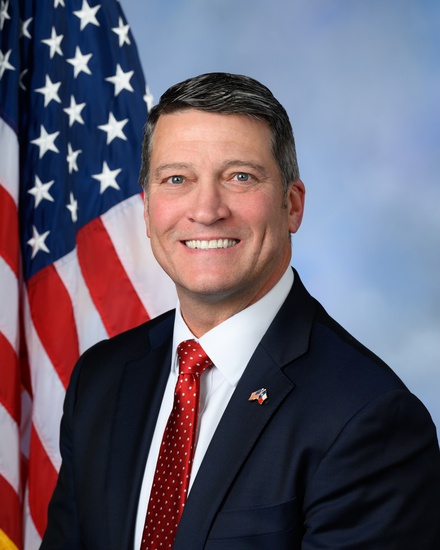
Rep. Ronny Jackson
Sponsored bills
Maddy summaryThis bill prohibits financial institutions (like banks and credit card processors) from using special transaction codes that separately identify firearm or ammunition sellers. It directly affects gun retailers and the financial services they use, ensuring these businesses are treated the same as other merchants for payment processing. The key provision amends the Truth in Lending Act to ban covered entities from categorizing firearm transactions differently, requiring uniform handling of all business types. This changes how payment systems classify transactions but does not alter gun ownership laws.
Maddy summaryHR 3001, the Embrace Fossil Fuel Recruitment Act, requires public high schools and colleges receiving federal education funding to grant fossil fuel companies the same student recruitment access as other energy sectors (like renewables or utilities). The bill mandates that schools provide fossil fuel employers equal opportunities to connect with students for job and internship opportunities, mirroring access given to competitors in other energy fields. Failure to comply could result in colleges losing federal financial aid eligibility under the Higher Education Act, as non-compliance would be treated as a violation of core funding requirements. This bill directly affects public K-12 schools and colleges participating in federal education programs, focusing solely on recruitment access without altering energy policies or environmental regulations.
Maddy summaryHR 2991, the TEACH Act of 2023, modifies federal education law to tie funding to school firearm policies and create grants for defensive training. It prohibits the Department of Education from funding schools that restrict firearm possession beyond existing federal limits (Section 2(b)), and directs the Secretary to award competitive grants using ESEA funds for "defensive training programs" focused on firearm use for school safety (Section 3(a)). These programs include training on carrying, using, and storing firearms on school property to protect students from intruders (Section 3(e)(1)). The bill directly affects schools receiving federal education funds by requiring them to allow firearm possession for training or face funding restrictions, and prioritizes grant applications from entities supporting Second Amendment rights.
Maddy summaryThis bill protects living organ donors from insurance discrimination by prohibiting life, disability, and long-term care insurers from denying coverage, raising premiums, or altering policy terms solely because someone donated an organ while alive. It also updates the Family and Medical Leave Act to include recovery from organ donation surgery as a qualifying health condition, allowing donors to take protected leave for this purpose. Additionally, the bill requires the Health and Human Services Secretary to update public educational materials about living donation benefits, risks, and insurance protections within six months of enactment. These changes directly affect living organ donors, insurers, employers, and healthcare systems by ensuring fair access to insurance and workplace leave.
This bill prohibits the Federal Housing Finance Agency, the Federal National Mortgage Association (Fannie Mae) and the Federal Home Loan Mortgage Corporation (Freddie Mac) from implementing their January 2023-announced changes to the single-family pricing framework for fees on purchase, rate-term refinance, and cash-out refinance loans. The changes revise the fee charts that provide percentage adjustments based on a borrower's credit score and other factors.
This joint resolution nullifies a Department of Labor final rule entitled Adverse Effect Wage Rate Methodology for the Temporary Employment of H-2A Nonimmigrants in Non-Range Occupations in the United States and published on February 28, 2023. This rule makes changes to the methodology used to set adverse effect wage rates for H-2A workers (temporary agricultural workers), including by using Bureau of Labor Statistics wage surveys in certain instances. (Generally, the minimum wage for an H-2A worker is the highest of the adverse effect wage rate, the applicable minimum wage, the prevailing wage for that occupation in that area, or any agreed-upon collective bargaining wage.)
Maddy summaryHRES 90 is a resolution demanding the Chinese government immediately release Mark Swidan, a U.S. citizen from Texas who has been detained since 2012 on drug trafficking charges. The resolution cites the UN Human Rights Council Working Group finding his detention arbitrary, with no evidence of drug offenses, passport records showing he wasn’t in China during the alleged crimes, and China denying his family contact and medical care. It specifically condemns China for blocking U.S. diplomatic access and calls on the U.S. government to prioritize Swidan’s release through diplomatic channels. The resolution focuses on the case’s documented legal and humanitarian issues, not broader policy implications.
Maddy summaryHR 2826, the Save Local Business Act, clarifies when multiple businesses can be held jointly responsible for labor laws. It amends the National Labor Relations Act and Fair Labor Standards Act to state that a business is only a joint employer if it directly controls key employment terms like hiring, pay, schedules, or discipline for another business's workers. This directly affects franchisors, contractors, and similar business models that might previously have been deemed joint employers under broader interpretations. The bill aims to limit joint employer liability to cases where one business has clear, day-to-day control over essential worker conditions.
Maddy summaryHR 2420 requires the USDA to contract with land-grant universities to review the Cattle Fever Tick Eradication Program. The review must evaluate the program's effectiveness, benefits and compliance burden for cattle producers, treatment protocols, and funding allocation. Within one year, the USDA must submit a report to Congress with findings and recommendations for improving the program, including reducing producer burdens. This bill focuses on reviewing an existing program, not changing its operations.