

Maddy summaryThis bill prohibits access to single-sex facilities (like restrooms, locker rooms, and changing rooms) on federal property unless the individual's biological sex matches the facility's designated sex. It directly affects anyone using federal buildings, military bases, or postal facilities, requiring them to use spaces corresponding to their biological sex as defined in the bill. Key provisions define "biological sex" based on reproductive systems (male/female) and allow exceptions only for emergency medical personnel or active law enforcement during investigations. The bill does not apply to private or non-federal spaces, focusing solely on facilities owned or operated by the U.S. government.
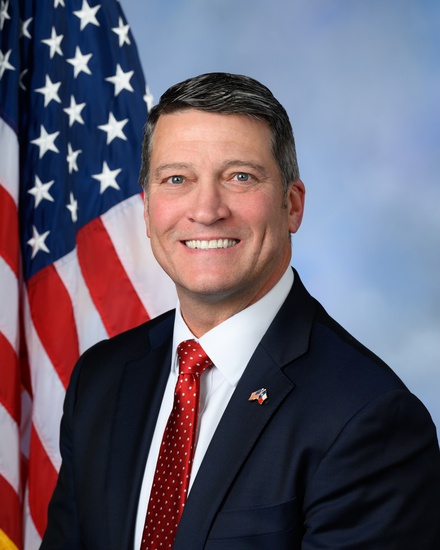
Rep. Ronny Jackson
Sponsored bills
Fair Access to Banking Act This bill places restrictions on certain banks, credit unions, and payment card networks if they refuse to do business with a person who complies with the law. Restrictions include prohibiting the use of electronic funds transfer systems and lending programs, termination of an institution's depository insurance, and specified civil penalties. Banks and other specified financial institutions are allowed to deny financial services to a person only if the denial is justified by a documented failure of that person to meet quantitative, impartial, risk-based standards established in advance by the institution. This justification may not be based upon reputational risks to the institution. The bill establishes the right for a person to bring a civil action for a violation of this bill.
Maddy summaryThis bill designates the U.S. Postal Service facility at 2600 Wesley Street in Greenville, Texas, as the "Cooper Dawson Post Office Building." It updates all official references in federal laws, documents, and records to use this new name. The bill affects the specific post office location and its administrative records, with no policy changes or direct impact on residents or services. It is a purely procedural naming resolution with no substantive legislative provisions.
Maddy summaryHR 943, the "No User Fees for Gun Owners Act," bans states and local governments from requiring insurance, taxes, or user fees as conditions for owning, buying, or selling firearms. It specifically prohibits these fees for firearm manufacture, importation, acquisition, transfer, or continued ownership, except for general sales taxes applied equally to all goods. The bill amends federal law to prevent states from imposing such conditions on gun ownership or commerce, while allowing standard sales taxes to apply uniformly. This directly affects gun owners, dealers, and manufacturers by removing mandatory fees tied to firearm transactions. The law does not restrict general sales taxes but eliminates state-specific fees as a prerequisite for firearm-related activities.
Maddy summaryHR 925, the "Dismantle DEI Act of 2025," would eliminate diversity, equity, and inclusion (DEI) programs across federal government operations. The bill requires federal agencies to close DEI offices, rescind related executive orders, and prohibit the use of federal funds for DEI training, offices, or initiatives. It defines "prohibited diversity, equity, or inclusion practice" as any activity that discriminates based on race, ethnicity, religion, biological sex, or national origin, or requires employees to complete training asserting that certain groups are inherently superior or inferior. The legislation also prohibits requiring employees to sign statements about race, ethnicity, or gender, and establishes private lawsuits for violations with potential damages of $1,000 per violation per day. This bill would directly affect federal agencies, contractors, grantees, and advisory committees receiving federal funding.
Medicare Patient Access and Practice Stabilization Act of 2025 This bill increases certain payment adjustments under the Medicare physician fee schedule for services furnished between April 1, 2025, and January 1, 2026.
Maddy summaryHRES 71 is a symbolic House resolution condemning Mexico for not meeting annual water delivery obligations to the U.S. under the 1944 U.S.-Mexico treaty governing the Colorado, Tijuana, and Rio Grande rivers. The resolution specifically states that the House "condemns the Government of Mexico for failing to fulfill its water deliveries" as required by the treaty. It does not impose new requirements or penalties but serves as a formal expression of disapproval. This resolution directly addresses the U.S. government's position regarding Mexico's compliance with the existing treaty terms. As a procedural resolution, it has no binding legal effect on water delivery operations.
Maddy summaryThis bill prohibits federal funds from being used to cover gender transition procedures for individuals under 18, including puberty blockers, hormone therapies (at higher-than-normal doses), and surgeries like hysterectomies or mastectomies. It defines "sex" biologically as male or female and exempts certain medical treatments, such as puberty suppression for precocious puberty or care for genetic disorders of sex development. The policy directly affects minors receiving federally funded healthcare (e.g., Medicaid), restricting coverage for most gender-affirming care. Key mechanisms include funding restrictions and specific medical exceptions, though it does not ban private insurance or out-of-pocket payments.
Maddy summaryThis bill amends Medicare rules to clarify when rural hospitals can apply for specific payment rates. It changes Section 1820 of the Social Security Act to allow hospitals to submit applications for redesignation (reapplying for payment rates) before the bill's enactment date, with those applications still valid after the law takes effect. The change directly affects rural hospitals seeking to qualify for enhanced Medicare reimbursement under existing programs. It does not create new funding or services but streamlines administrative timing for hospitals already pursuing these designations.
Illegitimate Court Counteraction Act This bill imposes sanctions against foreign persons (individuals and entities) who assist the International Criminal Court (ICC) in investigating, arresting, detaining, or prosecuting certain individuals. The bill categorizes as protected persons (1) any U.S. individual, U.S. entity, or person in the United States, unless the United States is a state party to the Rome Statute of the ICC and provides formal consent to ICC jurisdiction; and (2) any foreign person that is a citizen or lawful resident of a U.S. ally that is not a state party to the Rome Statute or has not consented to ICC jurisdiction. If the ICC attempts to investigate, arrest, detain or prosecute a protected person, the President must impose visa- and property-blocking sanctions against the foreign persons that engaged in or materially assisted in such actions, as well as against foreign persons owned by, controlled by, or acting on behalf of such foreign persons. The President must also apply visa-blocking sanctions to the immediate family members of those sanctioned. Upon enactment, the bill rescinds all funds appropriated for the ICC and prohibits the subsequent use of appropriated funds for the ICC.