

Maddy summaryHR 1219, the Food and Agriculture Industry Cybersecurity Support Act, establishes an online cybersecurity clearinghouse under the National Telecommunications and Information Administration (NTIA) to provide resources and support to the food and agriculture industry. The clearinghouse will offer publicly accessible tools, including updated FAQs, ransomware response guides, and small business assistance, alongside consolidated voluntary cybersecurity recommendations covering risk management, incident recovery, and protection of critical systems. It also mandates a Comptroller General study assessing federal cybersecurity efforts in the sector, including coordination among agencies and potential benefits of creating a dedicated industry-specific cybersecurity information-sharing center. The bill directly affects food producers, processors, distributors, and their technology systems, aiming to strengthen defenses against cyber threats without imposing new regulatory requirements.
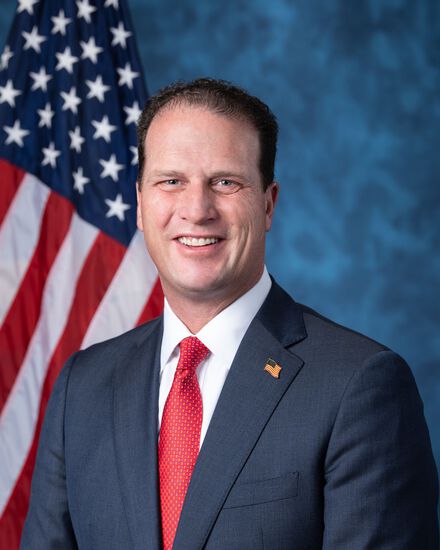
Rep. August Pfluger
Sponsored bills
This bill limits when the Department of the Interior or the National Oceanic and Atmospheric Administration (NOAA) may add a species to the endangered or threatened species list and revises the process to list species under the Endangered Species Act of 1973. Specifically, Interior and NOAA may not add a species to the list if listing the species would cause significant economic harm to any state or locality. In addition, the bill allows Interior and NOAA to prioritize the consideration of petitions to list a species as endangered or threatened other than in the order in which the petitions are received. However, Interior and NOAA may not give general priority to petitions to add species to the list over petitions to remove a species.
Maddy summaryH.J. Res. 26 is a congressional disapproval resolution blocking the District of Columbia Council's approval of its Revised Criminal Code Act of 2022 (D.C. Act 24-789). It directly affects the District of Columbia by preventing the new criminal code from taking effect, as Congress disapproved the Council's action under the Home Rule Act. The resolution formally rejects the Council's enactment of the code, which was transmitted to Congress on January 27, 2023. This procedural action stops the District from implementing the revised criminal code without further congressional action.
Police Officers Protecting Children Act This bill specifies that certain active and retired law enforcement officers who are authorized to carry concealed firearms are not subject to the federal prohibition on possessing (or discharging) a firearm in a school zone.
Maddy summaryHR 1346, the COVID-19 Origin Act of 2023, requires the Director of National Intelligence to declassify specific information related to the origin of the pandemic within 90 days of enactment. It mandates releasing details about potential links between the Wuhan Institute of Virology and COVID-19, including military connections, prior coronavirus research, and health records of researchers who fell ill in autumn 2019. The bill also requires the Director to submit an unclassified report to Congress containing this information, with only minimal redactions for security. This affects the Director of National Intelligence, who must act on the directive, and the public, who would gain access to the declassified materials.
Maddy summaryHR 1388 authorizes the minting of commemorative coins to honor the 1865 Sultana steamboat disaster, the deadliest maritime tragedy in U.S. history. It specifies three coin types ($5 gold, $1 silver, and half-dollar) with defined weights and compositions, to be sold at face value plus surcharges ($35, $10, and $5 per coin, respectively). All surcharges collected will fund the Sultana Historical Preservation Society for museum development, including exhibits, artifact preservation, and facility construction. The coins are legal tender but intended for collectors, with sales limited to a one-year period starting January 2023.
Maddy summaryHR 1143 prohibits the President from declaring any federal emergency (under the National Emergencies Act, Public Health Service Act, or Stafford Act) for two specific purposes: promoting abortion access or taking action against states that restrict abortion. The bill amends three federal laws to add these explicit restrictions, directly affecting the President's emergency declaration authority. It defines "abortion" as intentionally terminating a pregnancy except for medical reasons like increasing live birth chances or removing a dead fetus. This is a procedural change that limits how emergencies can be used regarding abortion policy, not a direct regulation of abortion services.
Maddy summaryHR 1286, the Lone Star Reimbursement Act, directs the Department of Defense and Department of Homeland Security to reimburse the State of Texas $2.2 billion for costs incurred during Operation Lone Star in fiscal years 2022 and 2023. The bill specifically allocates funds from existing appropriations to cover Texas' expenses related to border security operations, including apprehensions and fentanyl seizures documented in the bill's findings. This reimbursement applies to costs already incurred by Texas, with no new policy changes or requirements for the state.
Feral Swine Act This bill extends through FY2028 the feral swine eradication and control pilot program to respond to the threat feral swine pose to agriculture, native ecosystems, and human and animal health.
Maddy summaryThis bill prohibits the Department of Defense from using funds to pay for or reimburse abortion services, except when the pregnancy endangers the mother's life, results from rape, or results from incest. It directly affects military personnel, civilian DOD employees, and contractors receiving medical care at military facilities by restricting funding for abortion-related expenses. Key provisions include amending federal law to ban reimbursement for travel or licensing costs related to abortion services and repealing a 2022 DOD memo that expanded access to such care. The bill explicitly blocks all funding for abortion services beyond the existing exceptions, with no new exceptions added. It does not change abortion access for civilians outside the military healthcare system.