

Purple Heart Freedom to Work Act This bill increases the monthly income limit that is used to determine whether certain Purple Heart recipients are eligible for Social Security Disability Insurance (SSDI) benefits. Specifically, when making such determinations with respect to Purple Heart recipients who are entitled to SSDI benefits based on combat-related injuries, the Social Security Administration must use the limit that applies to individuals who are blind rather than the lower limit that applies to other SSDI recipients. In addition, the bill phases out SSDI benefits for these Purple Heart recipients, with benefits reduced by $1 for every $4 of earnings in excess of the limit.
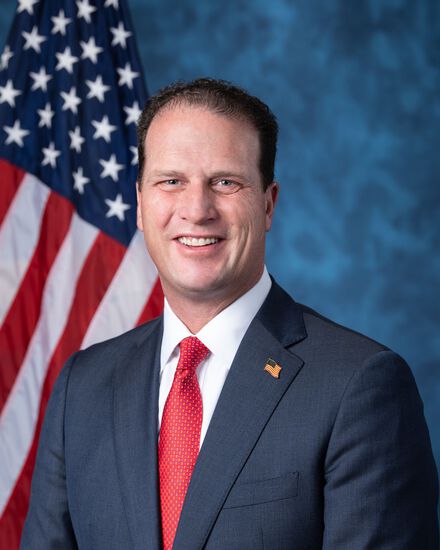
Rep. August Pfluger
Sponsored bills
Let Experienced Pilots Fly Act of 2023 This bill raises the mandatory retirement age for pilots engaged in commercial aviation operations from 65 to 67 years of age, unless the operation takes place in (1) the territorial airspace of a foreign county where such operations are prohibited by the foreign country, or (2) international airspace where such operations are not in compliance with the Annexes to the Convention on International Civil Aviation. The Federal Aviation Administration must also submit a report to Congress on further increasing the age limitation for pilots engaged in commercial aviation operations.
Maddy summaryHR 1623 amends the Homeland Security Act to exclude specific propane storage facilities from certain Department of Homeland Security chemical security standards. It directly affects facilities storing propane for residential use (as defined in the Fair Housing Act), agricultural production (per CFR), or small rural businesses (per the Small Business Act). The bill adds a new exclusion criterion for these facilities and requires the DHS Secretary to report to Congress and notify owners if a facility doesn't qualify for the exclusion. This changes the current security requirements for these specific propane storage locations without altering broader DHS chemical security rules.
Maddy summaryHCONRES 17 is a non-binding congressional resolution expressing that the U.S. Congress believes the federal government should not impose restrictions on crude oil or petroleum product exports. It cites the 2015 repeal of export bans, U.S. growth as a top oil producer, and 2019 status as a net petroleum exporter as reasons for this position. The resolution specifically urges against overly restrictive regulations on energy production and any export restrictions under the Energy Policy and Conservation Act. It does not change existing law but formally states congressional sentiment on this policy matter.
Maddy summaryH.J. Res. 30 seeks to block a Department of Labor rule that would have required retirement plan managers (like those handling 401(k)s) to follow strict "prudence and loyalty" standards when selecting investments and voting on company matters. The rule, published in December 2022, aimed to protect retirement savings by ensuring fiduciaries prioritize participants' interests. This resolution, if passed, would prevent the rule from taking effect, avoiding new compliance requirements for retirement plan managers and sponsors. It directly affects retirement plan administrators and the millions of participants in these plans.
Maddy summaryHR 1155, the Keeping America’s Refineries Act, exempts certain petroleum refineries from a specific requirement under the Clean Air Act. It directly affects refineries operating alkylation units that use hydrofluoric acid (HF), specifically those with valid Clean Air Act permits or that meet American Petroleum Institute safety standards. The bill prohibits the EPA from mandating that these refineries assess "safer technology" or alternative risk management measures for HF use in their hazard assessments. This change removes a regulatory step requiring refineries to evaluate safer alternatives for HF acid, focusing solely on their existing operational compliance.
Maddy summaryHR 1141, the Natural Gas Tax Repeal Act, repeals a specific provision (Section 136) of the Clean Air Act that established an incentive program for reducing methane emissions and waste in natural gas systems. This bill directly affects natural gas producers and operators who previously participated in or were subject to the methane emissions reduction program. The key mechanism is the removal of this incentive program, eliminating federal requirements and financial incentives related to methane waste reduction for the natural gas industry. The bill also rescinds unobligated funds allocated for this program. This is a policy change removing a regulatory incentive, not a tax repeal.
Maddy summaryThe BNA Fairness Act (HR 1732) changes federal tax rules to exclude the basic needs allowance from taxable income for active-duty military members. This specifically affects service members who receive the basic needs allowance under 37 U.S.C. §402b, making this benefit fully tax-free. The bill amends the Internal Revenue Code to add the allowance as a qualified military benefit under Section 134(b). The change applies to tax years beginning after the bill's enactment date, providing immediate tax relief for affected service members.
Maddy summaryHR 1700, the ATF Transparency Act, requires the Bureau of Alcohol, Tobacco, Firearms, and Explosives (ATF) to provide firearm transfer applicants with background check details and appeal options if their application is denied. It sets a 90-day deadline for the ATF to process transfer or manufacturing applications, automatically approving them if no decision is made by then. The bill also mandates that applicants denied based on background checks can appeal and seek reimbursement for attorney fees if successful. Additionally, it requires reports on unresolved background checks from 2010-2021 and a new agreement between the ATF and FBI to improve background check processing.
Maddy summaryHR 1544 would add approximately 6,100 acres of land to Big Bend National Park by authorizing the Secretary of the Interior to acquire these lands through donation, purchase from willing sellers, or land exchange. The bill specifies that the boundary adjustment must follow a map dated November 2022 and requires the Secretary to revise the park's boundary to include acquired lands. It explicitly prohibits the use of eminent domain or condemnation for this acquisition. This bill directly affects the park's boundaries and any landowners who voluntarily sell or donate property within the designated area.