

Maddy summaryHR 2769, the "Stop Penalizing Working Seniors Act," allows seniors over 65 who are enrolled only in Medicare Part A (hospital insurance) to contribute to Health Savings Accounts (HSAs). It removes a current tax rule that barred these seniors from HSA contributions while they remain working. The bill amends the Internal Revenue Code to exclude this group from the existing restriction, effective for taxable years beginning after December 31, 2022. This change directly affects working seniors with limited Medicare coverage who previously could not use HSAs for medical expenses.
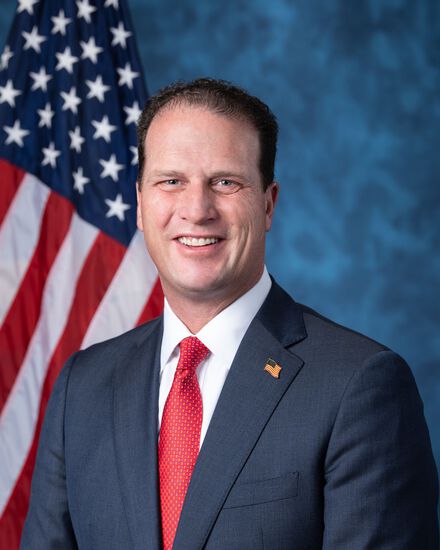
Rep. August Pfluger
Sponsored bills
Maddy summaryThis bill would require Medicare to cover FDA-approved blood tests that screen for multiple cancers simultaneously (like breast, lung, or colorectal cancer) for beneficiaries. It directly affects Medicare recipients aged 65+ who could access these new screenings once per year, without prior authorization. The key provision adds "multi-cancer early detection screening tests" to Medicare's covered services under Part B, defining them as blood tests analyzing cell-free DNA, while maintaining existing coverage for standard screenings like mammograms. The bill does not change current coverage for individual cancer screenings but ensures Medicare keeps pace with new medical technology.
Maddy summaryThis bill modifies Medicare's rules for clinical laboratory testing to reduce administrative burdens. It requires the use of statistically valid sampling (instead of full reporting) for "widely available" tests - defined as tests costing under $1,000 per test with over 100 labs performing them - to determine payment rates starting in 2026. The bill also delays reporting deadlines until 2027, updates how labs are defined for payment purposes, and adds annual payment increase caps (2.5% for common tests in 2024-2025, rising to 5% by 2028). These changes directly affect Medicare-participating labs, particularly independent and hospital-based labs conducting common tests.
Maddy summaryHR 1769, the Healthcare Freedom Act of 2023, amends the tax code to rename "health savings accounts" as "health freedom accounts" and expands their use. It allows individuals to use these accounts for direct primary care, health care sharing ministries, and medical cost sharing organizations, increases annual contribution limits to $12,000 (or $24,000 for joint returns), and permits rollovers between accounts within 60 days. Employers may contribute to these accounts for employees hired after a 5-year transition period, with those contributions excluded from taxable income. The bill directly affects individuals using these accounts, employers offering them, and the IRS in tax administration, without changing health insurance coverage requirements.
Maddy summaryThe Emergency Care Improvement Act would permanently allow freestanding emergency centers (FECs) to receive Medicare and Medicaid reimbursement for emergency services. FECs are independently licensed facilities operating 24/7 with on-site physicians, providing emergency care equivalent to hospital-based emergency rooms. The bill sets payment rates for FECs equal to hospital outpatient department rates for higher-level emergency services, based on existing Medicare payment structures. This change would apply to over 110 FECs, mostly in Texas, which previously operated under a temporary pandemic waiver and demonstrated 21.8% cost savings to Medicare for similar care.
Maddy summaryHR 1610 would modernize Medicare coverage for chiropractic care by removing the current restriction that limited beneficiaries to one chiropractic service per visit. It expands coverage to include all services provided by licensed chiropractors within their state-authorized scope, aligning Medicare with VA, military, and private insurance practices. The bill requires chiropractors to complete a Secretary-approved educational webinar to cover non-spinal services, while still allowing payment for spinal manipulation treatments without this requirement. This directly affects Medicare beneficiaries seeking chiropractic care and chiropractors seeking Medicare reimbursement for their services.
Maddy summaryThis bill requires the Treasury Secretary to review 10 specific Chinese companies within 60 days to determine if they are responsible for or complicit in serious human rights abuses against Uyghurs and other Muslim groups in Xinjiang, or meet criteria under existing sanctions laws. If determined to meet these criteria, the companies - such as Hikvision, BGI Group, Tiandy Technologies, Alibaba, and ByteDance - would be added to a U.S. sanctions list blocking their assets. The Treasury must then report its findings to Congress, including the reasons for the determination, in an unclassified report with a potential classified annex. The bill directly affects these listed entities by subjecting them to potential U.S. financial sanctions.
Maddy summaryThis bill repeals specific provisions from the Affordable Care Act and its 2010 amendment that restricted certain physician referrals to hospitals under Medicare. It directly affects hospitals and physicians who previously faced limitations on referring Medicare patients to facilities they owned or had financial ties with. The key mechanism restores the original rules that allowed such referrals without the prior restrictions, effectively undoing the 2010 changes. This is a procedural change to existing law, not a new policy.
Maddy summaryHR 497, the Freedom for Health Care Workers Act, eliminates a federal requirement for healthcare workers in Medicare and Medicaid programs to be vaccinated against COVID-19. The bill directly affects healthcare providers who treat patients under these federally funded programs by preventing the enforcement of the November 2021 HHS rule mandating staff vaccinations. Its key provision prohibits the Department of Health and Human Services from implementing, enforcing, or creating a similar rule regarding vaccination for these workers. This bill changes the policy by removing a specific vaccine mandate for providers in Medicare and Medicaid programs.
Maddy summaryHR 407, the "Protect the UNBORN Act," prohibits federal agencies from implementing or enforcing two specific executive orders issued by President Biden in 2022 (Executive Orders 14076 and 14079), which aimed to protect access to reproductive healthcare services. The bill bans the use of federal funds, including those from the 2022 Consolidated Appropriations Act, to carry out, administer, or enforce these executive orders. It directly affects federal agencies and programs that would otherwise comply with the Biden administration's policies on reproductive healthcare access. The bill does not create new healthcare rules but blocks the implementation of existing executive actions.