

Maddy summaryHR 1425, the "No WHO Pandemic Preparedness Treaty Without Senate Approval Act," requires the U.S. Senate to approve any World Health Organization (WHO) pandemic preparedness treaty through a two-thirds vote. The bill deems any convention, agreement, or international instrument on pandemic prevention drafted by the WHO’s International Negotiating Body (INB) as a treaty subject to Senate ratification, rather than allowing it to take effect as an executive agreement. This directly affects U.S. foreign policy implementation regarding WHO agreements, ensuring Congress has a formal role in approving such binding international commitments. The bill stems from congressional concerns about WHO’s pandemic response and public skepticism toward the organization, as outlined in its findings.
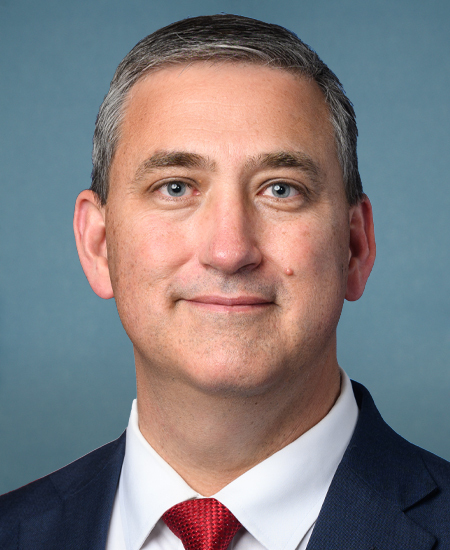
Rep. Nathaniel Moran
Sponsored bills
Maddy summaryThe NO FAKES Act of 2024 establishes legal rights for individuals (living or deceased) to control how their voice and visual likeness are used in digital replicas (highly realistic computer-generated representations that are readily identifiable as the individual). It requires authorization from the individual or their designated right holder for any digital replica, with specific rules for licenses (including 10-year limits for living individuals, 5-year limits for minors, and post-mortem rights for 10 years with possible 5-year renewals). The bill creates civil liability for unauthorized production or distribution of digital replicas, with exceptions for news, documentaries, commentary, and other protected uses. Online services are provided safe harbors if they follow notice-and-takedown procedures for unauthorized digital replicas after receiving proper notifications. The law preempts some state laws but leaves others in place, and applies to conduct occurring after the bill's enactment date.
Maddy summaryHR 9561, the Pay Our Border Patrol and Customs Agents Act of 2025, ensures that U.S. Border Patrol Agents and Customs and Border Protection officers working during a government shutdown receive their salaries. It appropriates funds from the Treasury (not regular appropriations) to cover their pay during any lapse in discretionary funding in fiscal year 2025. This bill directly affects these specific federal employees who are required to work during shutdowns but would otherwise face pay delays. It is a procedural measure focused solely on payment mechanisms, not on changing work requirements or policy.
Maddy summaryHR 9534, the National Constitutional Carry Act, would prohibit states and localities from banning or restricting the public carrying of legally owned firearms by eligible U.S. citizens. It directly affects all gun owners who meet federal and state possession requirements, removing the need for permits or licenses to carry in public spaces. Key provisions state that any state law restricting public carry - such as requiring permits or imposing financial barriers - would be invalidated, with exceptions for privately-owned businesses that clearly prohibit firearms or locations with security screening. The bill bases this on Supreme Court rulings affirming the constitutional right to carry firearms for self-defense outside the home.
Maddy summaryThe SEAS Act of 2024 aims to combat illegal, unreported, and unregulated (IUU) fishing off Africa's coasts by requiring African countries to implement vessel-tracking systems and improve fisheries management. The bill establishes a system of "Priority Coastal States" to target U.S. assistance, mandates regular reports on IUU fishing efforts, and calls for increased Coast Guard presence and training for U.S. personnel in Africa. It directly affects African coastal nations facing economic losses from IUU fishing (estimated at $11.49 billion annually) and U.S. government agencies responsible for maritime security. The legislation requires countries to document fishing vessels, identify IUU activities, and address labor abuses associated with fishing operations. The act also includes provisions for training U.S. diplomats on IUU fishing issues and enhancing coordination with African partners.
Maddy summaryHR 9221, the RESTORE Patent Rights Act of 2024, would restore a traditional legal presumption that courts must grant permanent injunctions to stop ongoing patent infringement. The bill directly affects patent owners, particularly smaller entities like individual inventors, universities, startups, and small businesses, which currently struggle to obtain injunctions against large companies. It amends patent law to create a "rebuttable presumption" that an injunction is warranted after a court finds infringement, shifting the burden to defendants to prove why an injunction should not be issued. This change aims to reverse recent court practices that have made it harder for patent holders to stop ongoing or willful infringement.
Maddy summaryThis bill reauthorizes the Debbie Smith DNA Backlog Grant Program, which provides federal funding to state and local law enforcement agencies to reduce backlogs in processing DNA evidence from crime scenes. It extends the program's funding period from fiscal years 2024 through 2029 (previously ending in 2024). The bill also updates audit requirements to ensure grant funds are used properly through 2029. This directly affects law enforcement agencies that receive these grants to accelerate DNA analysis for criminal investigations.
Maddy summaryThe Respect State Housing Laws Act amends the CARES Act by removing subsection (c) of Section 4024, which governed notice requirements for housing assistance programs. This change eliminates a specific federal notice provision that applied to tenants and landlords receiving CARES Act housing aid. The bill directly affects the administrative process for housing assistance under the CARES Act, streamlining or removing a requirement for notice delivery. It modifies an existing provision without creating new policy or altering broader housing protections.
Maddy summaryHJRES 165 is a congressional resolution seeking to block a Department of Education rule issued in April 2024 that updated protections against sex discrimination in schools receiving federal funding. The resolution aims to disapprove this specific rule (published as 89 Fed. Reg. 33474), which would have required schools to address sex-based discrimination in educational programs. If passed, the rule would no longer be in effect, meaning schools would not need to comply with its requirements. This resolution directly affects all schools and educational programs receiving federal financial assistance, as it targets the implementation of the new nondiscrimination standard.
Maddy summaryThe SAVE Act (HR 8281) requires U.S. citizens to provide documentary proof of citizenship when registering to vote in federal elections. It defines acceptable proof as documents like passports, REAL ID-compliant IDs, military IDs, or birth certificates, and mandates that states verify citizenship using information from government agencies like DHS and Social Security. States must establish processes for voters without required documentation to provide an attestation under penalty of perjury. The law also requires states to remove noncitizens from voter rolls when verified evidence shows they're not citizens. This bill directly affects all applicants registering to vote in federal elections and state election officials who must implement these requirements.