

Maddy summaryThe SHIELD Act of 2024 makes it a federal crime to knowingly distribute non-consensual intimate images of adults (e.g., photos showing genitals, pubic area, or female nipples without privacy expectations) or nude images of minors with intent to harm, abuse, or degrade. It directly affects individuals whose intimate images are shared without consent and those distributing such content, including social media platforms under specific conditions. Key provisions criminalize distribution causing psychological, financial, or reputational harm, with penalties up to 3 years in prison for minor-related cases and 2 years for adult cases, plus asset forfeiture. Exceptions cover law enforcement, legal reporting, medical/educational use, and platforms that don’t actively promote such content.
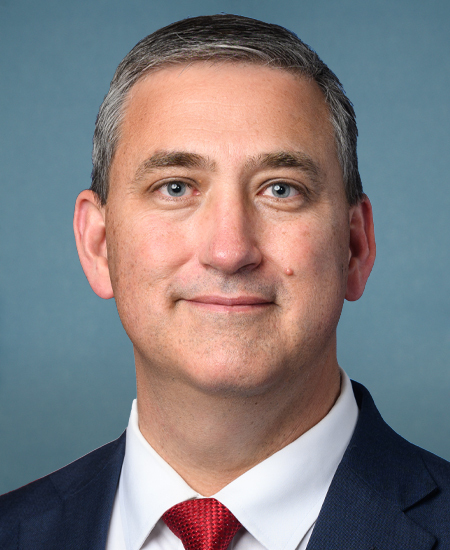
Rep. Nathaniel Moran
Sponsored bills
Maddy summaryHR 9151 establishes a new Department of Justice task force within 120 days to investigate and prosecute international trade crimes like tariff evasion, smuggling, and trade-based money laundering. The task force will hire specialized prosecutors, coordinate with U.S. Customs and Border Protection and Homeland Security, and focus on violations under specific U.S. Code sections including smuggling (18 U.S.C. 545) and fraud (18 U.S.C. 1001). It authorizes $20 million for fiscal year 2025, with 80% dedicated to criminal prosecutions, and requires annual congressional reports detailing case statistics, funding use, and future needs. The bill directly affects importers/exporters engaging in trade violations and DOJ agencies handling cross-border enforcement.
Maddy summaryHR 7233, the Jenna Quinn Law of 2024, creates new federal grants to fund innovative child sexual abuse awareness and prevention programs. The bill authorizes the Secretary to award up to 5-year grants to schools, child-serving organizations, and other entities for projects that: (1) teach students age-appropriate abuse recognition and reporting, (2) train teachers and mandatory reporters, and (3) provide parents with prevention resources. Grantees must submit annual reports detailing participants, services, and outcomes. Additionally, the Comptroller General must evaluate the program's effectiveness and check for duplication with other federal efforts within five years, reporting findings to relevant congressional committees.
Maddy summaryThe Working Dog Commemorative Coin Act (HR 807) directs the U.S. Treasury to mint three types of commemorative coins honoring working dogs' service: $5 gold coins, $1 silver coins, and half-dollar coins with specific weight and composition requirements. Each coin will carry a surcharge ($35 for $5 coins, $10 for $1 coins, $5 for half-dollars) that will be paid directly to America's VetDogs to support their programs providing service dogs for veterans, the disabled, and others. The coins will be issued in 2027 with designs reflecting working dogs' roles in military, detection, therapy, and assistance work. The legislation specifies that all surcharge revenue must fund America's VetDogs' operations without creating new government programs. This is a commemorative measure focused on honoring working dogs' contributions through coin sales, with all surcharge funds going to a specific nonprofit organization.
Maddy summaryHR 10256, the DETERRENCE Act, adds sentencing enhancements for certain federal crimes when committed at the direction of or in coordination with a foreign government. It directly affects individuals convicted of offenses like kidnapping, murder-for-hire, stalking, attacks on officials, or threats against federal employees if foreign government involvement is proven. Key provisions increase sentences by up to 10 years for the primary crime, up to 5 years for attempts, and additional years if serious harm occurs (e.g., bodily injury, use of weapons, or victim age). The bill modifies existing law without creating new offenses, only increasing penalties under specific, defined circumstances involving foreign coordination.
Maddy summaryThis bill reauthorizes federal funding for graduate medical education (GME) programs at children's hospitals through fiscal year 2028. It prohibits payments to any children's hospital that provided gender-affirming care to minors during the previous fiscal year (with a special rule for 2024 payments covering July-September 2023). The bill defines "gender-affirming care" as specific medical treatments like surgeries or puberty-blocking medications for gender transition, but excludes care for certain medical conditions or gender dysphoria treatment not classified as such. This directly affects hospitals receiving GME funding that serve minors, potentially impacting their federal support if they provided the specified care. The policy change modifies existing funding rules without altering broader healthcare access for minors.
Maddy summary# Summary of Proposed Higher Education Act Amendments This document outlines significant proposed amendments to the Higher Education Act of 1965, primarily as part of the "College Cost Reduction Act." The key elements include: ## Accreditation Reform - Major overhaul of accreditation standards, requiring accrediting agencies to demonstrate independence from trade associations - New requirements for accrediting agencies to assess student achievement outcomes, including median value-added earnings relative to median total price charged - Introduction of an "Alternative Quality Assurance Experimental Site Initiative" to test non-accredited institutions - Protections for religious institutions, including a new process for appealing accreditation decisions related to religious mission - Removal of "litmus tests" that would require institutions to support specific political viewpoints ## Student Success Initiatives - Establishment of "Postsecondary Student Success Grants" to increase participation, retention, and completion rates for high-need students - Focus on evidence-based practices, with tiered requirements (tier 1, 2, and 3 reforms) - Mandatory inclusion of high-need student populations (low-income, first-generation, military-connected, etc.) - Requirements for institutions to report on completion rates, retention rates, and student demographics ## Regulatory Changes - Repeal of numerous existing regulations including: * Closed school discharges * Borrower defense to repayment * Pre-dispute arbitration * False certification requirements * Ability-to-benefit rules * Financial responsibility regulations - New restrictions on incentive compensation for recruiters - Changes to third-party servicer definitions and regulations ## Transfer and Credit Policies - New requirement that institutions cannot deny transfer credit based solely on the source of accreditation - Requirements for transparent transfer policies - Changes to reverse transfer policies ## Other Key Provisions - Modifications to the National Advisory Committee on Institutional Quality and Integrity (NACIQI) - New definitions for "total price" and "value-added earnings" - Changes to the process for institutions to change accrediting agencies - New requirements for institutions to report on student outcomes The overall focus of these proposed amendments is to reduce regulatory burden on institutions, promote transparency, improve student outcomes (particularly for high-need students), modernize accreditation processes, and protect religious institutions' rights in accreditation decisions.
Maddy summaryHRES 1572 is a ceremonial House resolution honoring Bishop W.C. Martin, First Lady Donna Martin, and Bennett Chapel Missionary Baptist Church in Possum Trot, Texas, for adopting and fostering 77 children in their community over nearly 30 years. It recognizes their efforts as part of National Adoption Awareness Month and highlights the importance of stable homes for children in foster care. The resolution does not create new laws or policies but publicly acknowledges families nationwide who foster or adopt vulnerable children. It also references supporting H.R. 8793, a separate bill focused on foster care data collection. This is a recognition measure, not a legislative change.
Maddy summaryThis bill would change how Social Security benefits are calculated for public servants who worked in jobs not covered by Social Security (such as many state and local government positions). It replaces the current Windfall Elimination Provision with a new formula that accounts for both covered and noncovered earnings when calculating benefits, rather than reducing benefits based on noncovered employment. The bill would provide additional monthly payments of $100 for some affected individuals and $50 for others, starting 270 days after enactment. It also requires Social Security account statements to show noncovered earnings and directs the Social Security Administration to study ways to improve information sharing with state pension systems about noncovered pensions. The changes would apply to benefits payable starting January 1, 2025.
Maddy summaryHRES 1566 is a symbolic House resolution honoring all U.S. veterans on Veterans Day 2024. It recognizes the service and sacrifice of the estimated 15.8 million veterans living in the U.S. as of 2023, including those who served in conflicts from World War II to post-9/11. The resolution calls on the American public to observe Veterans Day to acknowledge veterans' role in preserving national freedom. As a non-binding resolution, it has no direct policy impact but formally expresses congressional recognition of veterans' contributions.