

Head Start Shutdown Protection Act of 2025 This bill requires the Department of Health and Human Services to reimburse a state, local government, or school district that uses its funds to maintain participation in the Head Start program or the Early Head Start program during a government shutdown in which there is a lapse in federal appropriations for the programs. The Head Start programs provide comprehensive early childhood education and development services to low-income children. The programs seek to promote school readiness through the provision of educational, health, nutritional, social, and other services.
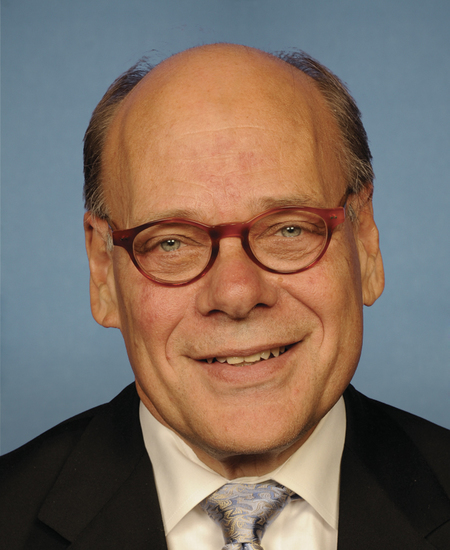
Rep. Steve Cohen
Sponsored bills
Keep Air Travel Safe Act This bill provides continuing appropriations for the Transportation Security Administration (TSA) during any period in which there is a lapse in appropriations for TSA. It also requires the continuing appropriations to be funded using certain unobligated funds that were provided to U.S. Immigration and Customs Enforcement by the One Big Beautiful Bill Act. The bill provides the appropriations for TSA to continue all programs, projects, or activities (including the costs of direct loans and loan guarantees) that were funded in the preceding fiscal year. The appropriations provided by this bill are available from the first day of a lapse in appropriations for TSA until the earlier of the date on which the applicable regular appropriations bill for the fiscal year becomes law or a joint resolution making continuing appropriations becomes law, or the date that is 180 days after the first day of a lapse in appropriations.
Maddy summaryThis bill makes federal funding for the WIC program mandatory by requiring Congress to appropriate necessary funds annually for fiscal year 2026 and each subsequent year. It removes discretionary language from WIC funding requirements and clarifies that eligible participants must be served without participation limits. The bill directly affects low-income pregnant women, new mothers, and young children who rely on WIC for nutrition assistance, ensuring continued access to critical food, health, and education services.
Maddy summaryThis bill prohibits the inclusion of portraits or busts of living individuals on U.S. coins and currency. Specifically, it bans any living president’s image on coins (including commemorative ones) and forbids any living person’s portrait on paper currency. The law directly affects the U.S. Mint’s design process for coins and currency, requiring changes to current or future designs. It does not alter existing currency but mandates that all new or updated coin/currency designs exclude living people’s likenesses.
Maddy summaryThe End Racial and Religious Profiling Act of 2025 (ERRPA) prohibits law enforcement agencies from using race, ethnicity, national origin, religion, gender, or sexual orientation in deciding which individuals to stop or investigate. The bill requires federal, state, local, and tribal law enforcement agencies to implement policies eliminating racial profiling, including mandatory training, data collection on stops and searches disaggregated by protected characteristics, and complaint procedures. Agencies must track "hit rates" (percentage of stops resulting in finding contraband) to identify potential disparities in enforcement practices. The Attorney General will issue regulations for data collection and analysis, and must submit annual reports to Congress on racial profiling practices.
Maddy summaryHRES 795 is a non-binding resolution condemning Hamas for the October 7, 2023, attacks that killed over 1,200 people, took 251 hostages (including Americans), and involved sexual violence. It demands Hamas immediately surrender and release all remaining hostages - specifically noting 48 people still held, including two U.S. citizens. The resolution also affirms Israel’s right to self-defense, calls for humanitarian aid to reach Palestinians, and condemns global antisemitism following the attacks. As a symbolic congressional statement, it does not create new laws or alter policies.
Maddy summaryHR 5715, the October 7 Gold Medal Act, authorizes Congress to award a gold medal to American hostages and victims of the October 7, 2023 Hamas attack in Israel. The medal, designed by the Treasury Secretary, will be presented to recognize their suffering and sacrifice, with the medal displayed at the Weitzman National Museum of American Jewish History in Philadelphia. The bill also permits the sale of bronze duplicates to cover costs, but does not create new legal obligations or policy changes. This is a ceremonial recognition, not a substantive legislative measure.
Maddy summaryHR 5707, the Voter Purge Protection Act, sets strict standards for states removing voters from registration lists. It requires states to use only objective, reliable evidence (like proof of death or moved residence) to remove voters - not factors like not voting or not responding to notices - and mandates 48-hour written notice to affected voters with reinstatement instructions. States must also issue public notices about removal programs to help voters verify their status. This bill directly affects state election officials and voters whose registration might be challenged, aiming to prevent improper removals under the National Voter Registration Act. It amends existing federal voting laws to enforce these new verification and notice requirements.
Maddy summaryHR 5720, the Federal Worker Childcare Protection Act of 2025, would provide reimbursement to federal employees who face a pay gap during a government funding lapse (starting October 1, 2025) while paying for childcare. It directly affects federal workers who are furloughed or working without pay during such a lapse. Employees would receive reimbursement for childcare costs if they provide documentation, such as receipts from a childcare provider, to the General Services Administration. This reimbursement is subject to available congressional appropriations and does not guarantee payment.
Maddy summaryThe Keep the Heat On Act of 2025 ensures low-income households continue receiving home energy assistance during a federal government shutdown in fiscal year 2026. It directs the use of unused Treasury funds to maintain the same payment rates for the home energy assistance program as in fiscal year 2025, preventing service interruptions. This applies specifically to any shutdown period during the 2026 fiscal year, guaranteeing consistent support for vulnerable families. The bill addresses a funding gap without altering existing program eligibility or requirements.