

This resolution impeaches President Donald John Trump for high crimes and misdemeanors. Specifically, the resolution sets forth two articles of impeachment stating that President Trump has abused the powers of the presidency. The first article states that, using the powers of his office, President Trump sought to threaten, intimidate, and solicit the Secretary of State of Georgia to acquiesce to his demand to find enough votes to make him the winner of Georgia's presidential election, even though the votes in Georgia had already been counted three times in favor of his opponent. The article further states that, by doing so, President Trump actively undermined public faith and confidence in the integrity of American elections, subverted the rule of law, and placed his personal interests above the national interest. The second article states that President Trump has endeavored to undermine foundations of U.S. democracy, indicating an intention to make himself an authoritarian ruler who is unaccountable to the U.S. people. The article specifies the following actions by President Trump: refusing to acknowledge, and opposing efforts to protect against, Russian interference in U.S. affairs; expressing willingness to accept foreign assistance to win reelection; refusing to accept the results of the election; undermining the ability of American citizens to exercise their rights as voters; falsely alleging widespread voting fraud while producing no evidence; inciting his supporters to believe falsely that the election had been stolen from him; and failing to take action to protect federal officers, personnel, property, and institutions on January 6, 2021, when the Capitol was besieged by his supporters. Both articles state that, by such conduct, President Trump warrants impeachment and trial, removal from office, and disqualification to hold U.S. office.
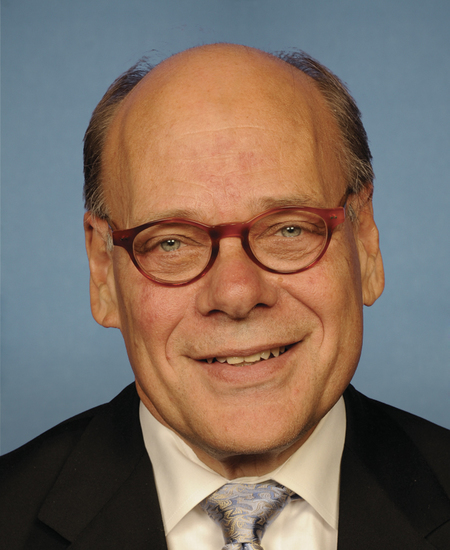
Rep. Steve Cohen
Sponsored bills
This resolution impeaches President Donald John Trump for high crimes and misdemeanors. Specifically, the resolution sets forth two articles of impeachment. The first article states that President Trump abused the powers of the presidency by attempting to unlawfully overturn the results of Georgia's presidential election. The article specifies that President Trump, on a recorded call, repeatedly asked the Secretary of State of Georgia to overturn the verified results of the election and threatened consequences for a failure to do so. The second article states that President Trump abused the powers of the presidency by inciting violence and orchestrating an attempted coup. The article specifies that, on January 6, 2021, President Trump incited a crowd of supporters to attack the Capitol while Congress was in session to certify the results of the election. The article further specifies that, after those supporters had violently breached the Capitol, President Trump made a statement repeating his false claims of election fraud and expressing affection for the supporters. Both articles state that, by such conduct, President Trump warrants impeachment and trial, removal from office, and disqualification from holding U.S. office.
This resolution censures and condemns President Donald J. Trump for asking the Georgia Secretary of State on January 2, 2021, to overturn the Georgia results of the November 2020 presidential election. It further calls on President Trump to (1) retract and disavow this behavior, and (2) acknowledge President-elect Joseph R. Biden as the victor of the November 2020 presidential election.
Medicare Audiologist Access and Services Act of 2021 This bill provides for Medicare coverage of certain audiologist services. Specifically, the bill expands coverage to include diagnostic and treatment services that are furnished by audiologists and that would otherwise be covered if provided by a physician, including incidental services, regardless of whether such services are provided pursuant to a referral from, or under the supervision of, a physician or other health care practitioner.
Nutrition Counseling Aiding Recovery for Eating Disorders Act of 2021 or the Nutrition CARE Act of 2021 This bill provides for Medicare coverage of medical nutrition therapy services for individuals with eating disorders. Such services must be furnished by a registered dietitian or nutrition professional pursuant to a referral from a physician, psychologist, or other authorized mental health professional.
Treat and Reduce Obesity Act of 2021 This bill expands Medicare coverage of intensive behavioral therapy for obesity. Specifically, the bill allows coverage for therapy that is provided by (1) a physician who is not a primary care physician; or (2) other health care providers (e.g., physician assistants and nurse practitioners) and approved counseling programs, if provided upon a referral from, and in coordination with, a physician or primary care practitioner. Currently, such therapy is covered only if provided by a primary care practitioner. The bill also allows coverage under Medicare's prescription drug benefit of drugs used for the treatment of obesity or for weight loss management for individuals who are overweight.
Baseball Diplomacy Act This bill waives various embargo and immigration restrictions in order to allow Cuban nationals to enter the United States to play organized professional baseball. U.S. embargo authority may not regulate or prohibit various transactions by or on behalf of a Cuban national entering to play baseball, nor may the individual be prohibited from returning to Cuba with the earnings made from playing professional baseball. The President's authority to bar an alien whose entry is deemed to be detrimental to U.S. interests may not be used to deny a visa to a Cuban national entering to play baseball. An individual entering to play baseball may obtain a visa to remain in the United States only for the duration of the baseball season. The visa need not be renewed for reentry into the United States during the term of a contract between the individual and the team for which the individual played in the preceding season.
Preventing Future Pandemics Act of 2021 This bill establishes measures to address global public health risks posed by wildlife markets, which are commercial markets that sell or slaughter wildlife for human consumption as food or medicine in communities where alternative nutritional or protein sources are available. Specifically, the bill prohibits importing, exporting, purchasing, or selling live wild animals in the United States for human consumption as food or medicine. The Department of the Interior must hire, train, and deploy at least 50 new U.S. Fish and Wildlife Service law enforcement attachés around the world, and the U.S. Agency for International Development must increase specified activities to address the threats and causes of zoonotic (animal-to-human transmission) disease outbreaks. Additionally, the United States must work with other United Nations member states to urge a global ban on commercial wildlife markets and enforcement of laws to end wildlife trafficking. Further, the President may impose sanctions against a foreign country or foreign nationals that the Department of State has determined are taking certain actions that enable or facilitate commercial wildlife markets. Among other reports required by the bill, the National Academies of Sciences, Engineering, and Medicine must conduct a study and submit a report that includes an evaluation of (1) the impact that consumption of terrestrial wildlife as food or medicine has on the transmission of novel viral and other pathogens, (2) the role of consuming terrestrial wildlife as food or medicine in the transmission of microbes from animals to humans, and (3) the conditions at live wildlife markets that lead to this transmission.
Protecting Consumer Access to Generic Drugs Act of 2021 This bill prohibits the manufacturer of a brand-name, generic, or biosimilar drug from entering into certain agreements to resolve or settle a patent infringement claim in connection with the sale of a drug or biological product. Specifically, such an agreement shall, with some exceptions, be a violation of the bill if the filer of a subsequent application to market a drug or biological product receives anything of value and agrees to limit or forego research, development, manufacturing, marketing, or sales of the subsequent drug or biological product. (Typically, a subsequent application seeks to market a generic or biosimilar version of a patented drug or biological product.) Penalties for violations of the bill include civil penalties and loss of the 180-day exclusivity period for a generic drug. The Federal Trade Commission (FTC) shall have exclusive authority to litigate to enforce the bill. When a generic or biosimilar drug manufacturer enters into an agreement with another drug manufacturer related to the manufacturing, marketing or sale of a drug, the manufacturers shall certify that the material they have given the FTC concerning the agreement contains (1) the complete agreement; and (2) any agreements related to the main agreement, including descriptions of any oral agreements or representations.
Build America's Libraries Act This bill establishes and provides funds through FY2024 for the Build America's Libraries Fund, from which the Institute of Museum and Library Services (IMLS) must allocate funding to states and, through them, need-based grants to libraries to make long-term improvements to library facilities. The IMLS must also award grants to Indian tribes and organizations that primarily serve and represent Native Hawaiians. Specifically, the bill requires each state that receives an allocation, and each library that receives a grant, to carry out certain activities to improve library facilities. These activities include constructing and renovating library facilities, investing in infrastructure projects to improve internet access and connectivity, improving indoor air quality, and making facilities accessible to individuals with disabilities. The bill also outlines administrative and oversight provisions, including by requiring library projects to use iron and steel products that are produced in the United States.