

Girls' Leadership, Engagement, Agency, and Development Act of 2021 or the Girls LEAD Act This bill directs the Department of State and the U.S. Agency for International Development (USAID) to jointly report to Congress a strategy to strengthen the participation of adolescents, particularly girls, in democracy, human rights, and governance. The State Department and the USAID shall (1) implement activities to achieve this goal, including activities to increase adolescent girls' civic and political knowledge and skills and address barriers to political participation; and (2) prioritize foreign assistance funding for democracy, human rights, and governance programs toward achieving the goals in this bill.
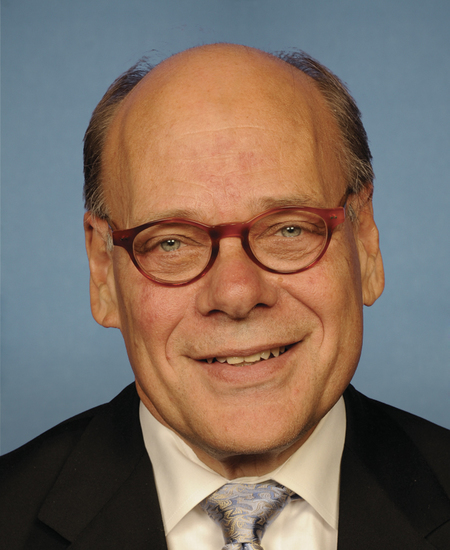
Rep. Steve Cohen
Sponsored bills
Give Our Athletes Level Salaries Act or the GOALS Act This bill prohibits the use of funds for the 2026 World Cup until the U.S. Soccer Federation agrees to provide equitable pay to the members of the U.S. Women's National Team and the U.S. Men's National Team.
Postal Employee Appeal Rights Amendments Act This bill extends federal employee protections against adverse personnel actions, including the right to appeal such actions to the Merit Systems Protection Board, to additional categories of employees at the U.S. Postal Service (USPS). Specifically, it extends such protections to any officer or employee of the USPS who is not represented by a bargaining representative and is in a supervisory, professional, technical, clerical, administrative, or managerial position covered by the Executive and Administrative Schedule.
Postal Supervisors and Managers Fairness Act of 2021 This bill modifies procedures for negotiating pay and benefits of supervisory and other managerial personnel of the U.S. Postal Service (USPS). At least 60 days before the expiration of a pay decision, the USPS must propose to the supervisors' organization any changes in pay policies, pay schedules, or fringe benefit programs for members of such organization. Not later than 60 days after the USPS agrees to a collective bargaining agreement that affects the pay or benefits of supervisors or managers who are members of the supervisors' organization, the USPS shall provide a proposal regarding such matters to the organization. The bill makes binding the decision of the fact-finding panel appointed by the Federal Mediation and Conciliation Service in the event of an impasse between the USPS and a supervisors' organization over proposed changes in pay and benefits.
National Women's Hall of Fame Commemorative Coin Act of 2021 This bill directs the Department of the Treasury to mint and issue $5 gold coins, $1 silver coins, half-dollar clad coins, and proof silver $1 coins in recognition and celebration of the National Women's Hall of Fame in Seneca Falls, New York. All minted coins shall include a specified surcharge, which shall be paid to the National Women's Hall of Fame Foundation to establish an endowment fund to provide for the long-term financing of the hall's operations.
Postal Vehicle Modernization Act This bill establishes requirements for U.S. Postal Service (USPS) vehicle purchases and charging stations. The bill's provisions only apply if specified funding is appropriated. Specifically, the bill requires the USPS to ensure that at least 75% of the total number of next generation delivery vehicles purchased using such funds are electric or zero-emission vehicles. The bill provides for a phase-out of medium- and heavy-duty vehicles that are not electric or zero-emission vehicles. The USPS must provide by January 1, 2026, at each postal facility accessible to the public, at least one electric vehicle charging station for use by the public or USPS officers and employees.
Retired Pay Restoration Act This bill allows the receipt of both military retired pay and veterans' disability compensation with respect to any service-connected disability. Under current law, only individuals with service-connected disabilities rated at 50% or more receive both without offset. Individuals who were retired or separated after at least 20 years of military service due to a service-connected disability shall be eligible for the full concurrent receipt of both veterans' disability compensation and either military retired pay or combat-related special pay.
Hong Kong Safe Harbor Act This bill designates certain Hong Kong residents with priority status for refugee consideration and contains other related provisions. An individual and certain family members shall have such priority status if the individual (1) is a Hong Kong resident who suffered persecution or has a well-founded fear of persecution as a result of peaceful political activity; or (2) has been formally charged, detained, or convicted for certain peaceful actions. An individual receiving refugee status under this bill shall not be counted against various numerical limitations. When determining whether an individual shall be admitted as a refugee under this bill, an individual whose citizenship, nationality, or residency was revoked for submitting a nonfrivolous application for a U.S. immigration benefit shall be considered to have suffered persecution on account of political opinion. The general presumption that an alien is seeking immigrant status shall not apply to certain Hong Kong residents seeking asylum into the United States. (Typically, an alien seeking admission as a nonimmigrant must establish that the alien does not intend to immigrate to the United States.) This exception to the presumption shall apply to certain individuals involved in the 2019 and 2020 protests against China's encroachment into Hong Kong's autonomy (Hong Kong is a part of China but has a separate legal and economic system). An individual from Hong Kong may not be denied admission into the United States if the primary reason for the denial is a politically motivated government action against the individual's involvement in protests.
This joint resolution proposes a constitutional amendment requiring the President and Vice President to be elected directly by the people of the states and the District of Columbia.
This joint resolution proposes a constitutional amendment limiting the pardon power of the President. The amendment prohibits the President from granting a pardon or reprieve to himself or herself, to family members or members of the administration, to paid campaign employees, to a person or entity for an offense motivated by an interest of any of those people, or to a person or entity for an offense directed by or coordinated with the President. The amendment also invalidates pardons issued for a corrupt purpose.