This resolution honors and congratulates the Tennessee Farm Bureau Federation on its 100th anniversary and commemorates the Tennessee Farm Bureau Federation for its service to the farmers and rural communities in the state of Tennessee.
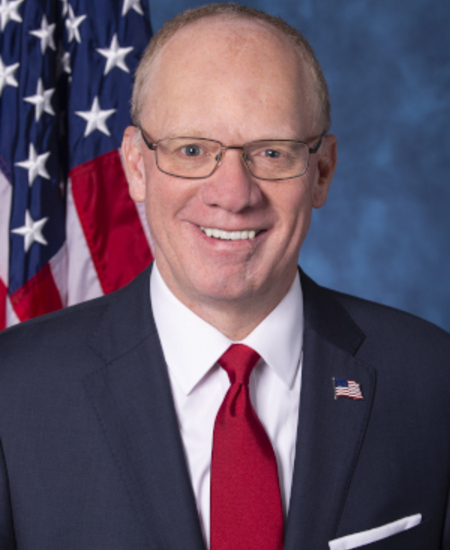
Rep. John W. Rose
Sponsored bills
Maximum Pressure Act This bill expands sanctions and economic penalties on Iran. It also restricts the President from unilaterally lifting or waiving the sanctions or penalties and increases congressional oversight of them. Specifically, the bill requires the President to impose visa- and asset-blocking sanctions. Additionally, it modifies existing sanctions, including by (1) providing statutory authority for executive orders imposing sanctions; (2) applying sanctions to additional sectors of Iran's economy; and (3) broadening sanctionable conduct to cover, for example, assisting Iran with the acquisition of ballistic missiles and the complicity of Iranian officials in human rights violations in specified countries. The bill also requires reporting on licenses that authorize activities subject to sanctions. The bill prohibits U.S. representatives at the International Monetary Fund from voting to allow Iran's access to special drawing rights (a currency support tool) and places restrictions on financial transactions with Iran. The restrictions include requiring domestic financial institutions to implement special measures with respect to foreign financial institutions that conduct significant transactions connected to the Instrument in Support of Trade Exchanges (a European mechanism that bypasses U.S. sanctions when carrying out trade with Iran). The Department of State must maintain the Islamic Revolutionary Guard Corps' designation as a terrorist organization and must designate Ansharallah (or Houthis), which operates in Syria, as a foreign terrorist organization. The bill also requires reports on U.S. sanctions concerning Iran, the status of Iran's nuclear weapons program, and other matters.

Child Interstate Abortion Notification Act This bill creates new federal crimes related to transporting a minor across state lines for an abortion. Specifically, the bill makes it a crime to knowingly transport a minor across a state line to obtain an abortion without satisfying the requirements of a parental involvement law in the minor's resident state. A parental involvement law requires parental consent or notification, or judicial authorization, for a minor to obtain an abortion. The bill prohibits an individual who has committed incest with a minor from knowingly transporting the minor across a state line to receive an abortion. Finally, the bill makes it a crime for a physician to knowingly perform or induce an abortion on an out-of-state minor without first notifying the minor's parent.
COVID-19 Border Protection (CBP) Act This bill requires the Department of Homeland Security (DHS) to devise and implement a strategy to ensure that no alien with COVID-19 (i.e., coronavirus disease 2019) in DHS or Department of Health and Human Services custody may be released into the community during a public health emergency related to COVID-19. Funds previously provided to the Department of State for supporting international efforts to help migrants and refugees respond to COVID-19 shall be transferred to DHS to implement this strategy.
Blocking Joseph Robinette Biden's Overreaching Vaccine Mandates Act This bill restricts implementation and enforcement of COVID-19 vaccine mandates, including in the Medicare and Medicaid programs. Specifically, the Department of Health and Human Services may not require, as a condition of participation in the programs, that providers mandate COVID-19 vaccination for their employees, or otherwise penalize participating providers that do not mandate such vaccination. The bill also prohibits the use of federal funds to implement or enforce a COVID-19 vaccine mandate.
Health Freedom for All Act This bill prohibits the Department of Labor from issuing an emergency temporary occupational safety or health standard requiring employers to ensure that their employees receive a COVID-19 vaccine or undergo COVID-19 testing.
Israel Relations Normalization Act of 2021 This bill requires the Department of State to take certain actions promoting the normalization of relations between Israel, Arab states, and other relevant countries and regions. Specifically, the State Department must develop a strategy on expanding and strengthening the Abraham Accords (the term used to refer collectively to agreements between Israel and the United Arab Emirates and between Israel and Bahrain marking the public normalization of relations between the two Arab countries and Israel). The strategy must include a description of how the U.S. government will encourage further normalization of relations with Israel. In addition, the State Department must report on options for U.S. international efforts to promote the strengthening of ties between Israel, Arab states, and other relevant countries and regions. The State Department must also report on the status of the normalization of relations with Israel, including information on (1) laws that punish individuals for people-to-people relations with Israelis (i.e., anti-normalization laws), and (2) evidence of steps taken by Arab governments toward permitting or encouraging normalized relations between their citizens or residents and Israeli citizens.
Agricultural Fairs Rescue Act This bill directs the Agricultural Marketing Service of the Department of Agriculture to establish a program to award grants to states or state departments of agriculture to provide support to agricultural fairs for losses sustained by such fairs due to COVID-19. As a condition of receiving a grant, recipients shall agree to (1) prioritize supporting agricultural fairs in the state facing the greatest financial hardship, and (2) use not more than 5% of grant funds for administrative costs incurred in providing support to agricultural fairs.
Renter Protection Act of 2021 This bill limits the use and availability of assistance provided under certain emergency rental assistance programs created in response to the COVID-19 pandemic. For example, rental assistance not yet used by grantees to assist eligible households as of July 1, 2021, must only be used for rental arrears after this date, and not for rent, utilities and home energy costs and arrears, or other expenses as allowed under current law. Further, the bill changes the deadline for distribution of these funds from September 30, 2022, to December 31, 2021.
Countering Communist China Act This bill addresses issues related to China, tax incentives, and other topics. The bill imposes visa- and property-blocking sanctions on certain entities and individuals that (1) are involved in acts of malign disinformation on behalf of a foreign government or political party, or (2) have engaged in a pattern of significant infringement of intellectual property belonging to a U.S. entity or individual. It also authorizes sanctions on developers and owners of software that makes unauthorized transmissions of user data to servers that are located in China and are accessible by China's government. The bill also provides tax incentives for relocating pharmaceutical, medical supply, or medical device manufacturing to the United States, including by allowing accelerated depreciation of nonresidential real property acquired in connection with such relocation; eliminates the five-year amortization requirement for research and experimental expenditures scheduled to begin in 2022, thus allowing continued expensing of such expenditures in the taxable years in which they are incurred; prohibits an institution of higher education from receiving certain federal funds if the institution has a contractual partnership with an entity controlled by China's government or organized under China's laws; modifies presumptions and evidentiary standards in administrative patent validity challenges; bars China from asserting sovereign immunity in certain instances; requires U.S. representatives to the International Monetary Fund (IMF) to take certain actions, such as opposing any increase to the weight given to China's currency when determining the value of IMF Special Drawing Rights; and permanently rescinds unobligated funds previously made available for certain economic relief programs related to COVID-19.