

FDIC Board Accountability Act This bill revises provisions related to the board of directors of the Federal Deposit Insurance Corporation. Specifically, the bill removes the director of the Consumer Financial Protection Bureau from the board as a voting member and requires the appointment of an individual with demonstrated primary experience working in or supervising small depository institutions. Further, the bill limits the term length of a board member to twelve years.
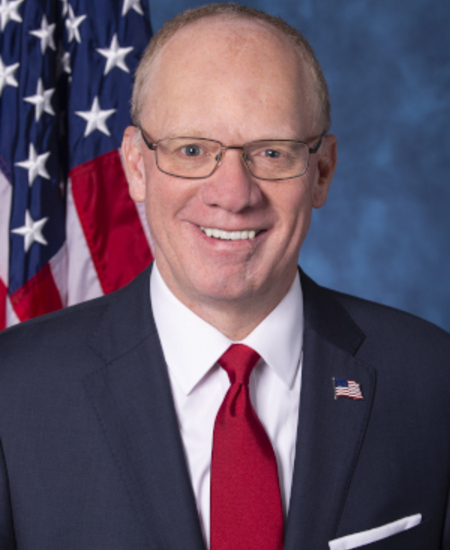
Rep. John W. Rose
Sponsored bills
Preserving Rights Of Tenants by Ensuring Compliance To the Second Amendment Act or the PROTECT the Second Amendment Act This bill establishes a right for a resident of covered federally assisted rental housing to lawfully possess a firearm within the residential dwelling unit occupied by the resident and any common area of the federally assisted rental housing in which the resident resides in the course of entering or exiting the rental housing.
Fairness for Federal Contractors Act of 2021 This bill prohibits executive agencies from requiring contractors to receive a COVID-19 vaccination. The bill also requires the Government Accountability Office to study the degree to which Executive Order 14042 (Ensuring Adequate COVID Safety Protocols for Federal Contractors) caused disruptions to federal contracts, supply chains, and transportation systems.
This joint resolution nullifies a Department of Labor emergency temporary standard for preventing the transmission of COVID-19 in employment settings. Under the standard issued on November 5, 2021, employers with 100 or more employees must require their onsite employees to either be fully vaccinated against COVID-19 or undergo weekly COVID-19 testing.
Credit Union Governance Modernization Act of 2021 This bill revises the procedure for expelling members from a federal credit union. Specifically, a member may be expelled for cause pursuant to a policy adopted by a majority vote of a quorum of the directors of a credit union. Currently, a member may be expelled by a two-thirds vote of the credit union membership present at a special meeting. The member may request a hearing from the board of directors. After the hearing, the board shall hold a vote on expelling the member. The expelled member may request reinstatement through a two-thirds vote of the members present at a meeting. Member conduct that may be cause for expulsion includes a material loss to the credit union, a violation of the credit union membership agreement, a substantial disruption to the operations of a credit union, fraud or attempted fraud, and other illegal or inappropriate behavior.
This resolution expresses the sense of the House of Representatives that (1) U.S. policy should be to strengthen the Second Amendment rights of Americans, and (2) Congress should never stop fighting to protect the Second Amendment.
Maddy summaryHRES 386 is a symbolic resolution introduced in the U.S. House of Representatives that expresses support for recognizing "National Police Week" each year. The resolution acknowledges law enforcement officers' sacrifices, particularly during the pandemic, and encourages the public to honor their service. As a non-binding statement, this resolution does not create new law or change policy but serves as a formal expression of support for law enforcement officers across the United States.
Prohibiting Unrealized Capital Gains Taxation Act This bill prohibits the Department of the Treasury or any other federal official from imposing a tax on unrealized capital gains (i.e., not sold or otherwise disposed of).
This bill prohibits the use of federal funds to require a member of the Armed Forces to receive a COVID-19 vaccination. The bill also prohibits adverse action (e.g., punishment) being taken against a member of the Armed Forces because the member refuses to receive a COVID-19 vaccination.
Treatment Restoration for Emergency Antibody Therapeutics Act or the TREAT Act This bill prohibits the Department of Health and Human Services (HHS) from implementing any policy that restricts health care facilities from ordering and receiving COVID-19 monoclonal antibody therapies directly from manufacturers and distributors. In addition, the bill expressly nullifies a policy announced on September 13, 2021, under which HHS allocated supplies of these therapies through state or territorial governments.