No Student Exchanges with North Korean Schools Act This bill prohibits an institution of higher education (IHE) from receiving certain federal education funds if the IHE has an agreement in effect with an IHE or other organization that is directly funded by the North Korean government.
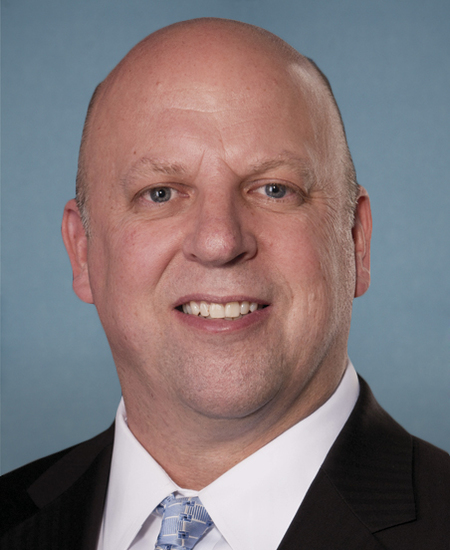
Rep. Scott DesJarlais
Sponsored bills
This bill prohibits the United States from rejoining the Joint Comprehensive Plan of Action (JCPOA) until the President makes specified certifications regarding Iran, including actions taken by Iran relating to its nuclear program. The JCPOA is an agreement, signed by Iran and several other world powers (including the United States), that places restrictions on Iran's nuclear program in exchange for certain sanctions relief. The United States withdrew from the JCPOA in 2018.
Toxic Exposure in the American Military Act or the TEAM Act This bill requires the Department of Veterans Affairs (VA) to expand health care, benefits, and resources for veterans with conditions related to exposure to toxic substances. Specifically, the bill expands eligibility for VA hospital care, medical services, and nursing home care to include veterans who (1) were exposed to toxic substances, radiation, or other conditions, and were awarded certain medals (e.g., the Armed Forces Service Medal); (2) are eligible for inclusion in the Airborne Hazards and Open Burn Pit Registry; or (3) have been identified by the Department of Defense to have been possibly exposed during service to an open burn pit, toxic substance, or specified hazardous sites. (A burn pit is an area used for burning solid waste in open air without equipment.) The bill establishes a presumption of service-connection for diseases associated with exposure to certain toxic substances and that become manifest within a certain time period; the VA must specify such diseases and requirements through regulations. Under a presumption of service-connection, specific conditions diagnosed in certain veterans are presumed to have been caused by the circumstances of their military service. Health care benefits and disability compensation may then be awarded. The bill also requires the VA to take specified actions to (1) evaluate scientific evidence regarding associations between diseases and exposure to toxic substances; (2) train its health care personnel on identifying, treating, and assessing illnesses related to such exposure; and (3) provide resources to veterans exposed to toxic substances.

This bill designates the Mental Health Residential Rehabilitation Treatment Facility Expansion of the Department of Veterans Affairs Alvin C. York Medical Center in Murfreesboro, Tennessee, as the Sergeant John Toombs Residential Rehabilitation Treatment Facility.
Compensation for Americans Act of 2021 This bill requires the Department of State to negotiate with China to secure compensation for China's distortion of information related to the spread of COVID-19. The bill also contains other China-related provisions, such as those imposing sanctions on certain Chinese individuals and entities. As part of such negotiations, the President shall (1) freeze Chinese assets subject to U.S. jurisdiction; (2) suspend the required review of any proposed acquisition of a U.S. entity by a Chinese entity; (3) impose sanctions on Chinese entities in certain industries, such as artificial intelligence and pharmaceuticals; (4) impose sanctions on various individuals, including Chinese government officials and Chinese citizens responsible for stealing intellectual property from U.S. entities; and (5) prohibit using federal funds to procure goods manufactured or sourced from a Chinese company, if such goods pose a supply chain risk to U.S. national security. The President may terminate such prohibitions and sanctions if China and the United States come to an agreement regarding compensation related to COVID-19. The Department of the Treasury shall establish a public repository with information about entities that are owned, financed, or controlled by the Chinese government. Other provisions in this bill include (1) imposing export controls on telecommunications equipment that would help China carry out censorship or surveillance, (2) banning researchers affiliated with China's military from obtaining visas, and (3) requiring U.S. World Bank representatives to end China's eligibility for World Bank assistance.
Flexible Financing for Rural America Act This bill allows rural utility service providers to submit to the Department of Agriculture (USDA) a request to adjust the interest rate or modify the terms of certain loans. The request shall include a report summarizing how the adjustment or modification will assist the borrower in providing critical utility services to a rural community. Specifically, on receipt of a request, USDA or the Department of the Treasury (in the case of a loan owned by the Federal Financing Bank) must adjust the interest rate on the loan to match certain interest rates for obligations of comparable maturity to the term remaining on the loan (or a higher rate requested by the borrower), and make modifications to the loan terms as necessary to address changes in the financial position of the borrower due to the COVID-19 public health emergency and to promote the financial sustainability of the borrower. In carrying out the adjustments or modifications, USDA or Treasury shall not impose or collect any fee from, or impose any penalty on, a borrower. The bill also provides funding to implement the adjustments and modifications and for the liquidation of residual intragovernmental amounts owed by the Federal Financing Bank in connection with certain loans.
This joint resolution recognizes and affirms the sovereign and unilateral authority of states to defend themselves against invasion.
Servicemember Safety and Security Improvement Act of 2021 This bill requires the Department of Defense to instruct each military department to review its policies and procedures for reporting members of the Armed Forces who are absent without leave, on unauthorized absence, or missing. Military installations must update the policies and procedures related to absent or missing service members with a focus on force protection, enhanced security for members living on base, and prioritizing the reporting of missing service members to local and federal law enforcement at the earliest reasonable time. The commander of each military installation must establish a protocol for sharing information with local and federal law enforcement agencies about service members who are absent without leave, on unauthorized absence, or missing. Each military installation must submit the established protocol to the relevant installation command.
Military Education and Values Act This bill requires the Department of Defense (DOD) to issue guidance prohibiting the use of any education or training methodology within DOD and the Armed Forces that promotes or causes a racial divide or lack of equality. Such guidance must also reiterate that members of the Armed Forces of all races will be treated equally and update service members on the core tenets of the U.S. military. DOD must report on the status of critical race-theory and other race-based training education methodologies in the Armed Forces.
Children Have Opportunities in Classrooms Everywhere Act This bill allows tax-exempt distributions from qualified tuition programs (known as 529 plans) to be used for additional educational expenses in connection with elementary or secondary school. The bill also allows certain federal funds for elementary and secondary education to follow a student from a low-income household to the public school that the student attends or for tax-exempt educational expenses. Under current law, tax-exempt distributions in connection with elementary or secondary school are limited to tuition for a public, private, or religious school. The bill allows these distributions to be used additionally for curriculum and curricular materials, books or other instructional materials, online educational materials, tutoring or educational classes outside the home, testing fees, fees for dual enrollment in an institution of higher education, and educational therapies for students with disabilities. Distributions may also be used for tuition and the purposes above in connection with a home school (whether treated as a home school or a private school under state law). In addition, the bill directs state educational agencies to allocate grant funds to ensure the funding follows students to their public school or for other tax-exempt educational expenses outlined by the bill. Each state that carries out these allocations must establish a plan that allows the parent or guardian of an eligible child to apply for grant funds.