

Maddy summaryThis bill extends a temporary COVID-19 emergency waiver that allows nurse aides in training to count hours worked during the pandemic toward their certification requirements at nursing facilities. It specifically permits these hours to satisfy the 75-hour minimum training requirement and allows facilities to conduct competency evaluations on-site if states don’t offer them weekly. The waiver remains in effect for at least 24 months after enactment, with a requirement for the Secretary to study its continued appropriateness within one year. The policy directly affects nurse aides working in skilled nursing facilities and nursing facilities under federal Medicare/Medicaid rules. It does not create new training programs but maintains pandemic-era flexibility for staffing.
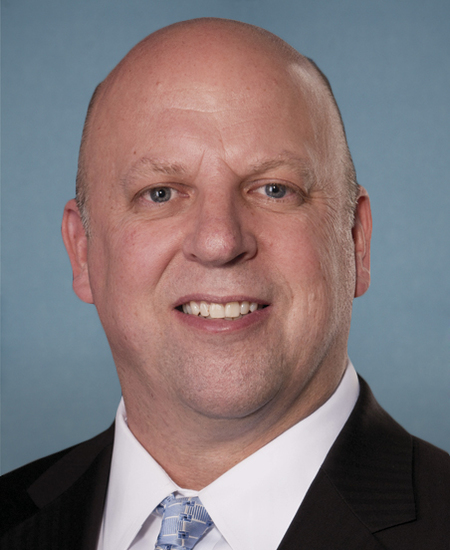
Rep. Scott DesJarlais
Sponsored bills
Maddy summaryThis bill designates the U.S. Postal Service facility at 300 Macedonia Lane in Knoxville, Tennessee, as the "Reverend Harold Middlebrook Post Office Building." It updates all official references in federal laws, documents, and records to use this new name. The change applies solely to the building's official designation and has no impact on postal services or policies.
Maddy summaryThe Working Dog Commemorative Coin Act (HR 807) directs the U.S. Treasury to mint three types of commemorative coins honoring working dogs' service: $5 gold coins, $1 silver coins, and half-dollar coins with specific weight and composition requirements. Each coin will carry a surcharge ($35 for $5 coins, $10 for $1 coins, $5 for half-dollars) that will be paid directly to America's VetDogs to support their programs providing service dogs for veterans, the disabled, and others. The coins will be issued in 2027 with designs reflecting working dogs' roles in military, detection, therapy, and assistance work. The legislation specifies that all surcharge revenue must fund America's VetDogs' operations without creating new government programs. This is a commemorative measure focused on honoring working dogs' contributions through coin sales, with all surcharge funds going to a specific nonprofit organization.
Maddy summaryThe No Discrimination in Housing Act would deny the federal low-income housing tax credit (LIHTC) to housing developers and entities that implement diversity, equity, and inclusion (DEI) initiatives. This credit, a key incentive for building affordable housing, would no longer be available to entities with DEI programs, including partnerships and S corporations. For business structures like partnerships, the denial applies to the entire entity - not just individual owners - meaning the credit is lost at the organizational level. The provision would take effect for tax years beginning after the bill is enacted.
Maddy summaryThis bill enhances the existing American Battlefield Protection Program by expanding eligibility for grants to include Tribes, nonprofit organizations, and educational institutions, alongside States and local governments. It clarifies that eligible sites must be identified in the 1993 Civil War battlefield report or 2007 Revolutionary War/War of 1812 report, excluding sites already within National Park boundaries. The bill also requires the Secretary to submit updated battlefield condition reports to Congress every 10 years, starting two years after enactment, tracking preservation efforts and battlefield changes. These changes streamline program administration and ensure ongoing assessment of historic battlefield sites.
Maddy summaryHR 8706, the "Dismantle DEI Act of 2024," would prohibit federal agencies from maintaining diversity, equity, and inclusion (DEI) offices, programs, or training by requiring the closure of existing DEI offices within 90 days and banning federal funding for DEI-related activities. The bill defines "prohibited diversity, equity, and inclusion practices" as those that discriminate based on race, color, ethnicity, religion, biological sex, or national origin, or require training that asserts a particular group is inherently superior or inferior. It would rescind several executive orders related to racial equity and gender inclusion, and prohibit the use of federal funds for DEI-related activities across all federal agencies, contractors, and grant recipients. The bill contains limited exceptions for Equal Employment Opportunity offices and disability rights enforcement offices as historically organized and operated.
Maddy summary# Summary of Proposed Higher Education Act Amendments This document outlines significant proposed amendments to the Higher Education Act of 1965, primarily as part of the "College Cost Reduction Act." The key elements include: ## Accreditation Reform - Major overhaul of accreditation standards, requiring accrediting agencies to demonstrate independence from trade associations - New requirements for accrediting agencies to assess student achievement outcomes, including median value-added earnings relative to median total price charged - Introduction of an "Alternative Quality Assurance Experimental Site Initiative" to test non-accredited institutions - Protections for religious institutions, including a new process for appealing accreditation decisions related to religious mission - Removal of "litmus tests" that would require institutions to support specific political viewpoints ## Student Success Initiatives - Establishment of "Postsecondary Student Success Grants" to increase participation, retention, and completion rates for high-need students - Focus on evidence-based practices, with tiered requirements (tier 1, 2, and 3 reforms) - Mandatory inclusion of high-need student populations (low-income, first-generation, military-connected, etc.) - Requirements for institutions to report on completion rates, retention rates, and student demographics ## Regulatory Changes - Repeal of numerous existing regulations including: * Closed school discharges * Borrower defense to repayment * Pre-dispute arbitration * False certification requirements * Ability-to-benefit rules * Financial responsibility regulations - New restrictions on incentive compensation for recruiters - Changes to third-party servicer definitions and regulations ## Transfer and Credit Policies - New requirement that institutions cannot deny transfer credit based solely on the source of accreditation - Requirements for transparent transfer policies - Changes to reverse transfer policies ## Other Key Provisions - Modifications to the National Advisory Committee on Institutional Quality and Integrity (NACIQI) - New definitions for "total price" and "value-added earnings" - Changes to the process for institutions to change accrediting agencies - New requirements for institutions to report on student outcomes The overall focus of these proposed amendments is to reduce regulatory burden on institutions, promote transparency, improve student outcomes (particularly for high-need students), modernize accreditation processes, and protect religious institutions' rights in accreditation decisions.
Maddy summaryThis bill provides one-time financial assistance to U.S. farmers growing specific crops (like corn, soybeans, wheat, cotton, and rice) during the 2024 crop year if their expected costs exceed expected returns. Payments equal 60% of the difference between the expected cost of production per acre (based on USDA cost forecasts) and the expected gross return per acre (based on projected farm prices and yields). Payments are calculated using actual planted acreage plus 50% of acreage prevented from planting due to natural disasters, with annual caps of $175,000 or $350,000 depending on the farm’s primary income source. The program uses existing USDA data sources and applies standard farm payment limits.
Maddy summaryThis bill prohibits U.S. Small Business Administration (SBA) assistance - including loans, contracts, and other support - from going to small businesses that are either headquartered in China or have more than 25% of their voting stock owned by Chinese-affiliated entities. It directly affects small business concerns meeting either of these criteria, blocking their access to SBA programs. The bill amends the Small Business Act to add this restriction and requires the SBA to update its regulations (including specific sections of the Code of Federal Regulations) to implement the change. The policy change is a direct eligibility requirement for SBA programs, with no additional funding or program modifications.
Maddy summaryThis bill clarifies Medicare rules to allow doctors to provide certain critical medications directly in their offices without extra administrative hurdles. It specifically amends a Medicare provision (Section 1877(b)(2) of the Social Security Act) to remove a requirement that drugs furnished in-office must follow specific administrative rules, effective May 11, 2023. The bill also directs the removal of conflicting Medicare guidance published in 2021 and 2023, which had previously restricted this practice. This change directly affects Medicare beneficiaries (seniors) and doctors' offices that supply covered medications during patient visits. It streamlines access to necessary drugs by eliminating an unnecessary barrier to in-office medication administration under Medicare.