

Maddy summaryHR 4380, the "Protecting Endowments from Our Adversaries Act," imposes a 50% excise tax on private colleges and universities acquiring investments tied to entities on specific U.S. government lists (like the Commerce Department's Entity List or Defense's CMIC List) and a 100% tax on net income from those investments. It targets large private institutions with over $1 billion in non-exempt assets (excluding public schools and smaller colleges), requiring them to pay these taxes on investments in entities deemed national security risks. The bill defines "listed investments" as stocks, debt, or derivatives in companies on designated government lists, with tax calculations based on fair market value. This is a direct tax on investment income and acquisitions, not a spending or regulatory measure, affecting only institutions meeting the asset threshold.
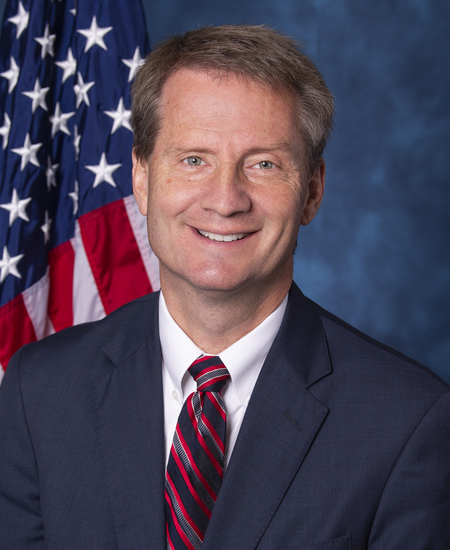
Rep. Tim Burchett
Sponsored bills
Maddy summaryThis bill expands eligibility for Federal Pell Grants to certain graduate students who previously received Pell Grants for their undergraduate degree. It specifically allows students who completed their first bachelor's degree with Pell support (for at least 1 but fewer than 12 semesters) to receive Pell Grants for their first postbaccalaureate program, provided they otherwise qualify. The key mechanism modifies Pell Grant rules to include this "first postbaccalaureate course of study" within the student's overall grant duration limits. This directly affects graduate students meeting these specific undergraduate Pell Grant history criteria.
Maddy summaryHR 3755, the Industrial Hemp Act of 2023, clarifies federal definitions and regulations for industrial hemp production. It defines industrial hemp as the *Cannabis sativa L. plant* (excluding cannabinoid resin from stalks or seeds) and requires hemp farmers to designate their crop as "industrial hemp" or "hemp for any purpose" when applying for state or federal programs. The bill mandates visual inspections for industrial hemp producers, with documentation requirements (like seed tags or harvest records) if inspections fail, and imposes a 5-year program ineligibility for producers who knowingly grow crops inconsistent with their designation. This directly affects hemp farmers, state regulators, and the agricultural industry by creating a clearer legal framework for industrial hemp cultivation.
Maddy summaryHJRES 44 is a congressional resolution seeking to block a 2021 rule by the Bureau of Alcohol, Tobacco, Firearms, and Explosives (ATF). The rule classified firearms with stabilizing braces as "short-barreled rifles," which would have required additional licensing and regulation. This resolution uses a specific legal process (under Title 5, U.S. Code) to formally disapprove the ATF rule, meaning the rule would no longer be in effect. It directly affects firearm owners, manufacturers, and dealers who would have been subject to the rule’s requirements.
Maddy summaryHRES 546 is a symbolic House resolution commemorating the one-year anniversary of the Supreme Court's June 24, 2022, Dobbs v. Jackson Women's Health Organization decision, which overturned Roe v. Wade. The resolution expresses support for the Court's ruling that the Constitution does not guarantee a right to abortion and celebrates the decision's impact on returning abortion policy authority to state legislatures. As a ceremonial resolution, it does not create new laws or directly affect any individuals or policies. The resolution focuses solely on marking the anniversary and affirming the position that unborn life should be protected.
Maddy summaryHR 277 would require Congress to approve major federal regulations before they take effect. Major rules are defined as those with significant economic impact ($100 million+ annually), major cost increases for consumers or industries, or significant adverse effects on competition, employment, or innovation. Agencies must submit detailed information about these rules to Congress, including cost-benefit analyses, before they can take effect. Congress would have 70 session days to approve the rule with a joint resolution; if they don't act within that timeframe, the rule would not take effect. This would increase congressional oversight of federal regulations and require more detailed information about proposed rules before they become law.
Maddy summaryHR 4040, the Recycling and Composting Accountability Act, requires federal agencies and states to collect and report detailed data on recycling and composting practices. It mandates the EPA to create reports on composting infrastructure capabilities, federal agency recycling/composting rates, and end-market sales of recyclables, while also developing a national inventory of materials recovery facilities. The bill directly affects federal agencies, state and local governments, and Indian Tribes by requiring standardized reporting on recycling rates, facility capabilities, and contamination rates. Key mechanisms include biannual facility inventories, standardized reporting metrics for recyclable diversion rates, and voluntary guidelines to improve labeling and public education on proper sorting. The goal is to strengthen data collection to address contamination issues and support infrastructure improvements, without imposing new regulatory requirements.
Maddy summaryHR 1640, the Save Our Gas Stoves Act, prevents the Department of Energy from implementing energy efficiency standards for gas stoves that would make them unavailable in the U.S. market. It amends federal law to require that any new standard for gas stoves must not result in the unavailability of gas stove types, directly affecting gas stove manufacturers and consumers who rely on these appliances. The bill specifically blocks the implementation of the 2023 proposed rule (Energy Conservation Program: Energy Conservation Standards for Consumer Conventional Cooking Products) and any similar rule. This is a policy change focused on maintaining the availability of gas stoves by altering the criteria for energy standard approval.
Maddy summaryHR 3956, the Veterans Protection from Fraud Act, amends federal criminal law to increase penalties for fraud committed against veterans. It directly affects veterans (defined under Title 38) of any age by adding them to a list of protected groups eligible for enhanced penalties under existing fraud statutes. The key provision modifies Section 2326(2) of Title 18 to include "targeted veterans" as a category subject to stricter sentencing when fraud is specifically directed at them. This change strengthens existing penalties without creating new crimes, making fraud against veterans a more severe offense under current federal law.
This resolution supports the designation of National Trailer Safety Week and expresses strong support for efforts to increase awareness of the importance of being committed to trailer safety.