

Maddy summaryHR 921, the Master Sergeant Roddie Edmonds Congressional Gold Medal Act, authorizes the posthumous award of a Congressional Gold Medal to Master Sergeant Roddie Edmonds for his heroic actions during World War II. The bill recognizes Edmonds' defiance of Nazi orders to separate Jewish-American soldiers at Stalag IX-A prisoner camp, where he declared "We are all Jews here" to protect approximately 200 Jewish soldiers, saving their lives. The medal, to be struck by the U.S. Treasury and presented to his son or next of kin, commemorates his actions and his posthumous recognition as "Righteous Among the Nations" by Yad Vashem. This commemorative act does not create new policy or affect any group beyond honoring Edmonds' legacy.
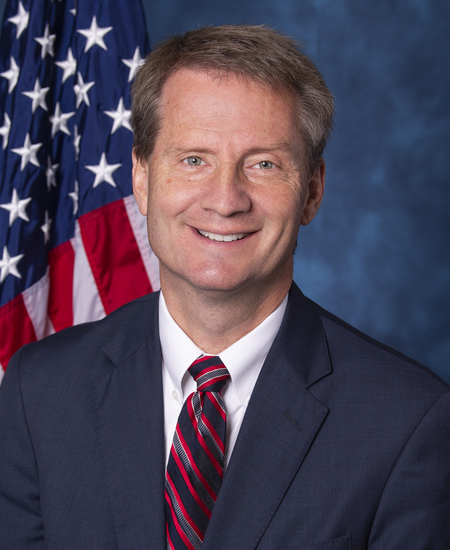
Rep. Tim Burchett
Sponsored bills
Household Goods Shipping Consumer Protection Act This bill allows the Federal Motor Carrier Safety Administration (FMCSA) to assess civil penalties against motor carriers, brokers, and freight forwarders for violations related to the interstate transportation of household goods and provides states with additional related authorities. As background, a broker is the “middle person” between a shipper and a motor carrier and arranges for the transportation of household goods. A freight forwarder organizes shipments for individuals or corporations. Unlike a broker, freight forwarders assume responsibility for transportation and may transport the freight itself. The bill expands the FMCSA registration requirements to require motor carriers, brokers, and freight forwarders to designate a principal place of business (i.e., a single physical location where management officials report to work, a significant portion of the transportation business is conducted, and records are maintained). FMCSA may withhold, suspend, amend, or revoke any part of a registration for failure to designate. In addition, brokers and freight forwarders must disclose any common ownership, management, control, or familial relationship with any other carrier, freight forwarder, broker, or applicant in the previous three years. Under current law, motor carriers must disclose this information. Further, states may use certain grant funds to enforce federal household goods statutes and regulations for the interstate transportation of these goods by motor carriers and brokers. This applies to Motor Carrier Safety Assistance Program (MCSAP) grant funds and MCSAP High Priority discretionary grant funds. A state shall retain collected fines that are a result of enforcement.
Silencers Help Us Save Hearing Act or the SHUSH Act This bill removes silencers from regulation under certain federal statutes governing the sale, transfer, and possession of firearms. Specifically, it removes silencers from the list of firearms subject to regulation (i.e., registration and licensing requirements) under the National Firearms Act (NFA). Additionally, it excludes a muffler or silencer from the list of firearms subject to regulation (e.g., background check requirements) under the Gun Control Act of 1968 (GCA). Finally, the bill does the following: preempts state or local laws that tax or regulate firearm silencers, specifies that a person who lawfully acquires or possesses a silencer under provisions of the GCA meets the registration and licensing requirements of the NFA, eliminates mandatory minimum prison terms for a crime of violence or drug trafficking offense in which a defendant uses or carries a firearm equipped with a silencer or muffler, and permits active and retired law enforcement officers to carry a concealed silencer.
Maddy summaryHR 847, the BLOCK Act, replaces 10 specific K-12 education programs under the Elementary and Secondary Education Act with flexible block grants to states starting in fiscal year 2026. It directly affects all 50 states, the District of Columbia, and Puerto Rico by repealing targeted grants for local schools (Title I), English language learners (Title III), student support (Title IV), rural education, and other programs effective October 1, 2025. The bill shifts funding from federally mandated, program-specific grants to general block grants, giving states more discretion in how they allocate funds. This represents a major structural change to federal K-12 education financing, moving away from categorical funding toward broader state flexibility. The law takes effect with the 2026 budget cycle, using 2025 funding levels as the baseline for block grant amounts.
Maddy summaryHR 899 would end the U.S. Department of Education by December 31, 2026, terminating its federal agency status. This bill directly affects all federal education programs and operations currently managed by the Department, such as student aid and school funding. The key mechanism is a fixed termination date, requiring the transfer of the Department's responsibilities to other federal agencies without specifying new administrative structures. The bill focuses solely on ending the agency's existence, not altering education policy or funding mechanisms.
Maddy summaryThis bill increases criminal penalties for individuals who re-enter the U.S. after being deported, removed, or excluded. It sets a maximum 5-year prison sentence for most cases, but adds up to 10 years for those with prior drug/crime convictions or multiple prior removals. For serious cases - such as aggravated felonies or two prior reentry convictions - it mandates a 5-20 year prison term. The law directly affects people who return without authorization after formal immigration removal proceedings.
Maddy summaryHR 809 bans members of the Chinese Communist Party (CCP) and entities controlled by the CCP from purchasing any public or private real estate in the United States. The law applies to all U.S. states, territories, and possessions, including Puerto Rico and Guam. The President must take necessary actions to enforce this prohibition, directly affecting CCP-affiliated individuals and organizations seeking U.S. property investments. It creates a specific restriction on real estate transactions without altering broader foreign ownership rules.
Maddy summaryHR 733 requires the President to review U.S. sanctions against 48 specific Hong Kong officials within 180 days of the bill's enactment. The review must determine if these officials - such as top government leaders (e.g., Chief Executive John Lee) and judicial figures (e.g., Chief Justice Andrew Cheung) - still meet criteria under four existing sanctions laws. The President must submit a detailed justification to congressional committees, including the Foreign Relations and Financial Services committees. This bill mandates a formal review process but does not alter current sanctions or guarantee any changes. The focus is solely on evaluating whether existing sanctions remain appropriate.
Life at Conception Act This bill declares that the right to life guaranteed by the Constitution is vested in each human being at all stages of life, including the moment of fertilization, cloning, or other moment at which an individual comes into being. Nothing in this bill shall be construed to authorize the prosecution of any woman for the death of her unborn child.
Maddy summaryHR 21, the Born-Alive Abortion Survivors Protection Act, requires medical staff at abortion facilities to provide the same immediate care and hospital admission to any infant born alive during an abortion as they would for any newborn. It mandates reporting failures to provide this care to law enforcement and imposes penalties of up to 5 years in prison for violations, with harsher penalties for intentional killing. The bill also allows women who undergo abortions to sue for civil damages, including triple the abortion cost, and provides for attorney fees. It defines "abortion" to exclude procedures performed after viability to preserve a live birth. This law directly affects healthcare providers at abortion facilities and creates new federal legal obligations for them.