

Maddy summaryHRES 1094 designates May 5, 2022, as the National Day of Awareness for Missing and Murdered Native Women and Girls. It directly supports Native American communities affected by disproportionately high rates of violence against women and girls, citing data showing murder rates over 10 times the national average in some Tribal communities. The resolution asks the public to honor victims and show solidarity with families, while acknowledging existing efforts like Savanna’s Act to address the crisis. As a symbolic resolution, it does not create new laws but raises awareness about this ongoing issue.
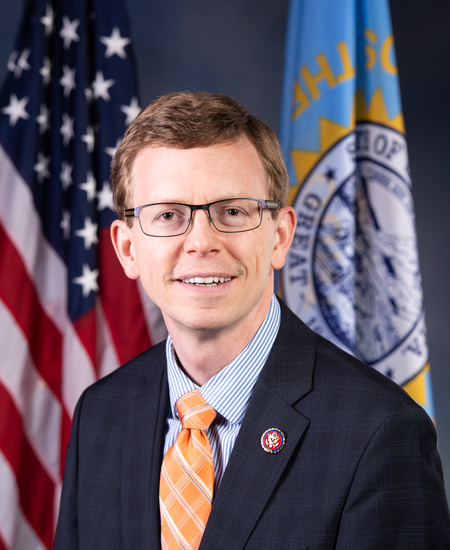
Rep. Dusty Johnson
Sponsored bills
Digital Commodity Exchange Act of 2022 This bill allows for the regulation and registration of digital commodity exchanges subject to oversight by the Commodity Futures Trading Commission. The bill establishes the conditions for the sale of digital commodities, the registration of exchanges, and sets forth other requirements.
Stop Reckless Student Loan Actions Act of 2022 This bill limits executive authority to (1) suspend or defer federal student loan payments or interest accrual on such loans, and (2) cancel federal student loans. Specifically, the bill prohibits the President or the Department of Education (ED) from suspending or deferring federal student loan payments or the accrual of interest on such loans for borrowers with annual household incomes over 400% of the federal poverty line. Further, ED may only suspend or defer federal student loan payments or the accrual of interest for such loans for a total of 90 days after the declaration of a national emergency by the President. ED must submit recommendations to Congress on relief necessary for recipients of student financial-aid assistance. Additionally, the bill prohibits the President or ED from cancelling the outstanding balances or portions of balances on student loans due to the COVID-19 national emergency or any other national emergency. Executive or regulatory action to suspend or defer federal student loan payments or to cancel federal student loans shall be subject to congressional review. The bill also revises the definition of affected individual for purposes of the Higher Education Relief Opportunities for Students (HEROES) Act of 2003 to exclude from relief under the act (1) an individual who resides or is employed in an area that is declared a disaster area in connection with a national emergency; or (2) an individual who suffered direct economic hardship as a direct result of a war, military operation, or national emergency.
Protection of Women and Girls in Sports Act of 2021 This bill makes it a violation of federal law for a recipient of federal funds who operates, sponsors, or facilitates athletic programs or activities to permit a person whose sex is male to participate in an athletic program or activity that is designated for women or girls. The bill specifies that sex shall be recognized based solely on a person's reproductive biology and genetics at birth.
Amplifying Processing of Livestock in the United States Act or the A-PLUS Act This bill directs the Department of Agriculture to revise federal regulations related to market agencies owning, financing, or participating in the operation of a meat packing entity. Specifically, this bill allows market agencies to have an ownership interest in, finance, or participate in the management or operation of a packing entity if such packing entity has a cumulative slaughter capacity of less than 2,000 animals per day or 700,000 animals per year.
Public Health and Border Security Act of 2022 This bill requires the Department of Health and Human Services (HHS) to meet conditions related to notification and planning before terminating certain restrictions on imports and individuals entering the United States. Current law authorizes HHS to restrict entries and imports from foreign countries to prevent the introduction of communicable diseases. HHS exercised this authority as part of its COVID-19 response, including to allow for the expulsion of undocumented migrants at the border without any asylum processing. Under this bill, HHS may not terminate the restrictions for (1) at least 60 days after it notifies Congress of the end of the COVID-19 emergency, and (2) at least 30 days after it submits to Congress a plan for addressing the possible influx of migrants or imports resulting from lifting the restrictions.
IHS Contract Support Cost Amendment Act This bill allows tribes to receive contract support costs for activities that would otherwise be carried out by the Department of the Interior or the Department of Health and Human Services for direct operation of a program, but for which the costs are not fully covered by the amount of funds required by the Indian Self-Determination and Education Assistance Act of 1975.
Maddy summaryHRES 1028 is a symbolic House resolution supporting the current legal standard for securities disclosure, which requires companies to share only information investors deem "material" (important to their investment decisions). It opposes new disclosure rules - particularly those focused on environmental, social, and governance (ESG) issues - that would expand beyond the SEC’s core mission of investor protection and market fairness. The resolution argues such changes would burden businesses with costly compliance, create information overload for investors, and distract the SEC from its primary role. It specifically references the decades-old materiality standard established by the 1933 Securities Act and reinforced by the 1976 Supreme Court case *TSC Industries v. Northway*. As a resolution, it does not change law but expresses congressional preference against expanding disclosure requirements.
This resolution supports the preservation of the stepped-up basis tax rule that allows recipients of inherited assets such as land, equipment, or buildings to adjust the cost basis of the assets to reflect their fair market value. The resolution opposes any efforts to impose new taxes on family farms or small businesses and recognizes the importance of generational transfers of farm and family-owned businesses.
COVID-19 American History Project Act This bill directs the American Folklife Center at the Library of Congress to establish a history project to be known as the COVID-19 American History Project to collect and make publicly available individual stories and records of experiences during the COVID-19 pandemic in the United States. The bill includes a requirement to collect video and audio recordings of personal histories and testimonials of those who were affected by the pandemic. The Librarian of Congress may solicit and accept donations of funds and in-kind contributions to carry out the project, subject to this bill.