Maddy summaryThe SHIP Act imposes sanctions on foreign entities that knowingly handle Iranian petroleum, targeting those involved in port operations, transportation, refining, or ship-to-ship transfers of Iranian oil. Starting 90 days after enactment, the President must block assets, deny visas, and impose penalties on individuals or companies engaging in these activities, including family members or owners of sanctioned entities. It requires annual reports tracking Iran's oil exports, revenues, and key players like shipping companies and ports. The sanctions terminate if the President certifies Iran has stopped supporting terrorism and dismantled weapons programs.
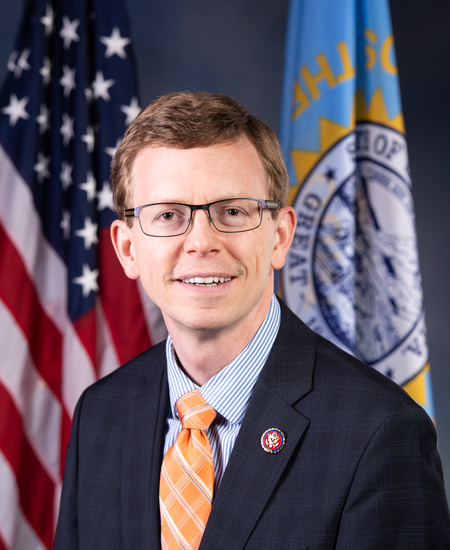
Rep. Dusty Johnson
Sponsored bills
Maddy summaryHR 6152, the Adopt GREET Act, requires the Environmental Protection Agency (EPA) to adopt and use the GREET model - a scientific tool developed by Argonne National Laboratory - for calculating lifecycle greenhouse gas emissions of transportation fuels. The bill mandates the EPA update this methodology every five years, starting 90 days after enactment, and specifically requires the first update to use the GREET model. This directly affects the EPA in its regulatory work and fuel pathway developers seeking approval for new fuels under existing EPA rules. The law ensures EPA analyses of fuel emissions align with the most current scientific model, with reporting requirements if updates are delayed.
Maddy summaryHRES 771 is a non-binding resolution expressing the U.S. House of Representatives' support for Israel following Hamas' October 7, 2023, attack. It condemns Hamas' actions, affirms Israel's right to self-defense, and calls for the immediate release of hostages. The resolution also urges enforcement of existing laws restricting aid to terrorists and sanctions against Iran for supporting Hamas. It does not create new policies or allocate funds, as it is a symbolic statement of congressional support.
Maddy summaryHRES 768 is a symbolic House Resolution expressing congressional support for Israel following Hamas' October 7, 2023 attacks. It condemns Hamas' actions, reaffirms Israel's right to self-defense, and calls for the immediate release of hostages. The resolution references the U.S. commitment to Israel's security through existing military aid programs, including the 2016 U.S.-Israel Memorandum of Understanding, and emphasizes enforcement of laws like the Taylor Force Act to prevent U.S. aid from reaching terrorist groups. As a symbolic resolution, it does not create new policy but serves as a statement of congressional support for Israel.
Maddy summaryThis bill removes a previous exclusion that prevented temporary federal employees (including U.S. Postal Service staff and Members of Congress) from counting service after January 1, 1988, toward their retirement benefits. It allows these workers to have their post-1988 temporary service counted toward retirement eligibility if they pay a deposit to the retirement system. The change applies to anyone employed by the federal government on or after the bill's enactment date. The Office of Personnel Management must notify affected employees and create rules to implement this change.
Maddy summaryHR 5110, the Protecting Hunting Heritage and Education Act, amends the Elementary and Secondary Education Act of 1965 to clarify that federal education funds cannot be used for certain weapons - but this restriction does not apply to archery, hunting, or other shooting sports training programs. The bill directly affects schools and educational programs seeking to use federal funds for these specific activities, such as archery clubs or hunting safety education. It adds an explicit exception to the existing prohibition, allowing funds to support "educational instruction or enrichment activities" in these sports under authorized programs. This change removes ambiguity about funding eligibility for such educational initiatives in K-12 schools.
Maddy summaryThis resolution designates the week of September 25-29, 2023, as "National Clean Energy Week" to recognize the growing role of clean energy in the U.S. economy. It expresses support for clean energy jobs and innovation, noting the sector employed about 8.1 million people in 2022. The resolution encourages federal, state, and local investment in affordable clean energy technologies and promotes "commonsense solutions" for energy needs. As a symbolic gesture, it has no legal force or funding implications - it simply urges recognition of clean energy's economic and environmental contributions.
Maddy summary# Summary of Immigration and Border Control Legislative Proposal This document is a comprehensive legislative proposal aimed at reforming U.S. immigration policy with a strong emphasis on border security, limiting asylum access, and accelerating the return of migrants. ## Key Provisions by Section: ### Title I: Asylum Reform and Border Protection - **Safe Third Country**: Requires aliens to seek protection in countries they transit through before applying for asylum in the U.S. - **Credible Fear Interviews**: Changes to how credible fear is determined. - **Asylum Eligibility**: Adds specific requirements for asylum claims, including restrictions on criminal activity, gang affiliation, and "generalized disapproval" of organizations. - **Employment Authorization**: Limits work authorization for asylum seekers and requires 180 days before eligibility. - **Asylum Fees**: Requires application fees of at least $50. ### Title II: Border Safety and Migrant Protection - **Detention Facilities**: Requires reopening of specific ICE detention facilities that closed after January 20, 2021. - **Mandatory Detention**: Limits parole and release of certain aliens, requiring return to contiguous countries. ### Title III: Preventing Uncontrolled Migration Flows - **Western Hemisphere Cooperation**: Requires negotiating agreements with Mexico, Honduras, El Salvador, and Guatemala for processing asylum claims and returning migrants. ### Title IV: Ensuring United Families at the Border - **Family Detention**: Changes to family detention policies, removing presumptions against detaining children with parents. ### Title V: Protection of Children - **Unaccompanied Children**: Requires faster repatriation of unaccompanied children to their home countries unless they are trafficking victims or have a credible fear of return. - **Findings**: Documents current crisis with over 350,000 unaccompanied children encountered since Biden took office. ### Title VI: Visa Overstays Penalties - **Increased Penalties**: Expands penalties for visa overstays with higher fines and potential imprisonment. ### Title VII: Immigration Parole Reform - **Restricts Parole Authority**: Limits parole to specific circumstances (urgent humanitarian reasons, significant public benefit, or specific categories like Cuban nationals). - **Case-by-Case Basis**: Requires individual consideration rather than class-based eligibility. - **Parole Duration**: Limits parole to 1 year (with possible 1-year extension). ## Overall Theme This proposal represents a significant shift toward stricter border control, reduced access to asylum, accelerated removal processes, and increased cooperation with other countries to process asylum claims before migrants reach the U.S. border. The document emphasizes "operational control" of borders and aims to reduce the number of migrants entering the U.S. unlawfully.

Maddy summaryThis bill extends existing aviation programs and tax authorities through December 2023. It modifies deadlines for airport improvement grants (extending $842 million in funding for Q4 2023), unmanned aircraft regulations, FAA operations, and key tax collections like fuel and ticket taxes. These changes maintain current funding levels for airports, airlines, and FAA programs relying on the Airport and Airway Trust Fund. The bill does not create new programs but ensures continuity of existing authorizations. It directly affects airports receiving federal grants, airlines paying aviation taxes, and FAA operational activities.
Maddy summaryThe Voluntary Public Access Improvement Act of 2023 increases annual funding for the Voluntary Public Access and Habitat Incentive Program to $150 million per year from fiscal years 2024 through 2028. This program provides financial incentives to private landowners who allow public access to their land for recreational activities like hunting and fishing, while also supporting habitat conservation efforts. The bill amends the Food Security Act of 1985 to establish this new funding level, replacing previous annual amounts. It directly affects participating landowners who enroll in the program and the public seeking expanded recreational access to private lands. The change is a specific funding adjustment without altering the program's existing structure or eligibility rules.