

Maddy summaryThis bill clarifies and expands the definition of "public charge" for immigration purposes, affecting non-citizens applying for visas, admission, or adjustment of status. It defines a public charge as someone receiving certain government benefits (including SNAP, Medicaid, housing assistance, and income support programs) for more than 12 months within any 36-month period. The determination considers factors like age, health, assets, education, and family status in a holistic assessment, while exempting refugees, asylees, and military dependents. The bill requires the government to publish a comprehensive list of covered benefits within 180 days of enactment.
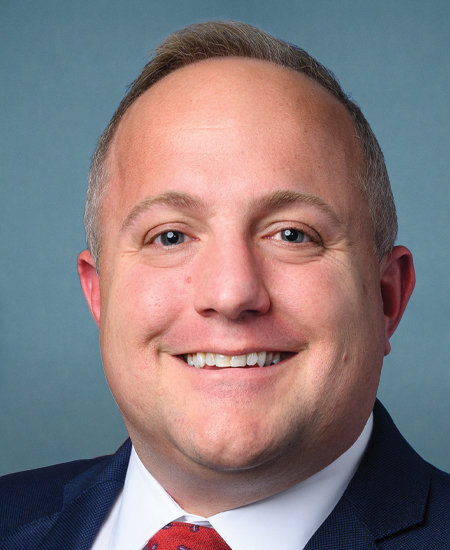
Rep. Russell Fry
Sponsored bills
Maddy summaryHR 472, the Restore VA Accountability Act of 2025, creates new disciplinary procedures for VA supervisors and management officials. It requires the VA Secretary to consider specific factors like the seriousness of misconduct and the employee's role when deciding on removal, demotion, or suspension, and limits the entire disciplinary process to 15 business days. The bill prevents courts from reviewing penalty amounts but allows review of whether procedures were followed correctly. It also strengthens whistleblower protections by requiring Special Counsel approval before disciplining employees who report misconduct, affecting VA supervisors and management officials but excluding senior executives and political appointees.
Maddy summaryThe Kayla Hamilton Act amends rules for placing unaccompanied immigrant children under 12 in foster care. It requires the Health and Human Services Secretary to contact the child's country of origin for criminal records, check for gang-related tattoos/markings, and place children with gang ties in secure facilities. The bill also mandates detailed background checks for host families, including immigration status, criminal history, and sex offender registry checks, before placement. These changes directly affect unaccompanied immigrant children in federal custody and the agencies managing their placements. The law aims to strengthen safeguards during the placement process without altering existing trafficking prevention programs.
Essential Caregivers Act of 2025 This bill prohibits certain health care facilities from limiting the access of essential caregivers to residents of those facilities, including during designated emergency periods. Specifically, the bill generally prohibits Medicare skilled nursing facilities, Medicaid nursing facilities, Medicaid intermediate care facilities, and associated inpatient rehabilitation facilities from restricting the access of essential caregivers to residents of the facilities, including during emergency periods in which visitation rights are otherwise restricted. During emergency periods, facilities may restrict access for an initial period of up to seven days and for one additional maximum seven-day period (if the additional period is approved by the state health department). Facilities may restrict access for a total of 7 days (or 14 days with the approval of the state health department) during an emergency period. Essential caregivers must agree to comply with any safety protocols set by the facility, which may be no more stringent for caregivers compared to those for staff. Caregivers who fail to comply with these requirements may be denied access, subject to an appeals process.
Miracle on Ice Congressional Gold Medal Act This act provides for the award of Congressional Gold Medals to the members of the 1980 U.S. Olympic men's ice hockey team in recognition of the team's achievement at the 1980 Winter Olympic Games.
Maddy summaryThe Kids Internet Safety Partnership Act establishes a new program within the Commerce Department to improve online safety for children under 18. The program will work with parents, educators, online platforms, and experts to identify risks and benefits of digital services for minors, then develop practical safety guidelines. Within two years, it will publish a detailed guide for platforms on implementing features like age verification, parental controls, and design changes that reduce addictive elements (e.g., endless scrolling). The program will also release regular reports tracking how well platforms adopt these safety measures. The initiative will end after five years.
Maddy summaryThis bill establishes a new interagency Task Force to dismantle foreign scam operations targeting Americans, particularly through "pig butchering" scams in Southeast Asia. The Task Force, chaired by the Secretary of State, will coordinate efforts across multiple agencies to shut down scam centers, impose sanctions on perpetrators, and support victims of trafficking. It requires a detailed strategy within 180 days and annual reports to Congress on progress, including sanctions imposed and funds recovered. The bill authorizes $30 million for these efforts in fiscal years 2026-2027, focusing on countries like Cambodia, Laos, and Burma where scam centers operate with forced labor.
Maddy summaryThis bill would amend the Anti-Terrorism Act of 1987 to designate the Muslim Brotherhood as a terrorist organization and prohibit its operations within the United States. It would require the President to designate the Muslim Brotherhood as a foreign terrorist organization under immigration law and impose new visa restrictions, including immediate revocation of current visas, for individuals identified as members. The bill mandates annual reports from the Secretary of State identifying Muslim Brotherhood branches worldwide and determining which should be designated as terrorist organizations under existing laws. These provisions would directly affect Muslim Brotherhood members, branches, and affiliated organizations seeking entry to or operating within the United States.
Maddy summaryHCONRES 58 is a symbolic congressional resolution denouncing socialism in all its forms. It does not create new laws or affect any policies, as it is a non-binding statement of opinion. The resolution cites historical events and quotes from Founding Fathers to argue that socialism leads to authoritarianism and economic harm, referencing examples like the Soviet Union and Venezuela. It formally "denounces" socialism and opposes implementing socialist policies in the U.S., but has no legal effect on citizens or government actions. This is a procedural resolution, not a policy measure.
Student Compensation and Opportunity through Rights and Endorsements Act or the SCORE Act This bill provides a framework for the compensation of student athletes for the use of their name, image, or likeness (NIL). This includes addressing certain elements of the court approved agreement to settle the In re College Athlete NIL Litigation (i.e., House settlement ). Specifically, the bill statutorily prohibits institutions, conferences, or interstate intercollegiate athletic associations (e.g., the National Collegiate Athletic Association (NCAA)) from restricting the ability of a student athlete to enter an NIL agreement. The bill also requires institutions of higher education that generate $20 million or more in annual revenue from the institution's intercollegiate athletics activities to (1) provide counseling and medical benefits to student athletes, and (2) establish and maintain at least 16 varsity sports teams. Further, the bill authorizes interstate intercollegiate athletic associations to establish rules with respect to athletic eligibility, transfers, recruitment, and the disclosure of NIL agreements. Under the bill, student athletes may not be considered employees of an institution, conference, or interstate intercollegiate athletic association. The bill also preempts state laws with respect to compensation, payments, benefits, employment status, eligibility, and academic standards applicable to student athletes. Compliance with the provisions of this bill is considered lawful under federal and state antitrust laws.