

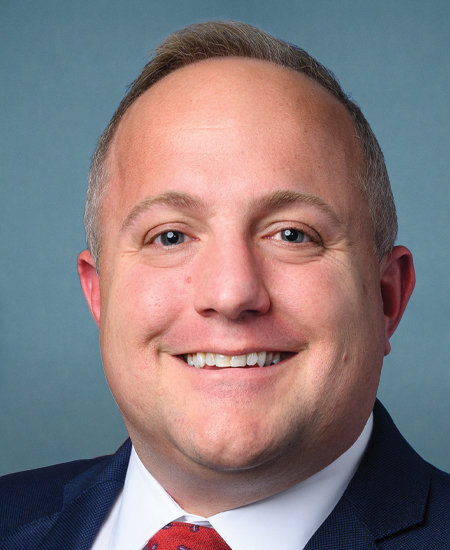
Photo of Russell Fry
R United States House · District 7 · South Carolina On the 2026 ballot

Rep. Russell Fry

Compare
Total votes
1,879
all sessions
Attendance
99%
10 missed
Higher than 82% of chamber peers
With party
92%
of cast votes
Lower than 88% of chamber peers
Bipartisan score
5%
crosses aisle rarely
Higher than 86% of chamber peers
Sponsored
459
bills & resolutions
Near the chamber average
Committees
7
assignments
459 bills and resolutions

Sponsored bills

Total
459
Primary
30
Co-sponsor
429
This page
459
matching current filters
Co-sponsor HR 261
Passed · Indiana House · Co-sponsor
Undersea Cable Protection Act of 2025

Maddy summaryThe Undersea Cable Protection Act of 2025 prohibits the National Marine Sanctuaries Act from requiring additional authorizations for undersea fiber optic cables that already have federal or state permits. It directly affects cable operators who have obtained licenses, leases, or permits from any federal or state agency for cable installation or maintenance in national marine sanctuaries. The bill prevents the Secretary from blocking or demanding new permits for these cables once they have valid existing authorization. This simplifies regulatory processes by eliminating redundant federal oversight for cables already approved by other agencies.

Passed Feb 12, 2026 1 co-sponsor
Co-sponsor HR 7420
In committee · Indiana House · Co-sponsor
Stop Gender Trafficking of Minors Act

Maddy summaryThis bill, titled the Stop Gender Trafficking of Minors Act, would create a new federal crime for knowingly transporting minors across state lines to receive gender transition procedures. The law defines these procedures to include puberty blockers, hormone therapy, and surgeries intended to alter sex characteristics, and would allow for up to ten years in prison or fines for violators. It also permits civil lawsuits by minors or parents seeking damages and prohibits federal funding for states that permit such transportation or refuse to cooperate with federal investigations. The legislation is based on the argument that the federal government has an interest in protecting minors from medical procedures that may cause long-term harm.

In committee Feb 9, 2026 1 co-sponsor
Co-sponsor HR 7387
In committee · Indiana House · Co-sponsor
Stop Settlement Slush Funds Act of 2026

Maddy summaryThis bill prohibits federal officials from using settlement agreements to direct payments to third parties unless those payments directly compensate for actual harm caused by the defendant or pay for services rendered in the case. It prevents the government from creating slush funds through settlements that benefit unrelated organizations or individuals beyond the scope of direct restitution. Federal agencies must annually report to the Congressional Budget Office on settlement payments that meet the new criteria, while agency inspectors general must audit and publicly report any violations. The reporting and audit requirements are set to expire seven years after the law takes effect.

In committee Feb 5, 2026 1 co-sponsor
Co-sponsor HR 3699
In committee · Indiana House · Co-sponsor
Energy Choice Act

Maddy summaryThis bill prevents state or local governments from banning or restricting energy connections (like installation, modification, or access) based on the type or source of energy, such as electricity, natural gas, or renewable fuels. It directly affects consumers choosing energy providers and energy companies seeking to offer services. The key provision prohibits local laws, regulations, or policies that limit energy services sold in interstate commerce, covering all energy types listed in the bill’s definitions. It does not create new programs but limits regulatory authority at the state or local level. The law aims to ensure open access to diverse energy sources without source-based restrictions.

In committee Feb 4, 2026 1 co-sponsor
Co-sponsor HR 7300
In committee · Indiana House · Co-sponsor
Make Elections Great Again Act

Maddy summaryThe Make Elections Great Again Act (HR 7300) would require voters to present photo identification to cast ballots in person or by mail for federal elections, with limited exceptions for religious objections or military voters. It would establish new requirements for proving U.S. citizenship during voter registration, including documentary proof of citizenship and proof of state residency. The bill would change mail-in ballot procedures by requiring voters to request mail-in ballots (rather than universal mail-in voting), implementing barcode tracking for mail-in ballots, and setting strict deadlines for ballot receipt. These provisions would apply to all states for federal elections held in 2027 or later, affecting how voters register, vote in person, and submit mail-in ballots for federal office elections.

In committee Feb 2, 2026 1 co-sponsor
Co-sponsor HR 7296
In committee · Indiana House · Co-sponsor
SAVE America Act

Safeguard American Voter Eligibility Act or the SAVE America Act This bill requires individuals to provide documentary proof of U.S. citizenship when registering to vote, and requires photo identification to vote, in federal elections. Specifically, the bill prohibits states from accepting and processing an application to register to vote in a federal election unless the applicant presents documentary proof of U.S. citizenship. The bill specifies what documents are considered acceptable proof of U.S. citizenship, such as identification that complies with the REAL ID Act of 2005 that indicates U.S. citizenship. Further, the bill (1) prohibits states from registering an individual to vote in a federal election unless, at the time the individual applies to register to vote, the individual provides documentary proof of U.S. citizenship; and (2) requires states to establish an alternative process to demonstrate U.S. citizenship. Each state must take affirmative steps on an ongoing basis to ensure that only U.S. citizens are registered to vote, which shall include establishing a program to identify individuals who are not U.S. citizens using information supplied by certain sources. Additionally, states must remove noncitizens from their official lists of eligible voters. The bill (1) provides for a private right of action for certain violations, and (2) establishes criminal penalties for certain offenses. Individuals voting in federal elections must present an eligible photo identification document. An individual who votes by absentee ballot must submit a copy of their identification document with both the request for, and the submission of, the absentee ballot.

In committee Jan 30, 2026 1 co-sponsor
Co-sponsor HR 7235
In committee · Indiana House · Co-sponsor
Protecting Motherhood Act

Maddy summaryHR 7235, the "Protecting Motherhood Act," requires all federal agencies to stop using the term "birthing person" in official documents and instead use specific terms like "female," "mother," "pregnant woman," or "woman." It directly affects federal agencies that produce regulations, forms, or communications, mandating the use of these defined terms when referring to individuals based on biological sex. The bill provides detailed definitions for terms like "female" (based on biological sex at conception) and "pregnant woman" (an adult human female carrying a child). The law takes effect 30 days after enactment. This is a procedural change focused solely on terminology in government documents, with no direct impact on healthcare access or services.

In committee Jan 23, 2026 1 co-sponsor
Primary HR 4323
Signed into law · Indiana House · Lead sponsor
Trafficking Survivors Relief Act

Maddy summaryThe Trafficking Survivors Relief Act (HR 4323) allows victims of human trafficking to petition courts to vacate convictions for non-violent federal crimes (level A offenses) or expunge arrest records if those offenses were directly related to their trafficking victimization. The bill establishes clear procedures for filing these motions, requires courts to consider testimony from anti-trafficking service providers, and ensures confidentiality for petitioners. It also adds a new "human trafficking defense" that permits defendants to claim duress due to trafficking victimization in criminal cases. The law mandates reports to Congress on implementation, including the number of petitions filed and outcomes, to assess its impact on trafficking survivors.

Signed into law Jan 23, 2026 0 co-sponsors
Primary HR 4593
Passed · Indiana House · Lead sponsor
SHOWER Act

Maddy summaryThe SHOWER Act updates the federal definition of "showerhead" in the Energy Policy and Conservation Act to align with the ASME A112.18.1-2024 industry standard, while explicitly excluding safety showerheads. This change clarifies which showerhead products must comply with federal energy efficiency regulations, directly affecting manufacturers and sellers of standard showerheads. The bill requires the Department of Energy to revise relevant regulations within 180 days of enactment to match this new definition. As a result, safety showerheads will no longer be subject to the same energy efficiency standards as typical residential showerheads.

Passed Jan 15, 2026 0 co-sponsors
Co-sponsor HR 909
Passed · Indiana House · Co-sponsor
Crime Victims Fund Stabilization Act of 2025

Maddy summaryHR 909, the Crime Victims Fund Stabilization Act of 2025, modifies how funds from the False Claims Act are deposited into the Crime Victims Fund. It specifies that from 2025 through 2029, certain False Claims Act proceeds (specifically those for qui tam plaintiff payments and government damage reimbursements) cannot be deposited into the fund. This change directly affects the composition of the Crime Victims Fund by excluding these specific revenue streams during the specified period. The bill does not create new benefits or alter victim services; it only adjusts fund allocation rules for existing False Claims Act revenues.

Passed Jan 13, 2026 1 co-sponsor
Showing 61 to 70 of 459 bills
Previous 1 … 6 7 8 … 46 Next