

Maddy summaryHCONRES 3 is a non-binding congressional resolution expressing support for pro-life facilities, groups, and churches targeted by vandalism and threats following the Supreme Court's Dobbs decision. It condemns specific incidents like graffiti, window-smashing, and arson at pregnancy centers and churches (e.g., in Frederick, MD, and Portland, OR), while recognizing the role of these organizations in supporting pregnant women. The resolution calls on the Biden Administration to use law enforcement to protect these facilities but does not create new laws or policies. As a symbolic measure, it has no legal effect on the incidents described.
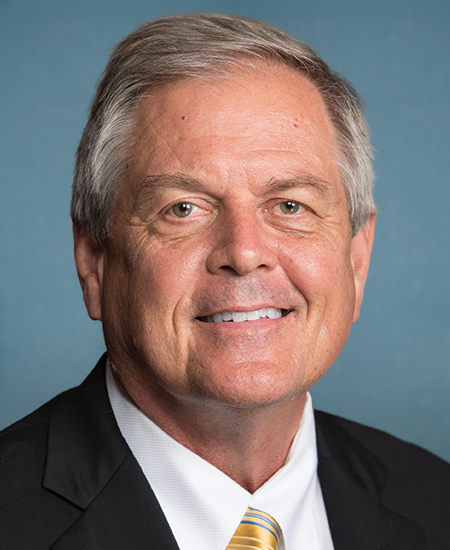
Rep. Ralph Norman
Sponsored bills
Maddy summaryHRES 51 is a non-binding House resolution expressing support for designating the week of January 22-28, 2023, as "National School Choice Week." It encourages parents to learn about K-12 education options (including public, charter, private, and homeschooling) and urges public awareness events during that week. The resolution does not create new policies, funding, or legal requirements - it solely serves as a symbolic expression of support for parental choice in education. It directly affects no individuals or entities, as it is a procedural resolution with no legislative force.
This resolution declares that every state within the United States has the sovereign right to exclude any person who does not have the right to be there. It also declares that the states along the southern border (1) are being invaded by terrorists, narco-terrorist cartels, and criminal actors; and (2) have the sovereign and unilateral authority to defend themselves against such an invasion.
Maddy summaryHR 441, the Leak and Lose Act of 2023, makes it a federal crime to conceal, remove, destroy, or alter unpublished Supreme Court opinions or draft opinions before they are officially published. The bill targets anyone who willfully engages in these actions while handling such materials within Supreme Court buildings. Violators face a $5,000 fine and lose the right to practice law in any federal court for life. This law directly affects individuals with access to Supreme Court documents, such as clerks or staff, by imposing severe professional penalties for mishandling sensitive court materials.
Maddy summaryThis bill denies tax deductions for employers covering two specific expenses: travel costs for employees obtaining abortions, and medical procedures related to gender transition for minor children (under age 18). It defines "gender transition procedure" broadly to include surgeries, hormones, and puberty blockers, but excludes medically necessary treatments for disorders of sex development or complications from such procedures. The law applies to taxable years starting after its enactment, directly affecting employers who provide health coverage for these services. It does not ban the procedures themselves but removes tax benefits for employer-paid expenses related to them.
Standardizing Thresholds Of Penalties for Fentanyl Act or the STOP Fentanyl Act This bill reduces the drug quantity thresholds that trigger a mandatory minimum prison term for a defendant who manufactures, distributes, imports, exports, or possesses with intent to distribute fentanyl. The bill also creates enhanced criminal penalties for certain violations involving fentanyl that was imported along the U.S.-Mexico border. Specifically, the bill reduces from 400 to 5 grams the fentanyl quantity and from 100 to 0.05 grams the fentanyl analogue quantity that trigger a mandatory minimum prison term for high-level first-time or repeat offenders. It also reduces from 40 to 0.5 grams the fentanyl quantity and from 10 to 0.005 grams the fentanyl analogue quantity that trigger a mandatory minimum prison term for low-level first-time or repeat offenders. Additionally, the bill creates enhanced mandatory minimum prison terms for importing or exporting fentanyl that was imported along the U.S.-Mexico border.
Maddy summaryHJRES 17 is a congressional resolution disapproving the District of Columbia Council's approval of the Local Resident Voting Rights Amendment Act of 2022 (D.C. Act 24-640), which the Council enacted on October 18, 2022. If passed by Congress and signed into law, this resolution would block the local voting rights amendment from taking effect. The bill directly affects the District of Columbia government by preventing implementation of the amendment, which aimed to address voting rights for residents. This resolution follows the District of Columbia Home Rule Act's requirement for congressional disapproval of certain local laws.
Maddy summaryHR 311, the Cost Estimates Improvement Act, requires the Congressional Budget Office (CBO) and Joint Committee on Taxation (JCT) to include debt servicing costs in their budget estimates where practicable and to list duplicative federal programs covered by legislation. The bill mandates that all CBO and JCT cost estimates must identify overlapping or redundant agency programs, initiatives, or activities within the proposed legislation. This change aims to improve transparency in federal budget analysis by providing clearer data on long-term debt impacts and program efficiency for lawmakers. The bill directly affects the CBO and JCT as they prepare budget estimates for Congress.
No Taxpayer Funding for the World Health Organization Act This bill prohibits the United States from providing any assessed or voluntary contributions to the World Health Organization.
Maddy summaryThe GAS Act (HR 337) prohibits any federal agency from banning the sale or use of gas-burning stoves in the United States. This applies to all agencies defined under federal law, including the Environmental Protection Agency and Consumer Product Safety Commission. The bill directly blocks agencies from enacting new regulations that would restrict gas stoves, preventing future regulatory actions. It does not affect existing stove sales or current agency authority but sets a clear restriction on future rulemaking.